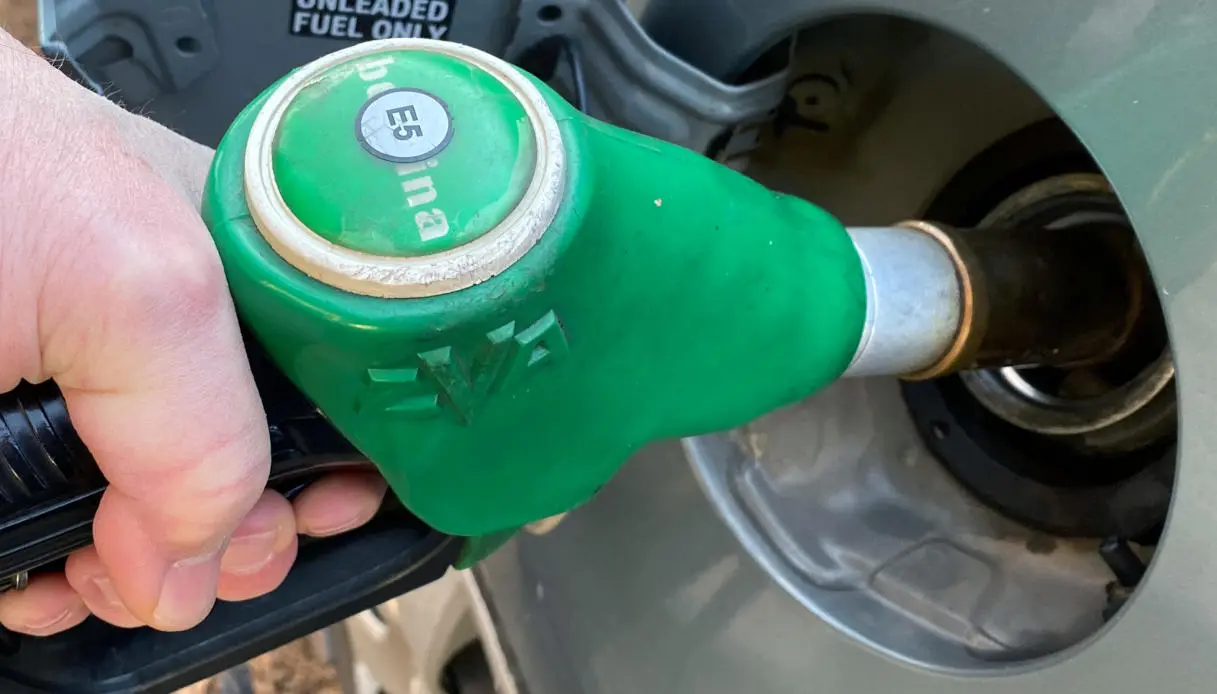
It only took one day after the end of the excise duty cut for the price of fuel to rise again.
Since 4 July, when the discount period decided by the Government to contain the effects of the increase in oil prices ended, petrol and diesel started to increase again both in cities and on the motorways. This is demonstrated by the first data from the Ministry of Business and Made in Italy.
The new prices of petrol and diesel
According to the Mimit Price Observatory, on Saturday 4 July the average price in self-service mode on the national network rose to:
- petrol – 1,820 euros per litre, compared to 1,803 euros the previous day;
- diesel – 1,899 euros per litre, compared to 1,882 euros recorded before the end of the discount.
There is also an increase on the motorway:
- self-service petrol – 1.907 euros per litre, compared to 1.894 euros;
- self-service diesel – 1.978 euros per litre, compared to 1.968 euros the previous day.
For diesel, the return towards the threshold of two euros per liter on the motorway now appears very close.
How much does the cost of filling up increase?
The excise duty cut, also considering VAT, was worth 6.1 cents per litre. According to estimates released in recent days, without an extension of the measure the average price of diesel could be around 1.94 euros per liter on the ordinary network and reach 2.02 euros on the motorway.
For petrol, however, the average price could reach 1.86 euros per liter on the ordinary network and 1.95 euros along the motorway network. For motorists, the highest expected cost for a full tank is around 3.05 euros.
Because the government has not extended the excise duty cut
The executive had already announced that it would not extend the measure beyond July 3, also in line with the indications of the European Commission.
The Minister of Business and Made in Italy, Adolfo Urso, explained:
We have decided not to extend the cut in excise duties, given that the cost of fuel has been falling for over 20 days now. We are always ready to implement further measures if the ongoing negotiations do not have positive consequences also with regard to navigation in the Strait of Hormuz, and therefore consequently the supply of fuel with the drop in prices on international markets.
2 billion euros against oil price increases
The excise duty reduction was introduced in the spring of 2026, during the phase of greatest tension on the energy markets linked to the Strait of Hormuz crisis. Since March the Government had extended the measure several times, adapting the discount to the trend in oil prices. Overall, the seven interventions cost public finances around 2 billion euros.
With the return to full taxation, Italy returns to the top of the European rankings for the tax burden applied to diesel. Considering excise duties and VAT, the tax burden on diesel once again exceeds one euro per liter, bringing our country back to first place in Europe according to data from the European Commission. Similar situation also for petrol.
Meanwhile, petrol station attendants are threatening to go on strike: Faib and Fegica have announced their state of mobilisation, also declaring themselves ready for a prolonged closure of the plants if the bill to reform the sector does not proceed.