From Piedmont to Friuli-Venezia Giulia and up to Sicily, in Italy there are 13 historic train lines born between the nineteenth and twentieth centuries on which we can still travel today to admire breathtaking views: previously abandoned, they were recovered thanks to the “Timeless Tracks” project, started in 2014 by the FS Italiane Foundation. These railway lines cross the Italian province as tourist lines and pass through many regions for a total of 1000 km.
What are historic trains and “timeless tracks”
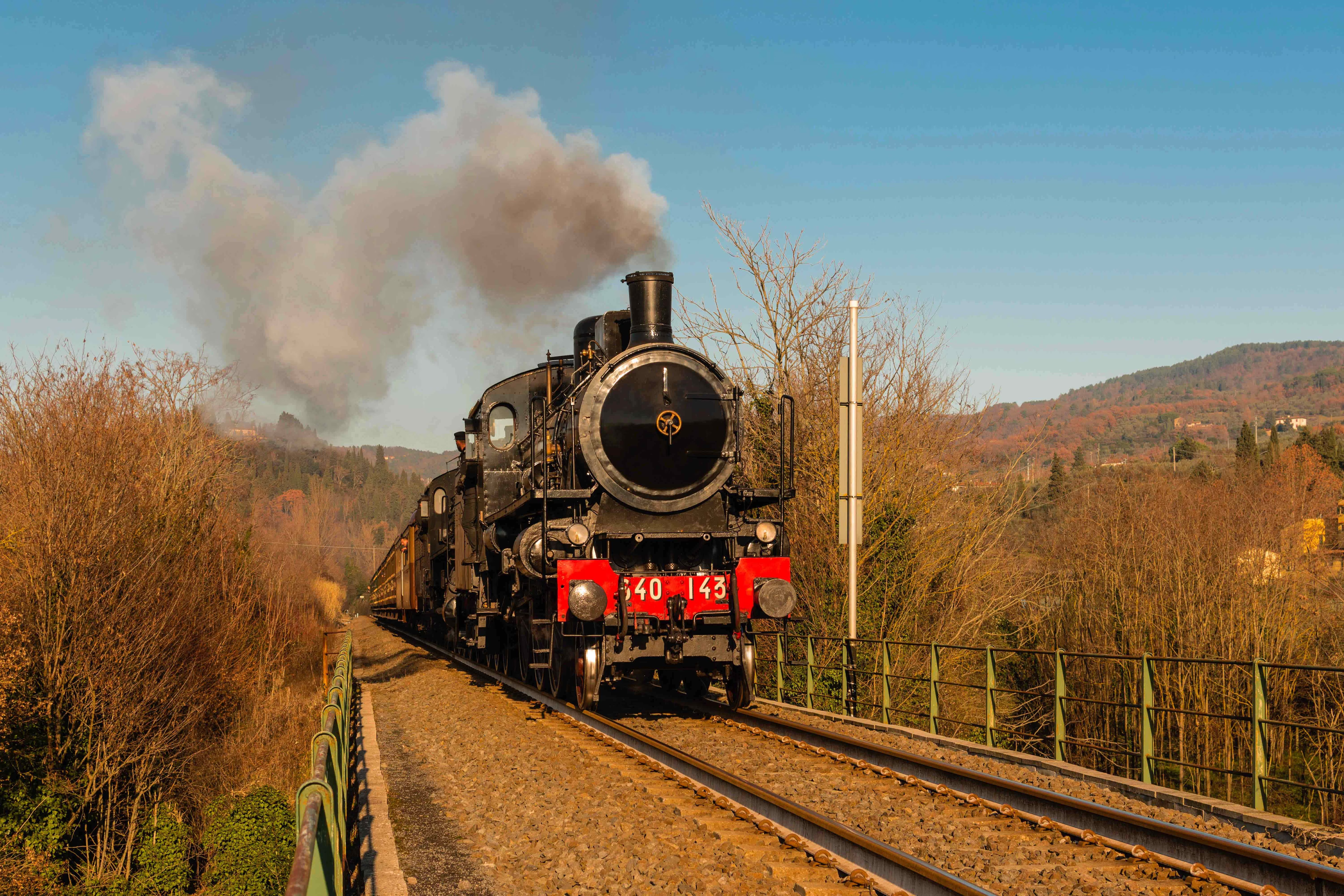
When we talk about “historic trains” we mean convoys made up of vintage rolling stock (steam, electric or diesel locomotives, and carriages from the 1920s-1950s such as the famous “Centoporte” and the “Corbellini”) perfectly restored and put back into circulation. These are not replicas, but the same vehicles that transported passengers and goods decades ago, now brought back to life.
The idea, initiated by FS Italiane Foundation (founded by Ferrovie dello Stato, RFI and Trenitalia in 2013) and carried out by FS Italian Tourist Trainswhich physically deals with putting the convoys on the road, was to recover the “suspended” railway lines, no longer useful for regular transport, because they were little frequented or unprofitable, and transform them into tourist railways.
In 2017, Parliament unanimously approved the Law 128 of 9 August 2017 (then modified in 2019), which for the first time recognizes and protects the institution of the “tourist railway” in Italy, identifying 18 lines of particular cultural, landscape and tourist value to be safeguarded. Today the project has 13 sections recovered for almost 1,000 kilometers in total. Between 2014 and 2018, vintage trains transported around 275 thousand people, and in 2018 alone there were 80 thousand with over 400 “train events” organized in a year.
The over 400 historic rolling stock (of which approximately half are in working order) are kept by the Foundation throughout Italy, together with archives, railway libraries, and two museums: that of Pietrarsa, near Naples, and that of Trieste Campo Marzio, a former Austro-Hungarian station.
The 13 routes recovered from 2014 to today
The Parks Railway
It extends for 128.7 km between Abruzzo and Molise, from Sulmona to Isernia, touching 19 intermediate stages (Sulmona-Introdacqua; Vallelarga; Pettorano sul Gizio; Cansano; Campo di Giove; Campo di Giove Majella; Palena; Rivisondoli-Pescocostanzo; Roccaraso; Alfedena-Scontrone; Castel di Sangro; San Pietro; Avellana-Capracotta; Villa San Michele; Vastogirardi; Carovilli-Roccasicura; Pescolanciano-Chiauci;
The Sebino railway
In Lombardy, it extends for just 10 kilometers along Lake Iseo, from Palazzolo sull’Oglio to Paratico-Sarnico, and boasts 150 years of history: the line was in fact built between 1874 and 1876 to serve the iron and steel activities of the lake. Reopened in 2014, from 2026 it will host the first panoramic carriages, made from three old regenerated freight wagons. The ticket costs 7.50 for adults and is discounted at 50% for children aged 4 to 12.
The Val d’Orcia railway
With the steam-powered Nature Train, it connects Asciano and Monte Antico in Tuscany, crossing the Sienese hills, a UNESCO heritage site, for 51.2 km. Built between 1865 and 1872, temporarily decommissioned since 1994, it is also among the first routes reactivated in 2014.
The Temple Railway
It connects the stations of Agrigento Bassa and Porto Empedocle Succursale in Sicily in a stretch of just 12 km and allows access to the Valley of the Temples, a UNESCO World Heritage Site since 1997.
The Valsesia railway
Active since 2015, it connects Vignale, in the province of Novara, and Varallo Sesia, in the province of Vercelli, in just a couple of hours, via over 50 km of tracks, from the Po Valley to the mountain landscapes. The Sacro Monte Train takes its name from the Sacro Monte of Varallo (the “New Jerusalem”), the oldest in Piedmont, built in various stages between 1486 and 1713.
The Tanaro railway
Also in Piedmont, along 35 km of tracks it has connected Ceva to Ormea, in the province of Cuneo, since 2016, crossing the Upper Valley of the Tanaro river. The itinerary moves aboard a historic train with 1930s carriages also departing from Turin Porta Nuova.
The Irpinia railway
119 km from Avellino to Rocchetta, with 18 intermediate stages, represents the main internal line of Campania, built for crossing the Apennines. The Irpinia Express today crosses Campania, Basilicata and Puglia. From the Campania capital it continues northwards and the Calore valley. This is followed by views of the Picentini mountains, the crossing of the Ofanto river, with final arrival in Puglia.
The Sannio railway
It connects Benevento, in Campania, with Bosco Redole, in Molise, along a 66.2 km itinerary. Designed as an alternative to the Naples-Foggia railway to connect the Tyrrhenian Sea to the Adriatic, and part of the longer Benevento-Campobasso route, it also crosses the places of Padre Pio on board the Sannio Express.
The Pedemontana railway
From Sacile to Gemona del Friuli-Venezia Giulia in about 75 km, reopened in December 2017, it is highly panoramic: on one side the circle of the Friulian Prealps with the entrances to the Cellina, Colvera, Meduna and Arzino valleys, on the other the open and bright plain, with intensely cultivated fields alternating with woods and streambeds, along the Cornino Lake Nature Reserve.
The Langhe Roero and Monferrato railway
The entirely Piedmontese route winds along 58 km, moving from Alba station to arrive at Castagnole delle Lanze, where it forks: on one side you continue towards Asti; on the other you reach Nizza-Monferrato, crossing the wine-growing landscapes of Asti, Alba and Monferrato. Among the next available itineraries, the Turin-Canelli, scheduled for Sundays 1, 8, 15 and 22 November 2026: departing from Turin Porta Nuova, arriving in Canelli with stops in Turin Lingotto, Bra and Alba, will take place on board the 1920s Centoporte carriages, pulled by a steam locomotive.
The Basso Monferrato railway
From Asti, you can continue towards Chivasso (51 km), to discover the Lower Monferrato. The line was built by the Swiss company Sutter: this influenced the particular architectural style of the station buildings which still characterizes this railway infrastructure today. In 1994 the line suffered serious damage due to the flooding of the Po river. Recovery works began in 2021, with inauguration in October 2022.
The Subappennina Italica railway
31.6 km from Fabriano to Pergola, along the Cesano Valley and the Marche hills, it was created to fit into the Bologna-Ancona and Rome-Ancona lines, but was relegated to mining transport.
The Murge railway
Through the Alta Murgia of Bari and part of the Murgia of Lucania, the line connects Rocchetta S.Antonio-Lacedonia, in the province of Foggia, to Gioia del Colle, in the province of Bari, popping up in Campania and Basilicata.
The other trains
The Campania Archeotreno connects Naples with the nearby archaeological areas of Pompeii and Paestum, both UNESCO heritage sites. The route of the historic train winds along the Vesuvian coast, with the Volcano on the left and the Gulf of Naples on the right. The Pietrarsa Express is the historic train that takes you to the Pietrarsa Museum directly from the center of Naples, aboard the Centoporte carriages, active from the end of the 1920s until the 1980s, so called due to the numerous doors along each side. The Reggia Express, however, connects Naples to the Royal Palace of Caserta, on Centoporte and Corbellini carriages (the latter from the 1950s).
Then there are the “author’s itineraries”, a format of travel on board historic trains, such as the Ferrovia delle Meraviglie: active in July and August, from Turin to Imperia, with a 4 and a half hour journey that passes through Cuneo, Limone, Tende and Breil Sur Roya, Ventimiglia and Sanremo. In October, for 3 consecutive Sundays, the Milan-Alba route will be active, with a train dedicated to the discovery of the gastronomic excellences of the Langhe, such as truffles and wine: this is the program for Sundays 11, 18 and 25 October 2026 and will pass through Pavia, Alessandria and Asti. Tickets can be purchased from the official Trenitalia website.