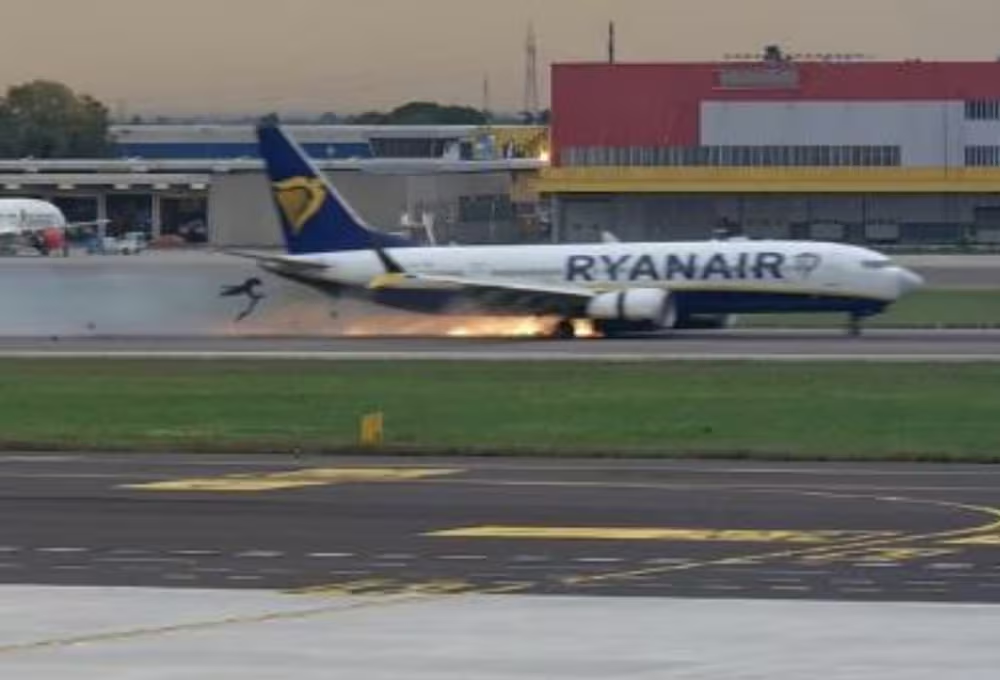
It was the anti-skid system, deactivated due to a fault, that caused the crash of the Ryanair Boeing 737 Max which blocked Orio al Serio airport for almost twelve hours on 1 October 2024. This is the conclusion of the National Flight Safety Agency, which in the final report on the flight accident Ryanair FR846, which took off from Barcelona with 162 passengers on board, points to two competing causes. On the one hand the anti-skid system, the anti-locking of the wheels, which had been deactivated before departure, on the other the pilots, who applied the brakes an instant before the aircraft was stabilized on the ground.
The landing at Orio al Serio with 162 passengers
Flight FR 846, which departed from Barcelona El Prat with 162 passengers and six crew members, landed on the Bergamo runway at 7.55am. Flames were immediately noticed from the control tower, while in the cabin the pilots felt an explosion on the left and then others on the right side. However, the aircraft completed the landing with all four tires on the main landing gear burst, of which the two on the right were completely destroyed, risking skidding on the runway with the engine. A 450 meter rubber strip remained on the asphalt. No injuries were reported among the passengers, who disembarked at 8.40 without noticing anything.
The recorded communications confirm the loss of the first moments. “We saw fire on the engines,” the tower warned at 7.55.31. “Negative, we have problems with the brakes,” replied the pilot, who shortly after asked for assistance because the plane was unable to move on its own. It was the controller who provided the first clue to the dynamics, considering the tire fragments scattered on the track, 220 meters behind the tail: “Maybe it was a tire explosion.”
Twelve hours of stopover blocked
Out of 308 movements scheduled that day, 129 flights were cancelled, with 21 thousand passengers affected, while arrivals were diverted to Verona and Malpensa and replacement buses made 22 trips. To manage the emergency, 120 people were mobilized, including airport staff, Enac and external companies. The plane remained on the runway for five and a half hours, until 1.30pm, when it was transferred to the Ryanair hangar and taken over by Seas maintenance workers. The airport only reopened at 7.39pm. The ANSV investigators, who intervened immediately after the accident, examined the runway, aircraft and flight recorders, in addition to the technical interventions carried out in Spain in the previous hours.
The investigation and the role of anti-skid
According to the reconstruction, an anti-skid anomaly had been detected before take-off and, to allow the return, the technicians had turned off both channels of the system, although the reports only concerned the internal one. According to the investigation, the basis of the choice was a contradiction between the maintenance manual and the list of minimum equipment, which would have led to the exclusion of the entire device instead of isolating just the faulty part.
Subsequently, involuntary pressure on the brake pedals, which occurred before the plane was completely on the ground and without active electronic protection, would have caused the calipers to instantly tighten on the rims. The spoilers, the airbrakes on the wings, were not opened in time in manual mode and the weight of the aircraft was slow to transfer to the wheels, which were now stationary. As a result, the tires stopped rolling and dragged on the asphalt until they disintegrated.
Recommendations to Boeing and the companies
Once the investigation was concluded, the National Flight Safety Agency made safety recommendations to Boeing and airlines, asking them to introduce specific simulator training, with sessions dedicated to landing without anti-lock, and to standardize maintenance procedures, so that a partial failure no longer leads to total deactivation of the anti-skid.