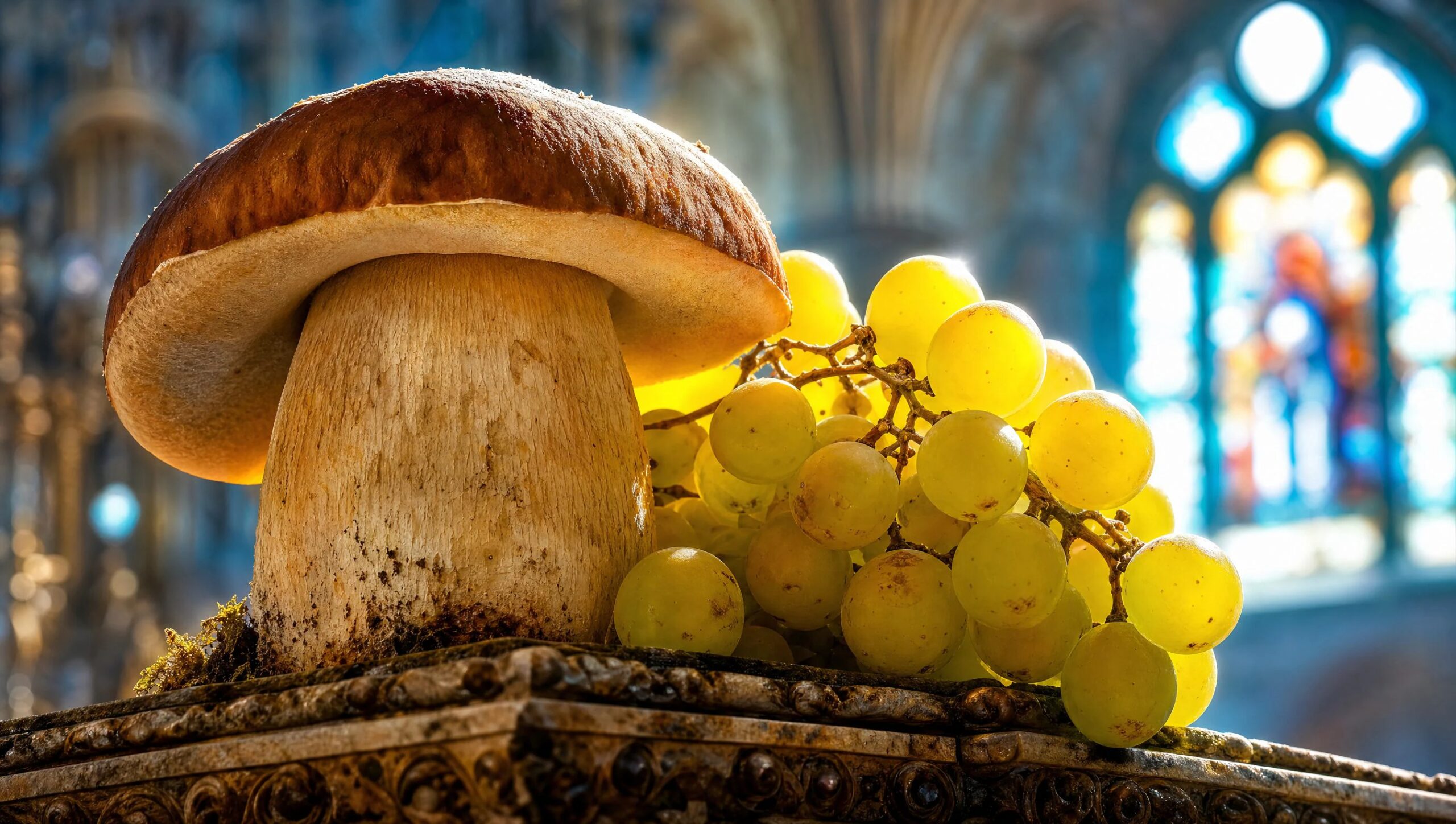
It is a period of festivals: in reality it is the whole year round, especially starting from June and July, but the period of greatest concentration in Italy is above all between the end of summer and the beginning of autumn, with a particularly rich month of September: September and October are usually the harvest months par excellence (grapes and grape harvest, mushrooms, truffles, chestnuts, first olives and so on), and the festivals are often created to celebrate precisely those freshly harvested products.
For example, the Sagra dei Osei in Sacile, Pordenone, is also usually held in September, the first weekend. Of medieval origins, it is the oldest ornithological event in Europe and is considered one of the oldest festivals in Italy, dating back to 1274: a document from that year authorized the transfer of the poultry market within the city walls. It was not a generic “municipal act”: it was the patriarch of Aquileia Raimondo della Torre who granted the transfer of the market, moving it from the pre-existing “San Lorenzo market” of 10 August, where the inhabitants of nearby villages were already exchanging singing and calling birds.
Born as a local market for singing and calling birds, over the centuries it has transformed into a large popular event with singing competitions between birds (the famous “Torzo”), exhibitions, gastronomic stalls: in 1907 it was organized for the first time “in modern form”, obtaining national resonance thanks to an article published in Corriere Sunday. In 1909, an actual regulation was written, which gave the event the form that, in essential lines, it still retains today. From there the subsequent recognitions: in 1957 it became “National Bird Exhibition”, in 2007 “National Specialized Fair”. Since 1998 it has also hosted the “European Birdsong Imitation Championship”, with the “cluckers”, at dawn on the last day.
It takes place every year on the first weekend of September: this year’s event was celebrated on 6 September and reached its 753rd edition, even older than the German Oktoberfest. Along with the competitions, it hosts a national ornithological exhibition with specimens and court animals, a market and gastronomic stalls, the Palio delle Contrade among the city’s districts.
The word “festival”, which today we associate with porchetta and sausage stands, stalls dispensing truffles or other delicacies and singing competitions between spit-roasted chickens, actually has a much more solemn and religious origin than we think, and the etymology helps us. How can we read about Treccani vocabulary, “sagra” is the feminine noun of the adjective “sagro”, an ancient variant of sacred. It is no coincidence, therefore, that the first meaning of the term was linked to religion: it in fact indicated the feast with which the consecration of a church, an altar or the sacred image of a saint was celebrated.
From there the meaning progressively broadened: from a solemn celebration commemorating the foundation or consecration of a church, or the day dedicated to the patron saint of a town, it became an occasion in which, alongside the religious functions, the fair, the market and extended and collateral celebrations were also organised. It is exactly from this juxtaposition between the sacred part and the more recreational part that the festival as we understand it today was born: a popular festival dedicated to a typical product or a harvest, from the grape or fig festival to that of the fish or cheese typical of a certain area.
A Word a Day describes this passage well, speaking of a real “motion from the sacred to the profane”: the term has retained its core of “solemn celebration”, so much so that it can still be used in a figurative sense for large civil or patriotic commemorations – even the composer and conductor Igor Fyodorovich Stravinsky chose it for his ballet The Rite of Spring; in common language it has moved, and today the word above all refers to the popular village festival, often dedicated to a typical product or local gastronomy.