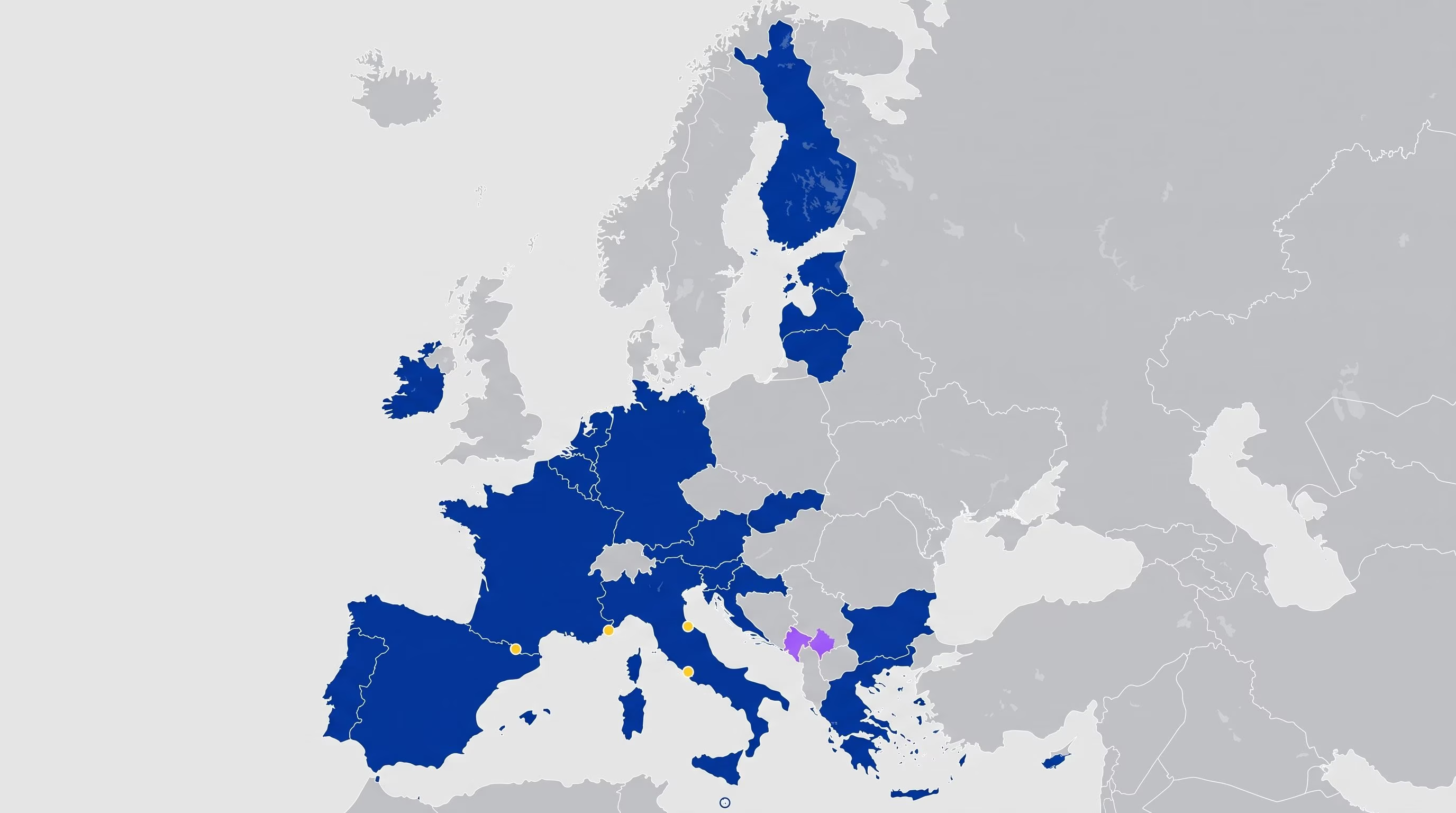
In Europe there are 4 states that use the euro as their official currency, even though they are not part of the European Union: perhaps we have never realized it due to a matter of habit, but it will certainly have happened to us Italians at least once in our lives to visit two of these countries. In fact, these are San Marino and Vatican City, which together with Andorra and the Principality of Monaco use Euros as their current currency.
But how is all this possible if the euro is the single currency adopted by EU members? The answer lies in the fact that these micro-states have signed formal agreements with the European Union, which allow them not only to use the euro, but also to coin money and create their own national faces. As we all know, each euro coin has a common side, which indicates the value, and a national side, specific to the issuing country. More specifically, as reported by the ECB:
- Andorra signed a monetary agreement with the European Union on 30 June 2011. Among the national faces are the Casa de la Vall, the former seat of Parliament, and the heraldic coat of arms of Andorra.
- Vatican City has had the right to use the euro as its currency since January 1, 1999, but issued the first series with Pope John Paul II between 2002 and 2005. So far, the smallest state in the world has issued 5 series of national faces, the latest of which bears the coat of arms of Pope Francis.
- The Principality of Monaco also issued the first series in 2002. Today, in total, there are three series produced, featuring the effigies of Prince Rainier III and Prince Albert II.
- Identical story also for San Marino, which has been using the euro since 2002: the two series of the coin portray the Palazzo Pubblico, seat of government, the Santo Marino and the official coat of arms.
In addition to these 4 countries, Kosovo and Montenegro also use the euro as their currency de facto: in this case, in fact, no formal agreements have been stipulated with the European Community. Of the 27 EU member countries, however, only 21 have adopted the euro as their national currency.
Small fun fact: Euros can be used in all Eurozone countries and also in their overseas territories. In practice, this means that our currency is also used in regions far away from us, such as French Guiana and Saint-Barthélemy (located in Latin America and the Caribbean, but part of France), the island of Reunion (a French overseas territory in the Indian Ocean), Ceuta and Melilla (geographically in Morocco, but part of Spain) and the Azores and Canary Islands in the Atlantic (the former part of Portugal, the latter part of Spain).