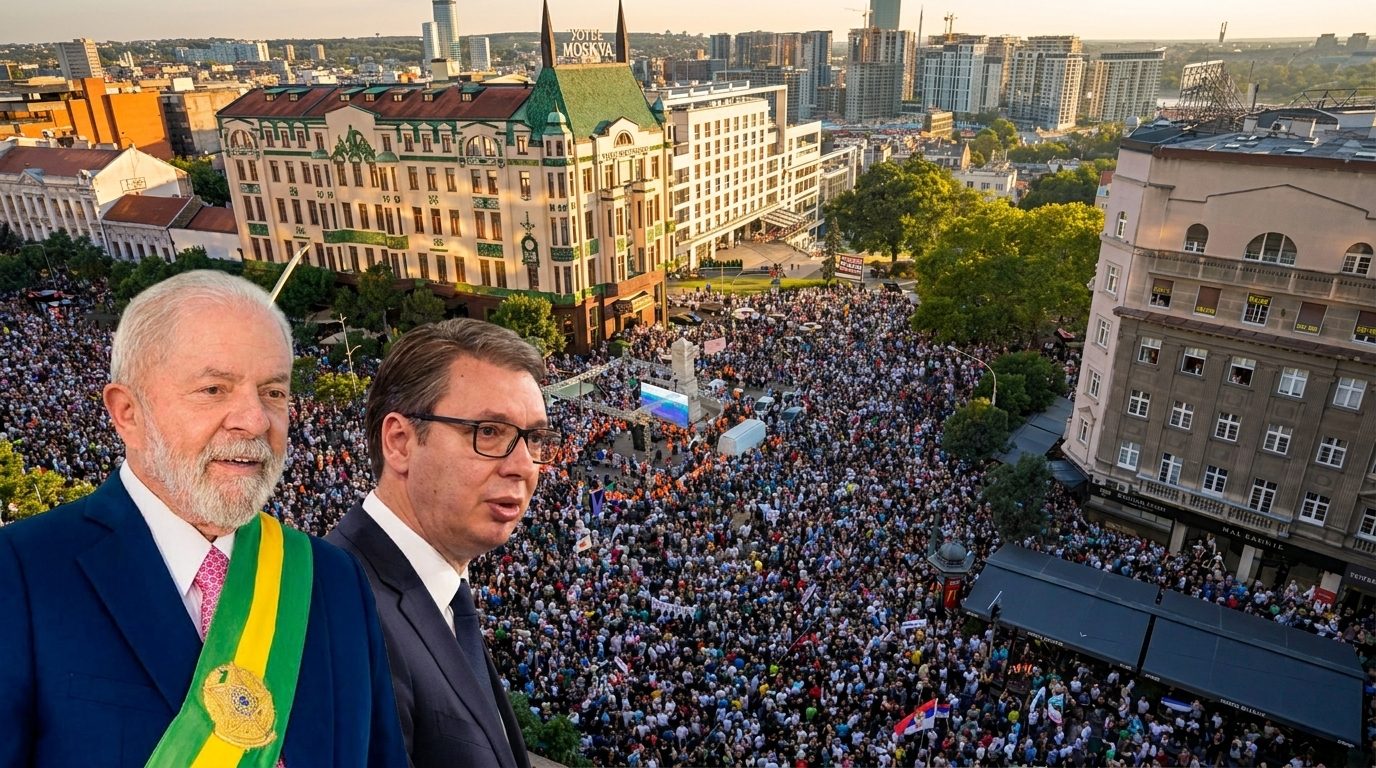
The last weekend of October 2026 ended with two major electoral results in Serbia and Brazil: in the European country, the polls decreed the overwhelming victory of the Students’ List (the movement born from the protests against corruption and the government), with around 53% of the votes, marking the end of President Aleksandar Vučić and his Serbian Progressive Party (SNS) after more than a decade in power.
On the other side of the world, however, Brazil confirmed Luiz Inacio Lula da Silva as president, with 51.7%, after he had been overtaken in the first round of the ballot by his rival Flávio Bolsonaro, son of the former president who is serving a 27-year sentence for an attempted coup d’état: Bolsonaro Jr contested the results shortly after the announcement, asking for the elections to be annulled.
There will be two other important electoral events to keep an eye on in the coming days: the elections in Israel (scheduled for tomorrow, October 27), which could reconfirm (or not) Benjamin Netanyahu in power, and the midterms in the United States, which could strip Donald Trump’s Republican Party of the majority in the House and Senate.
Lula wins the elections in Brazil against Bolsonaro: he is president for the fourth time
Brazil has reconfirmed as president Luiz Inácio Lula da Silva (known throughout the world as Lula), leader of the Workers’ Party (PT), who in the final ballot made a comeback against Flavio Bolsonaro, candidate of the Liberal Party (PL) and son of former president Jair Bolsonaro, currently in prison with a 27-year sentence for attempted coup d’état.
As declared by Lula himself, the reconfirmation took place with 51.74% of the votes, against 48.2% for Flavio Bolsonaro: the country, in short, is split in half.
However, these elections mark a historic result for Brazil: it is the fourth presidential mandate for Lula, an unprecedented fact for Brazilian democratic history (the Constitution, in fact, prohibits more than 2 consecutive mandates, but does not set a maximum limit of overall mandates). At the same time, it is the first time since 1989, the year in which run-off voting was introduced in presidential elections, that a candidate who lost in the first round managed to overturn the result in the second round.
The comeback, however, was far from a given: in the first round, last October 4, Lula lost with a margin of around 2.2 million votes (with 45.03% of the votes against 47.14% of his rival Bolsonaro), but the PT’s electoral campaign in the following weeks succeeded in its aim of “virar o voto” (overturn the vote).
It must be said, however, that in the last TV debate between Lula and Bolsonaro before the elections, the latter scored some last-minute own goals: first by calling Lula “Nine dedos” (literally nine fingers), taunting his opponent for losing a finger. In this case, the insult was exploited by the outgoing president, who recalled losing his finger at just 17 years old, while working as a metalworker at night, at unauthorized hours.
Bolsonaro’s second mistake was to show the words “CORRU(PT)O” to the cameras, claiming that the word corrupt (corrupt in Portuguese) cannot exist without the PT (Lula’s party). This move, however, backfired: the image of Bolsonaro himself showing the word “corrupt” went viral, with numerous internet users starting to write their profession on their hands, from doctor to teacher.
From a political point of view, this is Lula’s fourth presidential term: the first election dates back to 2002, when he became the first trade union leader and the first worker to hold the office of president of Brazil. During his first two mandates (2003-2011) he obtained strong popular consensus by introducing programs such as “Bolsa Familia” and “Zero Hunger”, exploiting the large proceeds from the sale of raw materials to finance social interventions against poverty in the country.
His political career then suffered a setback with the Lava Jato maxi-trial (inspired by the Italian Mani Pulite), an investigation into a vast bribery system linked to the Petrobras oil company and the Odebrecht construction company.
For this reason, in 2018 he was arrested, spending 580 days in prison, only to be released in November 2019 after a ruling by the Supreme Court, which in 2021 definitively annulled his convictions (which would have made him ineligible).
Now, at almost 81 years old, Lula has promised Brazilians to achieve the best presidential mandate in the country’s history. But Brazil, at this moment, is very different from that of the 2000s, years in which he managed to make it prosper to the point of allowing the country to enter the BRICS emerging countries (along with India, China, Russia and South Africa).
In Parliament, his party’s power will however be limited by strong opposition from Flavio Bolsonaro’s PL, which will have 121 deputies in the Chamber and 28 senators, out of a total of 513 deputies and 81 senators.
At the same time, Brazilian public debt has reached 83% of GDP, with the cost of living increasingly high and numerous families indebted. Meanwhile, financial markets are calling for an adjustment of public finances, which will necessarily require cuts in public spending.
Serbia and the Student List: historic turnout at 70%
To understand the real reasons behind the victory of the Student List in Serbia, we must go back to November 1, 2024, when the collapse of a shelter in the train station of Novi Sad, a city in the north of the country, caused the death of 16 people. The accident immediately raised great criticism on the safety of public works, on the responsibilities of the authorities and, above all, on the accusations of corruption linked to the renovation works.
Already then, in fact, the students organized the first demonstrations, demanding justice and accountability: the protests, however, quickly spread, becoming a truly national movement against the system of power that had governed Serbia for more than a decade.
Over the course of a year and a half, the protests gathered the support of a large part of civil society, highly dissatisfied and distrustful of political institutions, effectively becoming the most impressive movement in the country’s history after the fall of Slobodan Milošević in 2000.
In light of all this, in May 2025, a group of university students announced their candidacy in the elections, putting together a list of experts and professionals, far from the logic of power and traditional politics that have governed the country for the last 12 years.
This is how the Student List was born, a political formation without a single leader, but made up of 250 candidates from civil society.
On the day of the vote, the turnout was historic, with a final percentage of 70%, the highest ever recorded since the dissolution of Yugoslavia in 1992: it is no coincidence that there were long queues at the polls throughout the country.
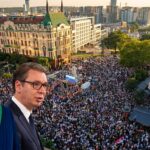
The final result was announced by Vučić himself, who appeared from his party headquarters announcing the defeat. According to the projections developed, the Student List obtained approximately 138 seats out of the total 250 in the Serbian Parliament. Vučić’s Serbian progressive party instead obtained 104: the remaining seats went to groups representing ethnic minorities.
But the significance of this result goes far beyond the redistribution of seats in Belgrade’s parliament: it represents a rejection of the political model that has dominated Serbia for more than 12 years. Vučić, in fact, has been in power since 2012: initially as deputy prime minister with responsibility for defense and security (2012-2014), then as prime minister (2014-2017) and finally as president of the Republic. In this period, Vučić consolidated a system in which his party exercised a strong influence on institutions and the media, to the point that under his government Serbia was classified as an “electoral autocracy” by the Swedish V-Dem institute, while today Serbia ranks 104th in the world for press freedom: it is last among the 40 European and Balkan countries.
Among other things, due to growing social pressure, Vučić had called early elections in September 2026, thus deciding to resign from the presidency of the Republic to run again as prime minister (given that the Constitution prevented him from a new mandate as Head of State).
Serbia’s new political footprint, however, will still have to be structured, especially as regards foreign policy: the new government will have to find a balance between China (main investor in the country), Russia (historical ally and main gas supplier) and the European Union (main commercial partner), for which Belgrade is a candidate country for membership.