Two worlds coexist in the wine market: on the one hand large productions, built on replicable volumes and standards; on the other, independent farms, where each bottle bears the mark of a place and of those who work it.
For these realities, craftsmanship is a business model, based on agronomic and commercial choices that are measured over the years: a model that attracts the growing attention of restaurateurs, enthusiasts and purchasing groups.
Artisanal wine, the territory as a productive resource
Talking about artisanal wine means starting from the land. The French have a term for it, terroir: the combination of microclimate, exposure and soil composition that makes each viticultural area different from the others. The same vine, grown in different areas, gives wines with different characters, and the producer’s task is to read these peculiarities and transform them into identity.
In Tuscany the most obvious example is Sangiovese, the main grape variety of the region, which changes shades depending on the area in which it grows. Alongside it there is a heritage of native vines cultivated for centuries, such as Canaiolo, Trebbiano and Malvasia, which independent companies have brought back to the center of their offer.
This is done, for example, by the Azienda Agricola Campriano di Murlo, in the province of Siena, which works exclusively with local and native grapes. For those who purchase, from the restaurant that creates the wine list to the private individual who buys directly from the producer, this variety represents a value: labels linked to a recognizable area and an identifiable name.
Tradition and innovation, a choice of corporate vision
Quality Italian wine as we know it is also the result of a crisis: the methanol scandal of 1986 hit the reputation of the entire sector hard and, in the following years, pushed wineries to invest in quality, technique and control of the supply chain.
From that reconstruction phase a new season of Italian winemaking was born, more attentive to the vineyard and more open to foreign markets. In the nineties, however, many Tuscan producers chose to combine historical grapes with international varieties such as Cabernet and Merlot, chasing global taste.
Others, like Campriano, took the opposite direction and remained faithful to the local vines. That phase today invites us to reflect on an entrepreneurial nature: in viticulture every decision, from the choice of the grape variety to the planting of a vineyard, produces effects for decades. Innovating, from this perspective, means updating cultivation and cellar techniques while preserving the material that the territory has selected over time.
Campriano, a castle between Crete Senesi and Val di Merse
The company is located in a castle of historical interest, documented since 943 along the ancient route that connected Siena to the Maremma, on the border between the Crete Senesi and the woods of the Val di Merse. The Neri family purchased it in 1911.
At the helm is Ranuccio Neri, entrepreneur and oenologist, the first in the family to deal with wine professionally. After studying agriculture with a focus on viticulture and oenology, he continued his technical training abroad, in California, before dedicating himself full time to the company; since 1994 it has been present at sector fairs.
The choice to focus exclusively on local historic grapes (Sangiovese, Canaiolo, Trebbiano, Malvasia and Aleatico), taken with foresight when the trend was going elsewhere, has remained the company’s line to this day. In the vineyard his decisions look at 30-40 year horizons: for him innovation concerns production and viticulture techniques, while the vines inherited over the centuries are the heritage to be valorised.
Elegance and drinkability, Ranuccio Neri’s production philosophy
The entrepreneur’s vision is reflected in the style of the wines. The company renounces extreme concentrations and products designed for meditation to focus on elegance, freshness and drinkability, with labels that find their natural space at the table, every day.
A choice that dialogues with the reference market, made up of restaurants, private individuals and purchasing groups interested in the artisanal productions of independent producers.
The work follows the cycle of the vine throughout the year, from winter pruning to monitoring ripening in the 30-40 days preceding the harvest, between the end of September and the beginning of October.
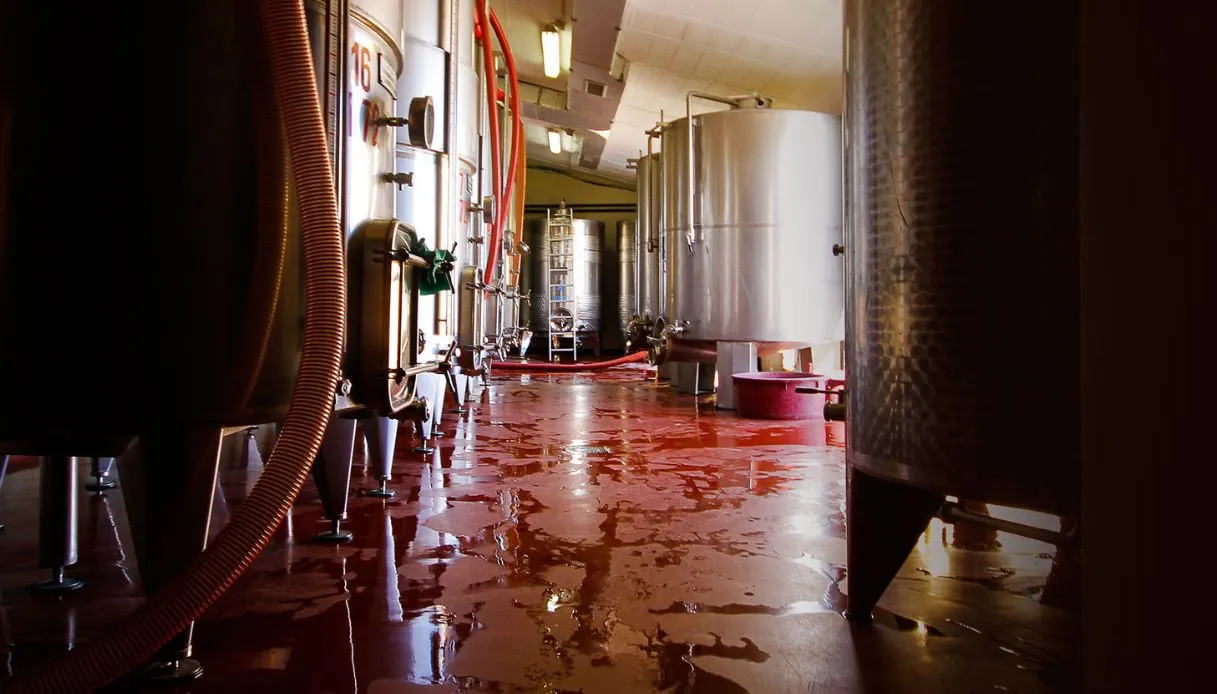
In the cellar Neri personally follows every phase, from destemming to fermentation. Wine, in his vision as an expert producer, is a sum of sciences (from botany to chemistry to physics) which always retains a certain amount of unpredictability.
The same approach guides the Amici Restaurant Bar in Campriano di Buonconvento, managed by Neri: a place designed on the model of the Tuscan taverns of the past, warm, informal and convivial, where time slows down and local cuisine meets the wine bar. Here you can taste the company’s labels and purchase Campriano wine and oil directly.
In wine, craftsmanship is built over time, through choices that require patience and consistency before bearing fruit. For independent producers, tradition, supported by up-to-date technical skills, becomes a competitive advantage, and places like Campriano demonstrate that linking your name to a territory remains a business strategy capable of looking far ahead.