Italians spend more and more on leisure and on products such as travel and communications, which means IT and telephone equipment. Three sectors, however, are growing less and are unable to reach pre-pandemic levels. In general, according to the analysis conducted by the Confcommercio research office, Italian families have returned to spending and are spending more, with an increase of approximately 314 euros compared to 2024.
An analysis that must be read as a whole, between the declines and increases that shape the behavior of Italians over the last three decades. Confcommercio’s photography is ultimately positive, but not everyone thinks the same way. Missing between the lines of the 2025 analysis are all the elements of the uncertainty of 2026, from the start of the conflict in the Middle East to the chain of events that followed. However, Maurizio Landini, secretary of the CGIL, looks beyond the last few months and comments on the data of the four years of the Meloni government so far.
Consumption by Italian families is growing
The analysis of the Confcommercio study center opens with a necessary “where are we at” compared to 2025, which is the object of the analysis conducted. In fact, it is inevitable to look at last year’s data with a slight nostalgia compared to the turbulence that is characterizing 2026.
In fact, Confcommercio speaks of fear of strong slowdowns in global economies for 2026 and 2027, thus repeating the trend of 2022-2023 after the invasion of Ukraine. While many analysts speak of a possible recession, the research center has a less pessimistic assessment.
In fact, he writes that Italy, which in theory is among the most fragile countries, has responded well to the international crisis. It works because:
The production context, although not at exceptional rates, continues to show signs of improvement and has favored the persistence of positive dynamics in the labor market.
In fact, it was precisely the increase in employment and wages, according to the analysis, that drove the consumption trend of Italian families in 2025 and, if conditions remain, also in 2026.
Tourism appears to be the driving force, with a clear improvement given by the important sporting event of the Milan-Cortina 2026 Winter Olympics which took place in the country.
The study center, therefore, confirms a substantially positive general picture, but underlines that the risks and unknowns of an autumn that brings with it the difficulties of a spring and summer marked by global uncertainty should not be overlooked.
Increase spending
Returning to the territory of the purchasing habits of Italians, the study center analyzed the data released annually by Istat to estimate the real overall spending per capita.
Spending, after the decline recorded between 2007 and 2019, in recent years has started towards a gradual recovery which should materialize in mid-2026 (even if the data is not yet available).
The driving force, as we underlined at the beginning, is the employment front: from the minimum in January 2021 (data in the midst of the pandemic) employed people have increased by over 2.2 million.
Thus, the real income of families also increases, showing a growth profile of 1% in 2026.
|
According to estimates for 2026, a positive change in consumption of around +1.2% is expected, which in numbers translates into a per capita expenditure of 286 euros more from a territorial perspective and 154 euros more from the perspective of resident spending.
What do Italians buy?
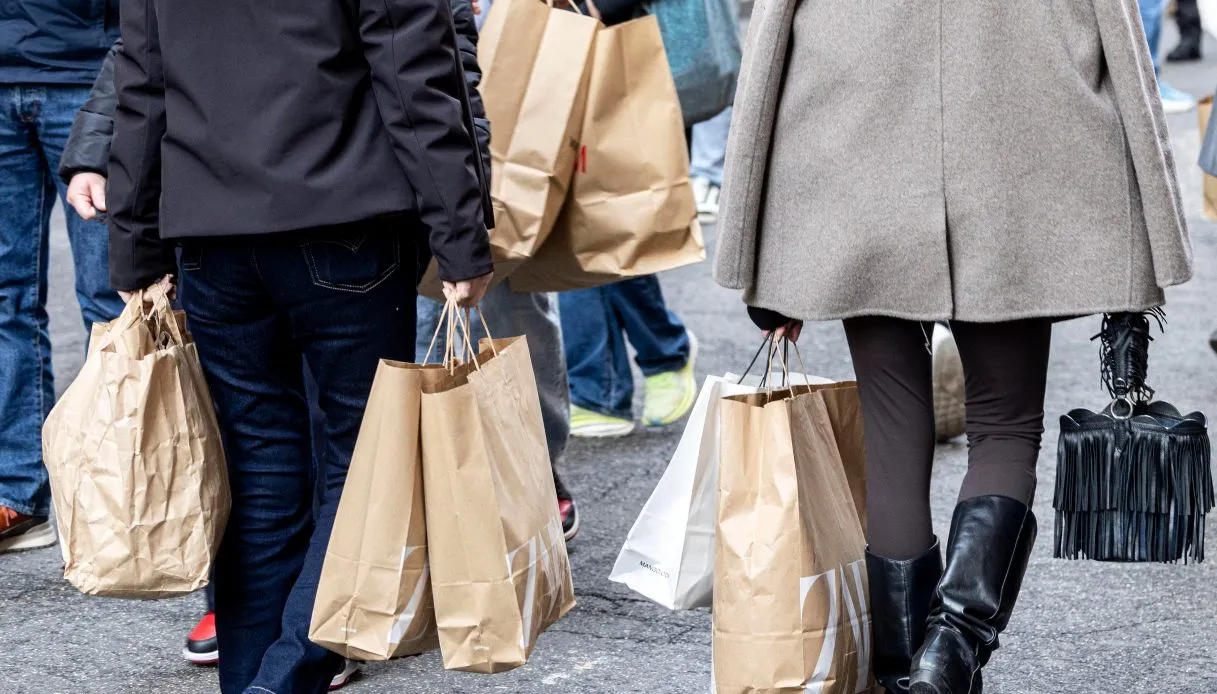
The habits of Italians have changed over time. In the post-pandemic period, spending on services and out-of-home leisure spending increased.
Italian families, therefore, spend less on traditional physical goods and increasingly more on services related to leisure and technology.
Technology and leisure sector
The greatest growth trend is seen precisely in the technology, telephony and IT sectors, for which Italians spent less than eight euros thirty years ago and today even more than 250 euros per capita.
Consumption linked to leisure time is also increasing, which includes audiovisual and multimedia products, recreational and cultural services, travel and holidays. Today the estimate of purchase volumes has doubled compared to 2007, when it was around 394 euros.
Tourism is once again the driving force of consumption, together with technology. Two macro-sectors which, however, are often influenced by another phenomenon, namely installment purchasing. Italians are increasingly getting into debt to be able to travel or to update their devices with the latest model.