Analysis says that more and more people are relying on mobile applications when it comes to health. These are increasingly widespread apps, also as a support for diets: in this case we are talking about a share of applications that seems to exceed 10% of the total market. The objective of these supports is to try to create positive “nudge” systems, convincing people to change their eating habits.
But what characteristics should these tools have? An answer comes from an original study that evaluated two specific features of these Apps: the research therefore helps to define what could really be needed in this market and was conducted by researchers from Carnegie Mellon University, Hofstra University and the University of California in Irvine. The investigation appeared in International Journal of Information Management.
Building loyalty is difficult
Thanks to the constant connectivity and multimedia capabilities of smartphones, it is easy for diet apps to offer features that promote social connection. For example, these models favor direct contact with experts for comments on what is being done or provide personalized and proactive suggestions.
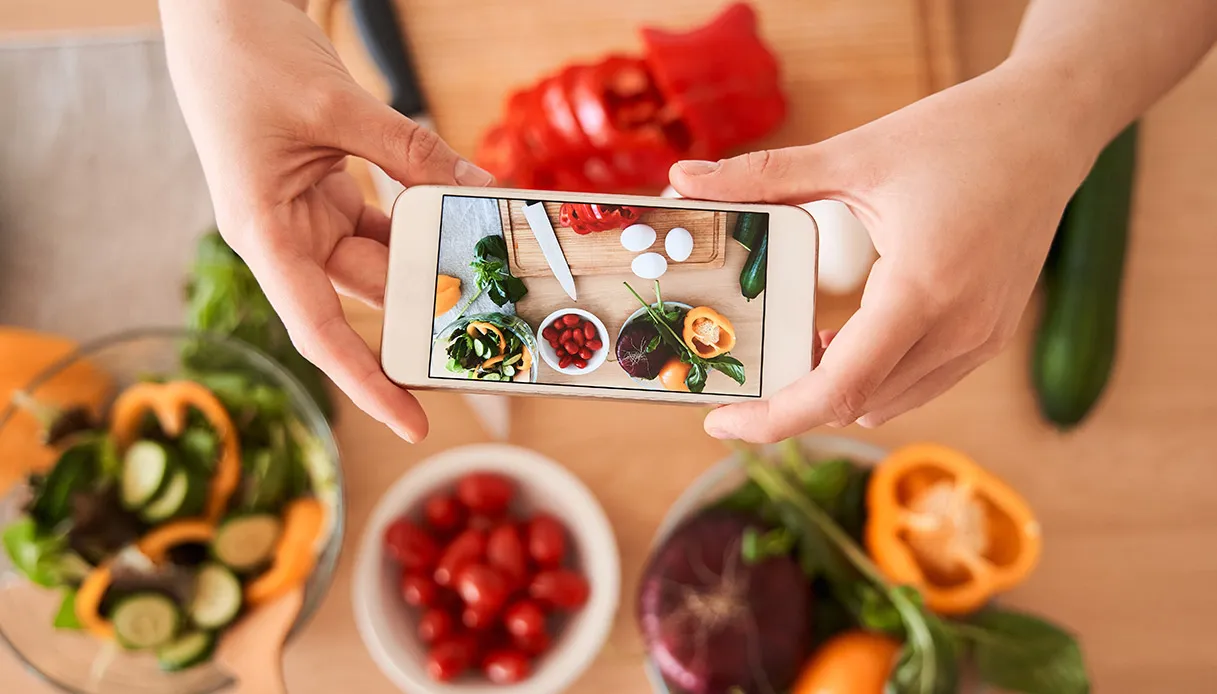
But in any case, diet apps struggle to retain users. And the analysis has focused precisely on this side. The researchers found that the healthy eating behaviors of nearly 350 adults were influenced, directly or indirectly, by two social features over a four-month period. The features in question were photo-based expert feedback, which provided personalized, proactive feedback on users’ meal photos, provided by a dietician, and photo-based peer observation, which allowed users to observe meal posts shared by others on a photo-based social platform.
Between images and games
As we are increasingly seeing, social sharing occurs above all through photographs. And even for apps dedicated to dieting this sharing tool appears to be increasingly widespread. But be careful. Photo-based expert feedback increased App usage and increased retention, slowing user churn over time. Not only that: even if there was no improvement in terms of nutritional balance, the process of recording meals was still improved.
In short, one can think that knowing that one is guided by specialists represents a support for users in self-monitoring, thanks to the presence of an authoritative guide, if no particular changes are shown in behavior at the table. much less effective, according to this analysis, would be the sharing of photos in the community of peers. You feel less involved, according to research, especially if your eating habits are already not particularly healthy. In short, the expert is always needed, even if only for an opinion on the images proposed.
“Other persuasive system design strategies, such as gamification, goal setting, and self-monitoring, focus on individuals, but peer- and expert-based persuasion involves interpersonal social interactions, and the dynamic nature of these social interactions can foster a kind of social contagion of healthy behaviors.”
is the opinion of study coordinator Yi-Chin Kato-Lin, of Hofstra University, in a press note.
Be careful not to “self-deceive”
Another research, which appeared some time ago on Journal of the Association for Consumer Researchinstead try to understand how much and how we are able to “agree with ourselves”. In fact, if a small subterfuge, in good faith, allows us to improve our self-perception we don’t really get stressed.
The study looked at 288 college students who were given menu information about three days of meals, such as three pancakes with butter, and were instructed to enter calorie information into a food tracking app. The students were divided into two groups. One included meal calorie counts, the other did not. The App listed five potential calorie options for each food item entered. For example, calorie counts for the three pancakes with butter ranged from 300 to 560 calories. The group without specific calorie information could have averaged the five options to compensate for the missing information and get a better idea of the true caloric value of each meal. but it didn’t happen that way. In general, the “free” participants on average entered a smaller quantity of calories into the app, almost as if to justify themselves, compared to those who had the exact calculation of calories.
So sometimes we choose the path of small cheating. And the Apps certainly cannot correct us even if we are not aware of what is happening. The final advice is simple: you need to rely on your doctor for truly healthy weight and well-being control.