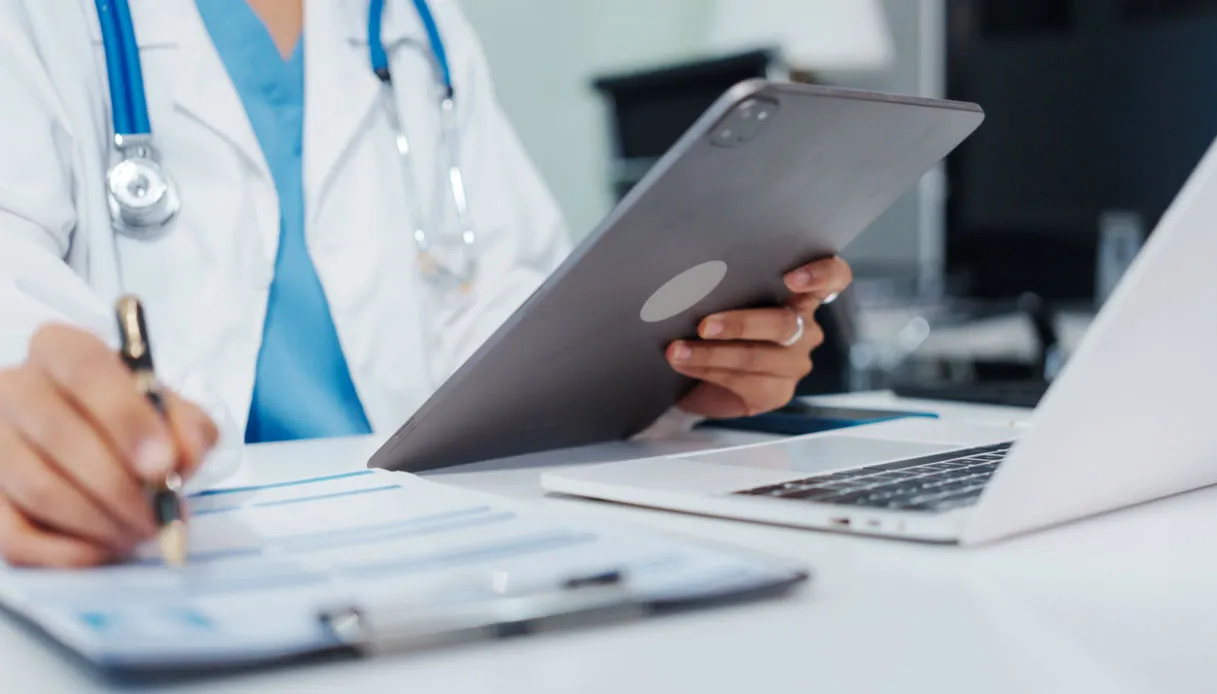
The last operational step of the electronic health record, one of the key tools for the digitalisation of Italian healthcare, begins on March 31st.
The goal is to reach full capacity by June, but new rules involving doctors, healthcare facilities and citizens come into force as early as March.
What is the electronic health record and why is it important
The system thus enters its definitive phase, even if there remain differences between territories and still limited use: less than half of Italians have authorized access to their health data and only a minority actually uses the file.
The electronic health record (EHR) is a digital collection that contains the citizen’s entire medical history. An always updated archive that allows you to track visits, tests, therapies and hospitalizations over time.
The goal is to create a sort of healthcare memory accessible quickly and safely, improving the quality of care and reducing waste and duplication.
What changes from March 31st
The most significant innovation concerns the obligation to adapt for all healthcare facilities, including private ones.
From the end of March:
- all health documents must be produced in standard format;
- the reports must be uploaded within a few days of the service;
- digital signature is mandatory;
- the data must be transmitted to regional portals.
The obligation no longer concerns only the structures affiliated with the National Health Service, but also:
- private medical practices;
- polyclinics;
- analysis laboratories;
- unaccredited clinics.
Turning point for health emergencies
Among the main innovations is the synthetic health profile, a sort of citizen’s health identity card.
It is filled out by the GP and contains essential information such as:
- chronic pathologies;
- allergies;
- ongoing therapies.
This document can be consulted even without explicit consent in the event of an emergency, allowing doctors to intervene quickly and with greater precision.
The benefits for citizens
For patients, the electronic health record becomes a concrete tool for managing their health.
It allows you to consult reports and analyzes online, avoid duplicate tests, save time and costs and, finally, add personal documents, including private or foreign ones.
It also includes a personal area where you can enter notes on lifestyle, health parameters and data from wearable devices.
The benefits for doctors and professionals
For doctors, the main advantage is access to the patient’s complete medical history.
This allows us to improve diagnoses and therapies, reduce unnecessary tests and intervene more quickly in urgent cases.
The services available
The electronic health record is not just an archive, but a real service platform.
Among the main features:
- booking visits;
- ticket payment;
- choice or change of primary care doctor.
Approximately 21 types of documents are available, including:
- laboratory and radiology reports;
- letters of resignation;
- first aid reports;
- prescriptions;
- vaccination certificates.
How to log in
Access takes place via Spid identity, Cie or health card. The owner can delegate up to five people to manage the file, a particularly useful function for the elderly or frail people. For minors, management is the responsibility of the parents. For protected subjects, to the legal representative.
It is also possible to verify who has consulted the file, ensuring total transparency.
For the majority of Italians, the silent consent mechanism is already active: the health data has been automatically uploaded. However, you can always change the permissions.