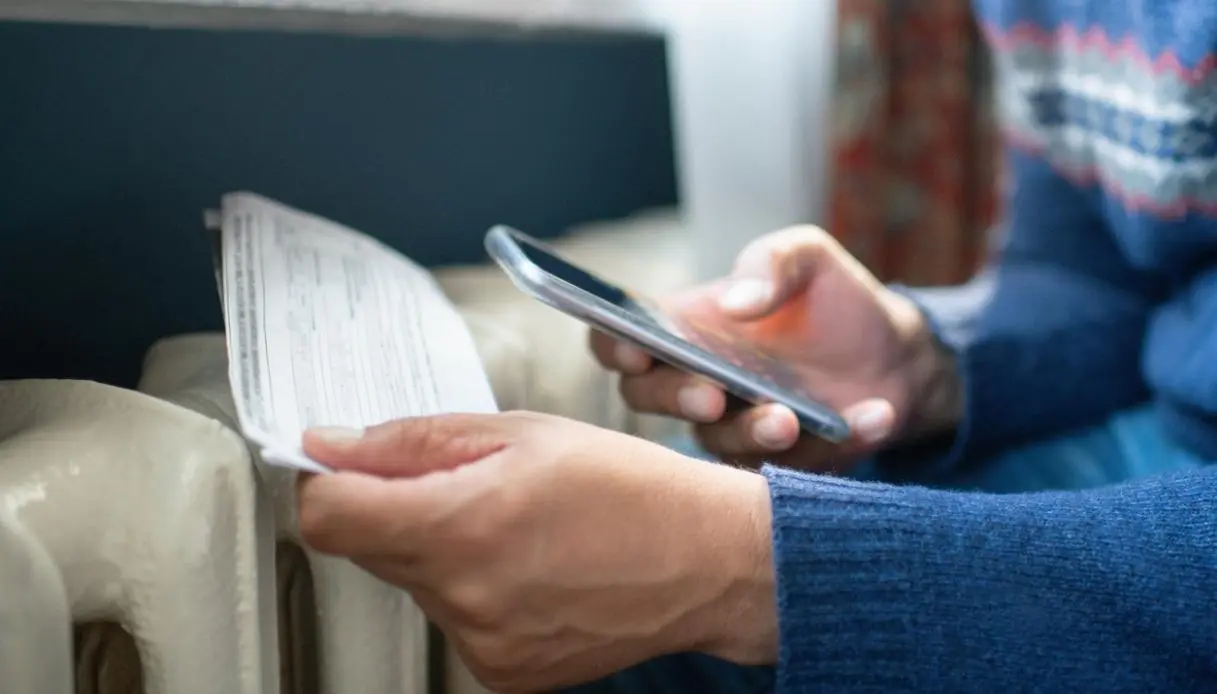
In Italy over 5 million people live in a condition of energy poverty. These are around 2.4 million families who struggle to pay for electricity and heating. The phenomenon concerns households that are unable to maintain an adequate level of essential energy services or that allocate too high a portion of their income to paying bills.
According to the analysis of the CGIA-Mestre research office on Istat and Oipe data, this is an increasingly widespread condition, linked both to low incomes and to the increase in energy prices.
The regions most affected by energy poverty
The difficulties are concentrated above all in Southern Italy. The most critical situation is recorded in Puglia, where over 18% of families are involved, followed by Calabria and Molise, with percentages exceeding 17%.
On the contrary, the least affected regions are Marche, Friuli Venezia Giulia and Lazio, where the incidence is more limited. Overall, the phenomenon affects 9.1% of Italian families, but with strong territorial differences.
The increase in gas and electricity prices played a central role. In 2025, costs grew by 6.3% and 6.7% respectively compared to the previous year. According to the CGIA, the recent increases are also linked to international tensions, with direct effects on the energy markets.
In March the price of gas reached 53 euros per MWh, while electricity stood at 143 euros per MWh. This increase in energy costs translates into an overall burden for families estimated at over 5 billion euros compared to the previous year, with a growing impact on domestic budgets.
The most exposed categories and the double weight for the self-employed
Among those most affected are single elderly people, large families and families with unstable incomes. Added to these are artisans and small traders, who often suffer a double impact. As highlighted in the study:
The vast majority of artisans and small traders pay the expensive bills twice.
On the one hand as families, on the other as economic activities. This double exposure affects company margins and leads, in many cases, to reducing consumption or postponing investments.
What it means to be in energy poverty
Energy poverty affects not only income, but also housing conditions and energy prices. It occurs, for example, when a family lives in an inefficient house and has to pay high costs for heating. In other cases, the problem manifests itself with the so-called “under-consumption”: to save money, essential services such as heating or cooling are given up. A further sign is the difficulty in paying bills, with delays or accumulation of debts, up to the risk of supplies being disconnected.
Forecasts indicate a further increase in energy costs. In 2026, overall household spending could grow by over 5.4 billion euros compared to 2025 and by 6.6 billion compared to 2024. The regions most penalized in absolute terms are Lombardy, Veneto and Emilia-Romagna, where the largest increases were recorded.