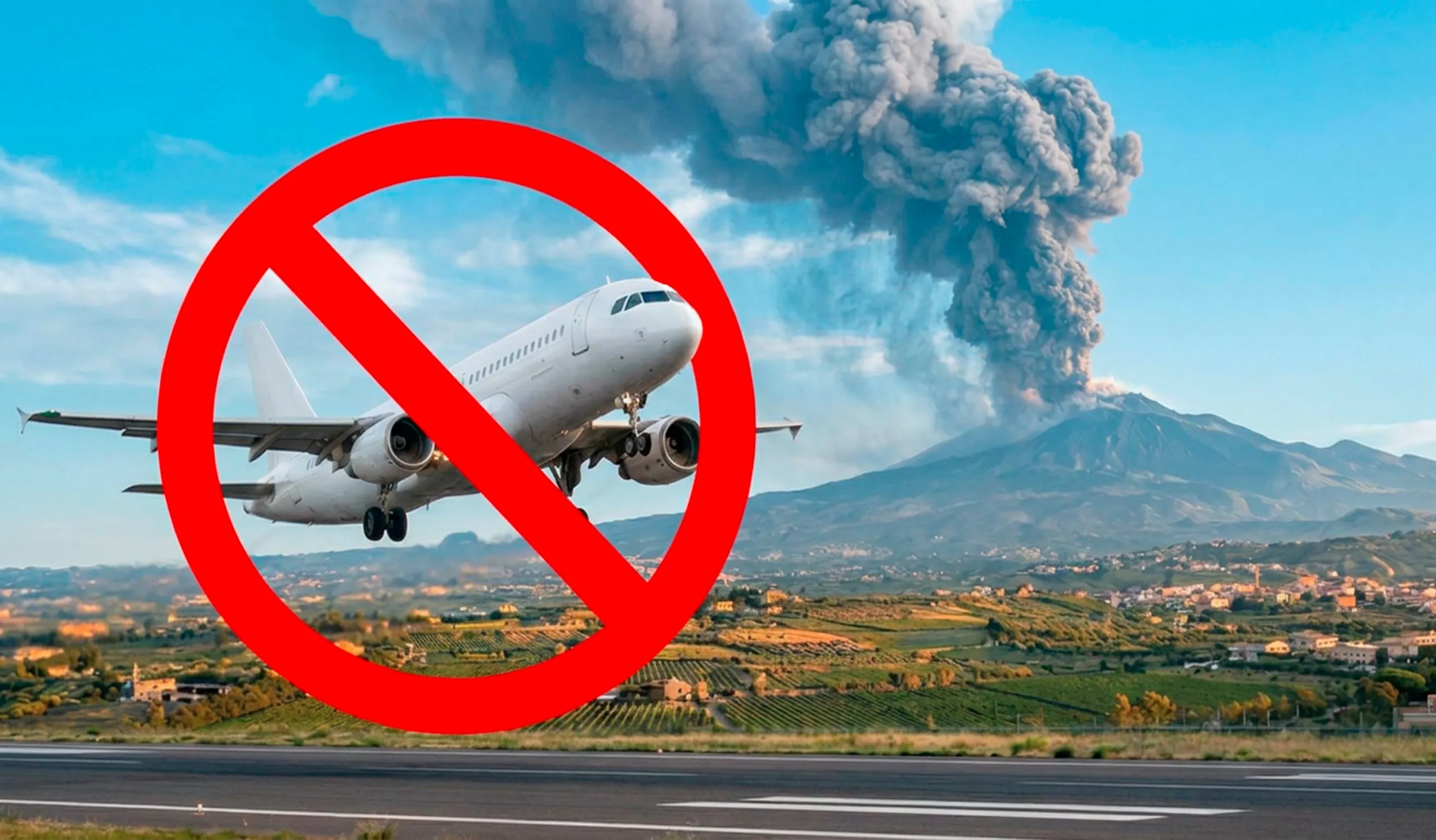
Catania-Fontanarossa “Vincenzo Bellini” airport has announced through an update that departures and arrivals will be suspended until 02:00 on August 14th. In fact, since 6 August Etna has started a new eruptive phase, characterized by explosive activity at the Voragine crater, by lava fountains and above all by abundant clouds of volcanic ash. This made flight operations too risky, forcing the authorities to block the activities of the airport – the fifth most important in Italy – ruining the holidays of over 100 thousand people.
The closure of Catania airport due to the eruption of Etna
As also confirmed by the analyses Corriere della Serafrom 8 to 11 August at Catania airport at least 388 departing flights were cancelled (55% of the total), while another 212 did not land (approximately 30% of the total).
At the moment the most affected companies are Ryanair, Wizz Air, easyJet And ITA Airways, i.e. those that had the greatest number of flights scheduled. Many of their passengers were diverted to Comiso and Palermo, forcing them to reach their original destination by alternative means, such as buses (provided by the same airlines) or taxis. However, several testimonies tell how the number of passengers diverted is so high that it makes it extremely difficult to find an available vehicle, be it public or private.
What happens with flight cancellation and how refunds work
What happens in case of cancellation? If this were to happen, either re-boarding on an alternative flight – if any – or a refund of the ticket is expected, but no financial compensation. In fact, it is good to remember that the eruption of Etna falls within the “exceptional circumstances” envisaged by European regulations. This, in other words, exempts airlines from dispensing compensation for the inconvenience. However, the European regulation obliges companies to provide free assistance in the form of meals and drinks, hotel accommodation (if overnight stays are necessary), transport to and from the place of accommodation and the possibility of calling or sending emails.
Alternatively, if the company is unable to accommodate all requests, it is its duty to reimburse the expenses incurred by the passenger deemed reasonable and necessary – including transport costs from the hijacking airport to the intended one. The important thing is to keep all receipts and detailed receipts, which will then be attached to the appropriate form.
For days lost in hotels or other facilities, however, there is nothing to be done: the airline is not required to provide compensation. The European Regulation only covers transport disruptions, not what is called a “ruined holiday” – that is, everything you lose on the ground due to the missed flight. And if the inconvenience arose from force majeure, the issue becomes even more complicated: recovering the money for the unused nights depends only on the cancellation policies of the structure or platform where you booked, or on any travel insurance.