Estimates say that 7 to 10% of children have language or communication difficulties, from primary language disorders to phonological and learning difficulties. But don’t think that speech problems only affect the little ones. In adulthood, communication and swallowing disorders affect a significant proportion of people affected by stroke – around 100,000 new cases every year in Italy – as well as patients with neurodegenerative and oncological diseases. In short, we are talking about millions of people. AI can already help today, but above all we need to know the situation and act accordingly.
This is the message that comes from experts on the occasion of European Speech Therapy Day, which is celebrated on 6 March. To inform citizens and answer doubts and questions about language and communication problems, the Federation of Italian Speech Therapists (FLI), as every year, organizes a week of direct contact with the population: from 2 to 6 March 2026, speech therapists will be available to citizens through a dedicated telephone line, live Facebook chat and information and orientation initiatives throughout the territory.
The AI revolution
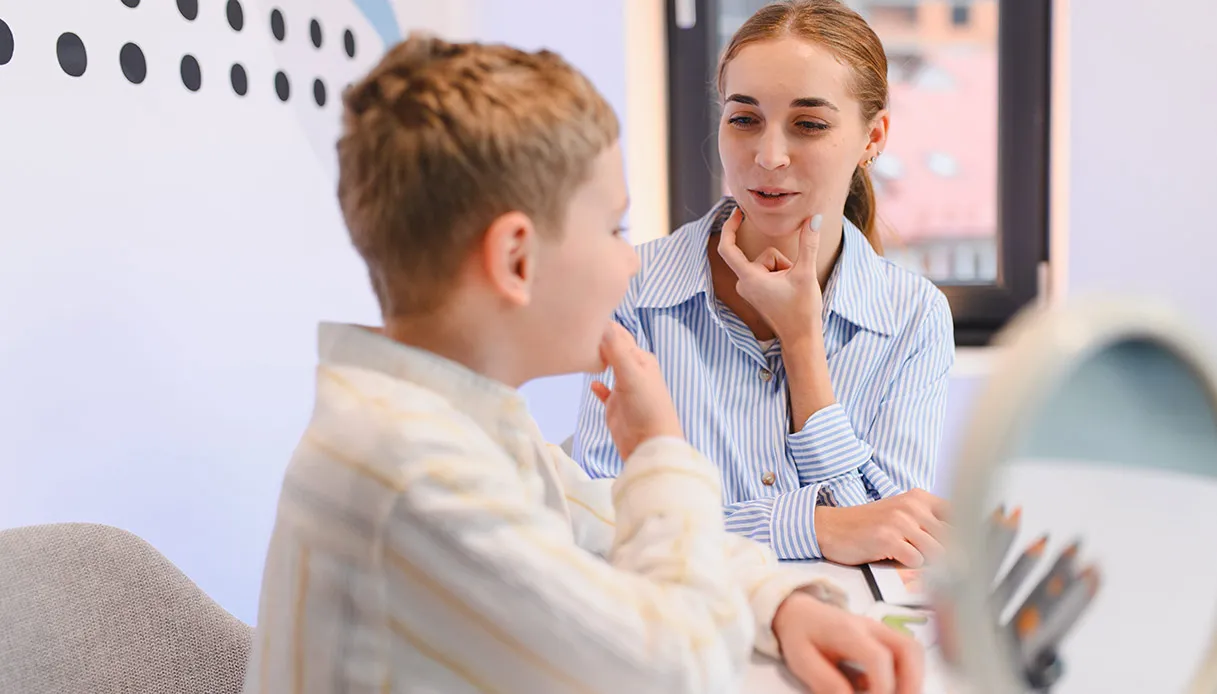
Artificial Intelligence is already applied today in the speech therapy field. Its use is therefore in a growing share of rehabilitation programmes, around two out of three, with the aim of making treatment courses more continuous, accessible and personalized, always under the guidance of the professional. We are talking about automatic speech analysis to evaluate and monitor, adaptive exercises between one session and another, even more efficient telerehabilitation tools to reach those who live far from services and support for the speech therapist’s daily activities.
“The first key point where AI has become very important in our work concerns the evaluation and monitoring of speech. Automatic voice and language analysis systems can support the speech therapist in measuring parameters such as intelligibility, phonetic correctness and fluency, facilitating comparison with the average of control subjects and over time between different phases of treatment, making the documentation of the progress of the parameters more objective and rapid”
explains Tiziana Rossetto, speech therapist and FLI national president.
A concrete example is the use of tools that allow speech samples from the same patient to be compared over time, making it easier to identify improvements, regressions or areas that need further intervention. This does not replace clinical observation, but strengthens it, especially in longer processes and speeds up transcription operations that would otherwise take hours. This is important not only for the clinic but also in the field of research where the support of AI has given great impetus to studies on language.
Remote treatments
Also important on the treatment front is the space that Artificial Intelligence can offer in terms of therapeutic continuity.
“Through digital platforms based on adaptive algorithms it is possible to propose personalized exercises between one session and another, increasing adherence to treatment and the active involvement of the patient and family, both in pediatric and adult pathways. The patient can carry out activities at home between one session and another, with an automatic modulation of the level of difficulty based on the answers. It is also possible to personalize the exercises based on the patient’s interests, for example by inserting images of the child’s favorite comics or the specific vocabulary of the hobby of the adult, maintaining high motivation and encouraging family participation”
specifies Raffaella Citro, speech therapist at the AOU San Giovanni di Dio e Ruggi D’Aragona in Salerno, FLI delegate in ESLA (European Speech and Language Therapy Association).
A third sector, closely connected to the second, concerns telerehabilitation, a method of providing treatment that is now quite widespread.
“The support of ‘intelligent’ tools, always monitored and verified by the professional, can make distance learning paths more structured and effective, promoting access to care even for those who live in areas far from services or have travel difficulties, helping to reduce territorial inequalities”
adds Rossetto.
Customized software
AI support is also used directly by the person with communication disabilities in daily life. Let’s think about the applications that read the written text or those that, listening to even atypical speech, transform it into a written message, or the voice banking systems that give a voice to those who no longer have one or that expand all the opportunities offered by Augmentative Alternative Communication. It is often speech therapists who develop, with the help of artificial intelligence, the software that supports the person with communication disabilities. Finally, a further facilitation concerns the management part:
“Artificial intelligence is already supporting us in our daily work, also on an organizational and communication level. For example, in the preparation of visually appealing and always new supports for the therapeutic session, in the synthesis of clinical data and the drafting of reports, in maintaining dialogue with families and caregivers. AI also supports us in writing information brochures for our patients, in our updating by summarizing selected scientific articles, in the translation of texts, in the administrative part by filling in forms and registers for us, freeing up time to dedicate to the therapeutic relationship, which in a speech therapist who uses words and signs is essential”
adds Luigi Marotta, speech therapist at the IRCSS Bambino Gesù Hospital, Santa Marinella and director of the FLI magazine ‘Logopedia e Comunicazione’.