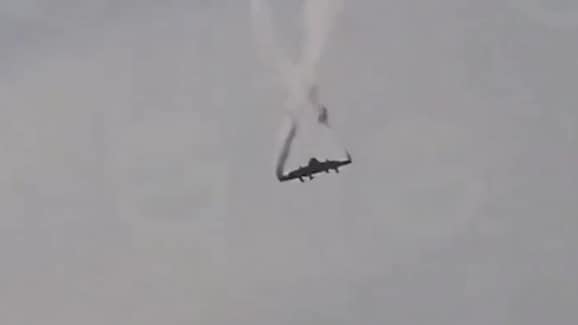
A Turkish Lockheed C-130 Hercules military cargo plane crashed on the border between Georgia and Azerbaijan while on its way to Turkey with 20 people on board: the dynamics of the accident, which occurred yesterday 11 November, has not yet been clarified by the Turkish authorities, who have started an investigation into the disaster and this morning confirmed the death of all 20 soldiers on board the aircraft, in the Turkish Air Force since 2010 and previously in service with the Air Force of Saudi Arabia. The plane crash, however, immediately triggered a series of speculations on possible enemy acts or sabotagegiven the strategic position of the place where the crash occurred, an area of particular interest for various regional powers, from Russia to Iran.
The first inspections – reported by the Turkish media – excluded the presence of ammunition on board, dispelling the hypothesis of an explosion that occurred inside the plane, which would have been visible already by analyzing the remains of the aircraft that fell in the Georgian town of Sighnaghi, about 5 km from the border with Azerbaijan. Meanwhile, the discovery of the black box has been confirmed.
At the moment, therefore, to have a more complete picture it will be necessary to wait for the outcome of the official investigations conducted by the Turkish authorities.
The reconstruction of the flight operated by the Turkish C-130
According to data tracked by Flightradar24the Turkish military plane – C-130 Hercules model – took off from Ganja international airport, in Azerbaijan, at 2.19pm local time (11.19am in Italy). The aircraft was headed to Türkiye: after approximately 22 minutes, at 2.41pm, the C-130 reached a cruising altitude of approximately 24,000 feet (approximately 7,315 metres).
After entering Georgian airspace, at 2.49pm (30 minutes after take-off), the military plane traveling at around 519km/h disappeared from radar, without transmitting any emergency signal. According to reconstructions, therefore, the commanders did not report any particular dangerous situations on board nor did they send distress messages before crashing.
The data available so far suggests a rapid descent during the last seconds of flight, with a vertical speed exceeding 19,000 feet per minute.
Because hypotheses of sabotage have arisen behind the accident
Immediately after the crash, Turkish and international media started talking about possible sabotage and enemy attacks against the Turkish military plane. Indeed, the area where the C-130 Hercules crashed, on the border between Georgia and Azerbaijan, is a space in which several regional powers – including Russia and Iran as well as Georgia and Azerbaijan – maintain a strong geopolitical interest.
Reinforcing the sabotage hypothesis is the fact that the C-130 Hercules military aircraft model is particularly known for its resistance to particularly adverse conditions – including meteorological ones – and has rarely suffered fatal failures, with the exception of a few fatal accidents caused mainly by human errors.
But conspiracies about a possible “external attack” spread further after Turkish academic Deniz Ulke Kaynak pointed out in a post on X that:
Planes do not disintegrate in flight without internal or external intervention. Either something exploded inside them (perhaps a transported ammunition load), or they were hit. If there is an attack or sabotage, may the blood of our children not go unpunished.
In a second post, Kaynak then partially recanted on the sabotage issue, specifying that:
It is not correct to immediately speculate on Russia, Israel, Ukraine or Iran, just because there is the possibility of sabotage. The plane may also have been destroyed by an explosion of internal material. Also, let’s not forget that friendly fire may have occurred, and that region is an arena for drones. A collision may also be possible.
In reality, several Turkish media, citing sources within the Ministry, confirmed that the military plane was exclusively carrying spare parts for a Turkish F-16 fighter, involved in the Baku military parade on 8 November from which the soldiers were returning: therefore, there were no ammunition or explosives on board.
Furthermore, the initial inspections would not have revealed signs of external impact or any explosions on the fuselage of the plane: as many experts have highlighted, if the C-130 had been hit by an explosive device, this would have left clear traces on the body of the plane.
Immediately after the incident, Turkish President Erdogan expressed his condolences for the “martyrs” (in Turkish şehidin) who lost their lives during the accident: this translation immediately fueled rumors of sabotage and external attack. Actually, the term şehidin it is always used by the Turkish government to indicate soldiers who died in service, just as in the case of the plane crash on November 11th.
At the moment, therefore, the hypothesis that the plane crash was caused by an internal explosion or an enemy attack remains a mere conspiracy: we will only be able to know more about the dynamics of the accident after the official investigations have been closed.