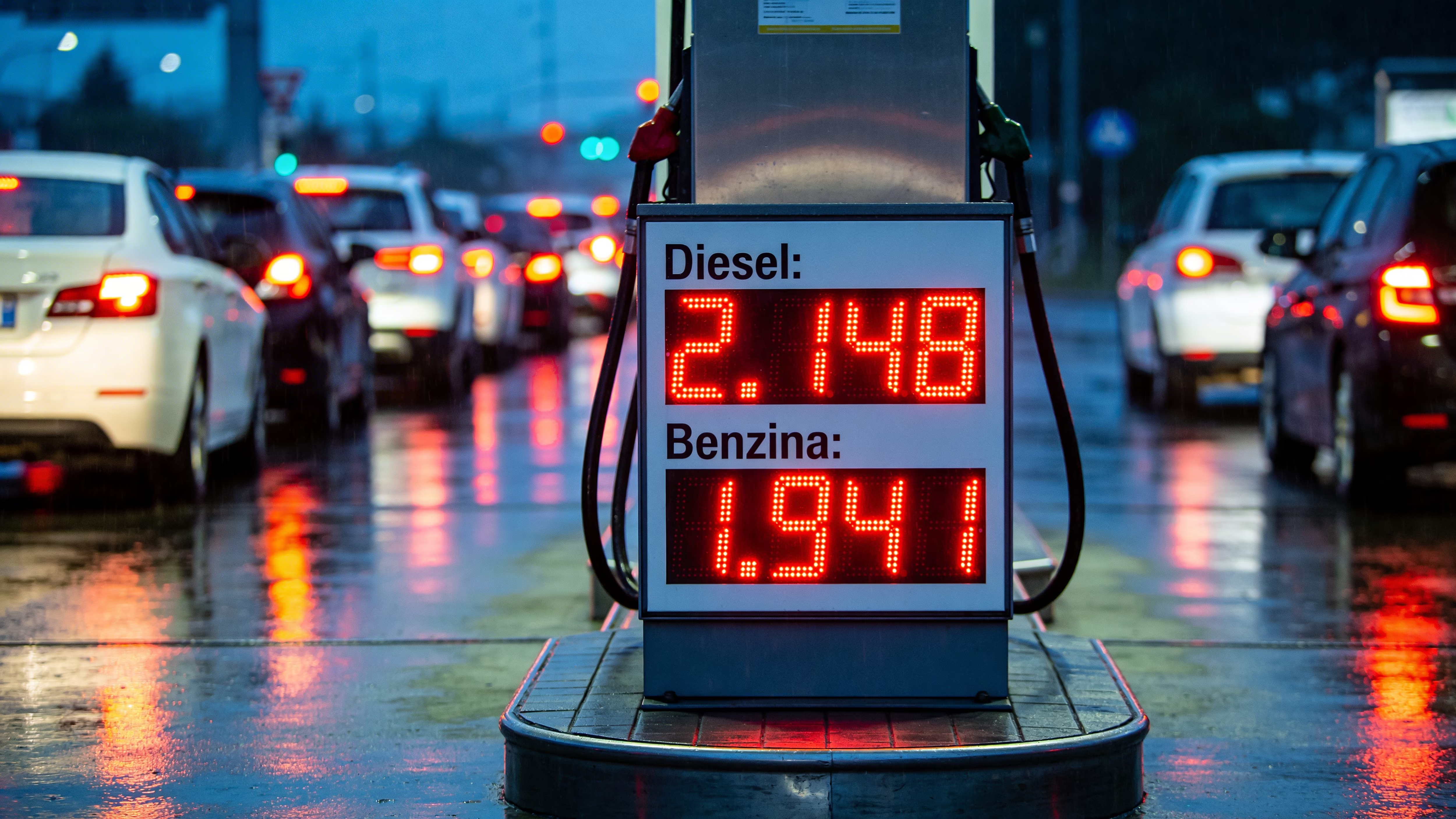
Every time a conflict breaks out, petrol pumps become the most immediate thermometer of the crisis. It happened in 1973 with the Arab embargo, in 1990 with the Gulf War, in 2022 with the Russian invasion of Ukraine. And it’s happening now, with the war in Iran. Since the United States and Israel attacked Tehran, fuel prices in Italy have not stopped rising. Diesel fuel hit its highest figure since March 2022, when the Draghi government was forced to cut excise duties to stem price increases. Petrol is at its highest since August 2024. The exchange rate is also pushing prices further: the euro is at its lowest against the dollar since August 2025, and since oil is bought in dollars, every cent lost from the single currency is transferred directly to the price at the pump. The Meloni government is evaluating countermeasures, but a general cut in excise duties seems excluded: the most probable hypothesis is a fuel bonus for lower incomes.
Increases in the cost of fuel in Italy
To understand the extent of the increases you need to look at the individual brands. According to Staffetta Quotidiana’s survey, Eni has once again exceeded the 2 euro per liter mark on diesel, after a couple of weeks below: on petrol it remains around 4 cents below the competition, and between six and seven below compared to the other main brands. IP has increased the recommended prices of both petrol and diesel by 2 cents per litre. Q8 saw a rise of 5 cents on both fuels. The most significant adjustment is that of Tamoil: +4 cents on petrol and even +8 on diesel.
Translated into concrete costs, according to Codacons estimates, a single tank of diesel costs 17.3 euros more today than before the outbreak of the conflict in Iran — diesel has seen a surge of 32.3 cents per litre. On an annual basis, calculating an average of two refuelings per month, the total burden for each motorist reaches 415 euros. A net subtraction of purchasing power which, through transport costs, risks fueling a new inflationary spiral.
Petrol and diesel prices today by region
The data updated to 17 March 2026, processed by the regional surveys of the Ministry of Transport, show this picture on the national road network.
On the motorway prices continue to rise. According to ministry data updated to March 17:
- Self-service petrol: €1,941/litre (served 2,178)
- Self-service diesel: €2.148/litre (served 2.385)
- LPG served: €0.836/litre
- Methane served: €1,537/kg
Excise duties and fuel bonuses: what the government is deciding
The government’s response starts from a choice of field: no general cut in excise duties. Business Minister Adolfo Urso justified this position with an uncomfortable precedent. In 2022, the Draghi government tried the same path and kept excise duties cut for months, with spending approaching a billion euros per month: inflation did not stop, and according to the Chamber Budget Office, it was above all the wealthiest families who benefited from it, those who consume the most fuel. What the government is building instead is a tailor-made protection system.
- The first pillar is a petrol bonus for families with ISEE under 15,000 euros.
- The second are tax credits for hauliers and companies most exposed to energy prices, to prevent the increases from being passed on to the prices of goods.
- The third instrument, technically more complex, is the mobile excise duty: a mechanism that lowers excise duties using as coverage the increased VAT revenue that the State automatically collects when prices rise. Deputy Prime Minister Antonio Tajani has left this door open, but with a practical constraint: the extra VAT revenue will only be accounted for at the end of the month, which makes immediate intervention difficult.
On the opposite front, both the opposition and consumer associations contest the slowness of the response. Codacons has calculated that with prices at current levels the State collects 9.5 million euros more every day than at the end of February, while motorists spend 16.5 million more. The association defines the bonuses as an insufficient remedy, recalling that the 2022 excise duty cut — the one that Urso cites as a failure — actually brought an overall saving of around 4 billion euros for consumers and contributed to bringing inflation down by half a percentage point. Elly Schlein attacks on a political level, demanding that the extra revenue be returned to the citizens immediately.
The dossier is still open. A decisive step will be the European Council on 19 and 20 March, from which a coordinated response between member countries could emerge to contain energy prices. If nothing concrete arrives, the pressure on the Italian executive is destined to increase: with diesel fuel not falling below 2 euros, every week that passes has a political as well as economic cost.