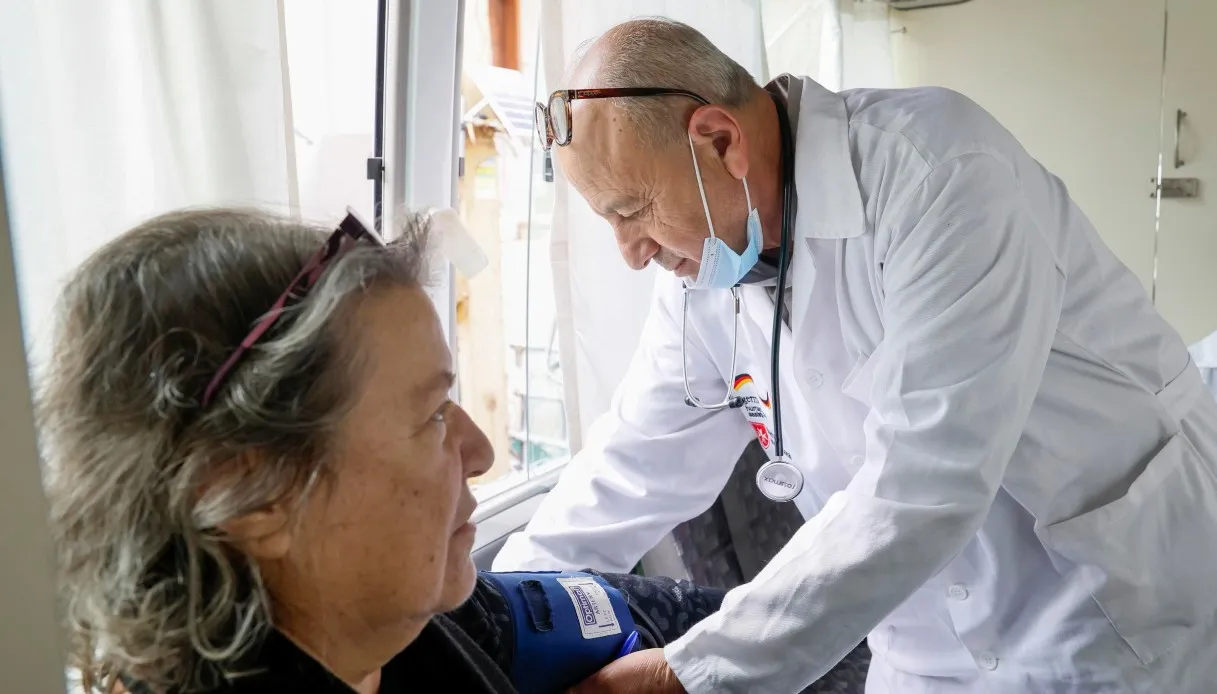
The Minister of Health, Orazio Schillaci, presented to the Conference of Regions the draft of a legislative decree that redesigns the role of family doctors in Italy. The measure aims to make them the fulcrum of the new Community Houses. The objective is clear: “Hurry up quickly to give Italians healthcare that is more efficient and closer to citizens, especially the most vulnerable”, explained the minister.
The dual channel model
The central theme of the decree is a mixed system, based on two parallel tracks. The agreement with the local health authorities remains the ordinary model, but is profoundly reformed. Alongside this, a form of selective dependence is introduced: doctors will be able, on a voluntary basis, to become public employees of the National Health Service, as already happens for hospital doctors.
This is not an obligation, but a gradual and planned path, designed to cover the most complex functions from an organizational point of view, such as:
- the hub and spoke Community Houses;
- integrated continuity of care;
- territorial coordination;
- the structured care of chronic and fragile patients.
In the transitional phase, the local health authorities will be able to hire general practitioners already in service on a permanent basis, provided they also have a specialisation.
New obligations and new remuneration
The reformed convention introduces a series of minimum obligations for doctors who choose to remain in the ordinary channel:
- activity planned in the Community Houses
- participation in the territorial network
- use of interoperable information systems
- taking care of chronic and fragile patients
- adherence to audits, checks and monitoring
- integrated work with nurses, specialists and local services
One of the most delicate issues concerns remuneration. Today, general practitioners are paid based on the number of patients served. The new system instead aims at an “objective” logic, linked to the management of chronic patients and the activities carried out in the Community Homes. This is a paradigm shift destined to arouse reactions among trade union organizations, already divided on the issue, with some ready to fight.
The shortage of doctors
The reform also comes in response to an increasingly evident crisis. According to the Gimbe Foundation, Italy lacks over 5,700 general practitioners. Between 2019 and 2024 their number decreased by 5,197 units. Today each doctor follows an average of 1,383 patients, exceeding the threshold considered optimal. At the basis of this deficiency there is also the lack of attractiveness of the discipline.
For this reason, the decree aims to enhance general medicine, recognizing it as a full-fledged specialization and providing for an economic valorisation more aligned with other clinical areas.
What happens now
The timetable attached to the draft includes several phases:
- 30 days for the definition of the model;
- 60 for the technical diagrams and the first economic estimate;
- 90 for the definitive implementation document;
- 180 days for the first operational applications.
The path of the decree has just begun, but for Schillaci it is “a historic opportunity for Italy” that cannot be wasted.









