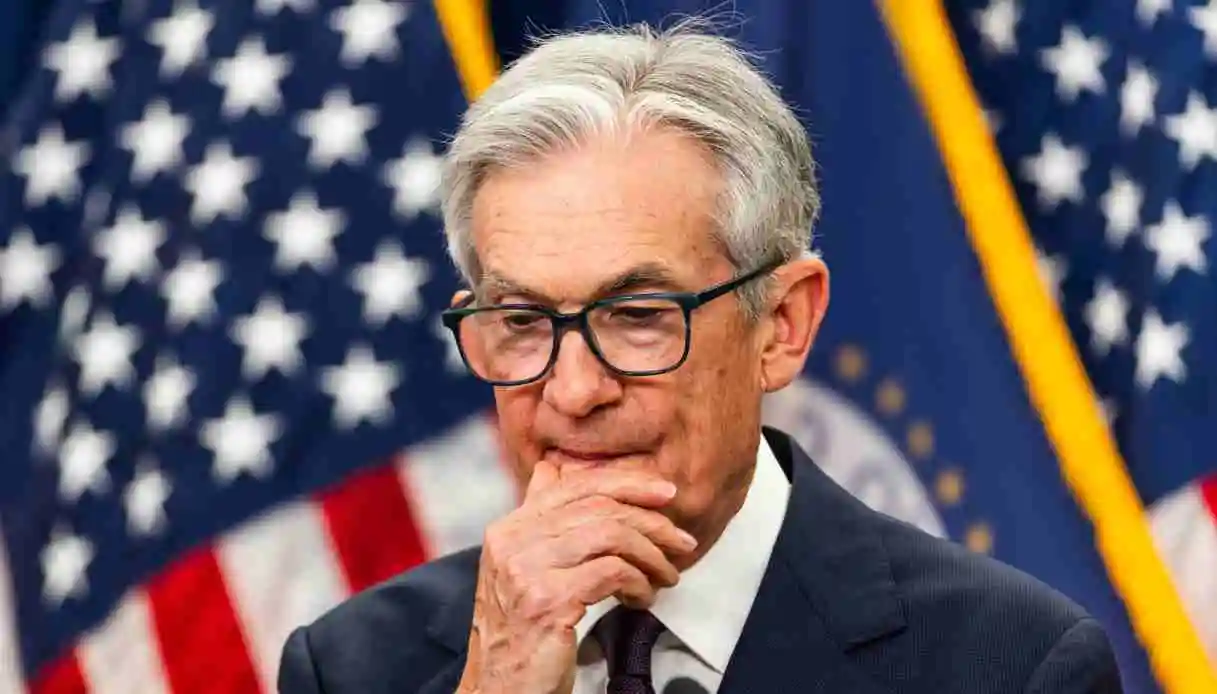
The Federal Reserve is preparing today to confirm interest rates held in a range of 3.5%-3.75%. However, US bankers will have to take note of a situation that has radically changed due to the conflict in the Middle East and the rise in oil prices above 100 dollars a barrel, which risks spilling over into inflation, distancing it from that famous 2% target taken as a reference by the FOMC, the Fed’s monetary policy committee. The outbreak of the war in the Middle East, in fact, has put the Fed’s dual mandate in crisis, with a still weak labor market and an inflation that risks incorporating the increase of energy prices.
The labor market remains weak
The recent weakness in the jobs report has reignited fears about the labor market. The unemployment rate rose to 4.4% from the previous 4.3% (the consensus indicated 4.3%), while jobs fell by 92 thousand units, after 126 thousand payrolls were created in January. The data on employed people is worse than the consensus which indicated a growth of 58 thousand jobs.
Upward pressure on inflation
The latest inflation data show price dynamics still under control, with growth of 0.3% on a monthly basis and 2.4% on a yearly basis, but the data relating to February does not yet incorporate the effects of the war in Iran, which broke out on 28 February, and the surge in oil prices above 100 dollars a barrel. Furthermore, recent data on the core PCE index, a measure of inflation favored by the Federal Reserve, recorded a change of 3.1% year-on-year, accelerating from the previous +3%.
The risk of stagflation is emerging
All this will undermine the dual mandate – lowering inflation and unemployment – putting the US central bank faced with a much greater risk, represented by the possibility of stagflation. Everything will obviously depend on the duration of the conflict and the impact on prices. Naturally, the market, which previously discounted the possibility of two cuts this year, is now more unbalanced in favor of a “wait-and-see” Fed, if not actually in favor of a more restrictive policy (some are already risking two rate increases this year).
Analysts’ expectations
Analysts at Pictet Wealth Management expect rates to remain largely unchanged at this meeting, with a policy statement that is “likely to recognize the risks that the conflict in Iran poses to both aspects of the mandate”. The updated dot plot is expected to be “essentially unchanged” with one rate cut expected in 2026 and one in 2027, but it is expected that “some committee members may expect fewer cuts due to inflation concerns, while others may expect more in light of recent labor market data.” The “risk of a hawkish orientation”, however, would be represented by a dot plot that “indicates a median of zero cuts or if President Powell raised the possibility of rate increases if inflation caused by tariffs or oil were to persist”.
Even for Allianz Global Investors, the FOMC should keep rates unchanged “despite a minority in favor of a cut”, but it is believed that “attention will focus on the persistent misalignment between inflation and employment dynamics, as well as on the possible indirect effects of the conflict in the Middle East”. “The conflict in the Middle East – it is underlined – now adds a further level of risk. If prolonged, stagflationary pressures could limit the ability of policymakers to ‘ignore’ the renewed supply shock”.
Finally, T. Rowe Price believes that “the dot plot should continue to indicate a cut for 2026, as in December, with the risk that there will be no cut.” “My basic hypothesis, which foresees an accommodative Fed in the second half of the year, has not changed, even if market expectations have deviated significantly from my view,” underlines analyst Blerina Uruci, recalling that the market is now pricing in “a cut for this year and practically no cut in the first half of 2027” and admitting that “if core inflation were to accelerate again in the coming months, the Fed will not be able to cut rates before the fourth quarter of 2026 or even the first quarter of 2027.”