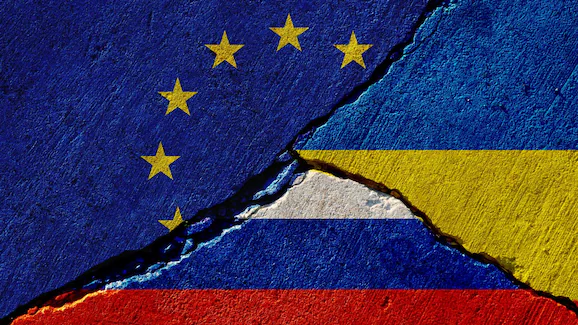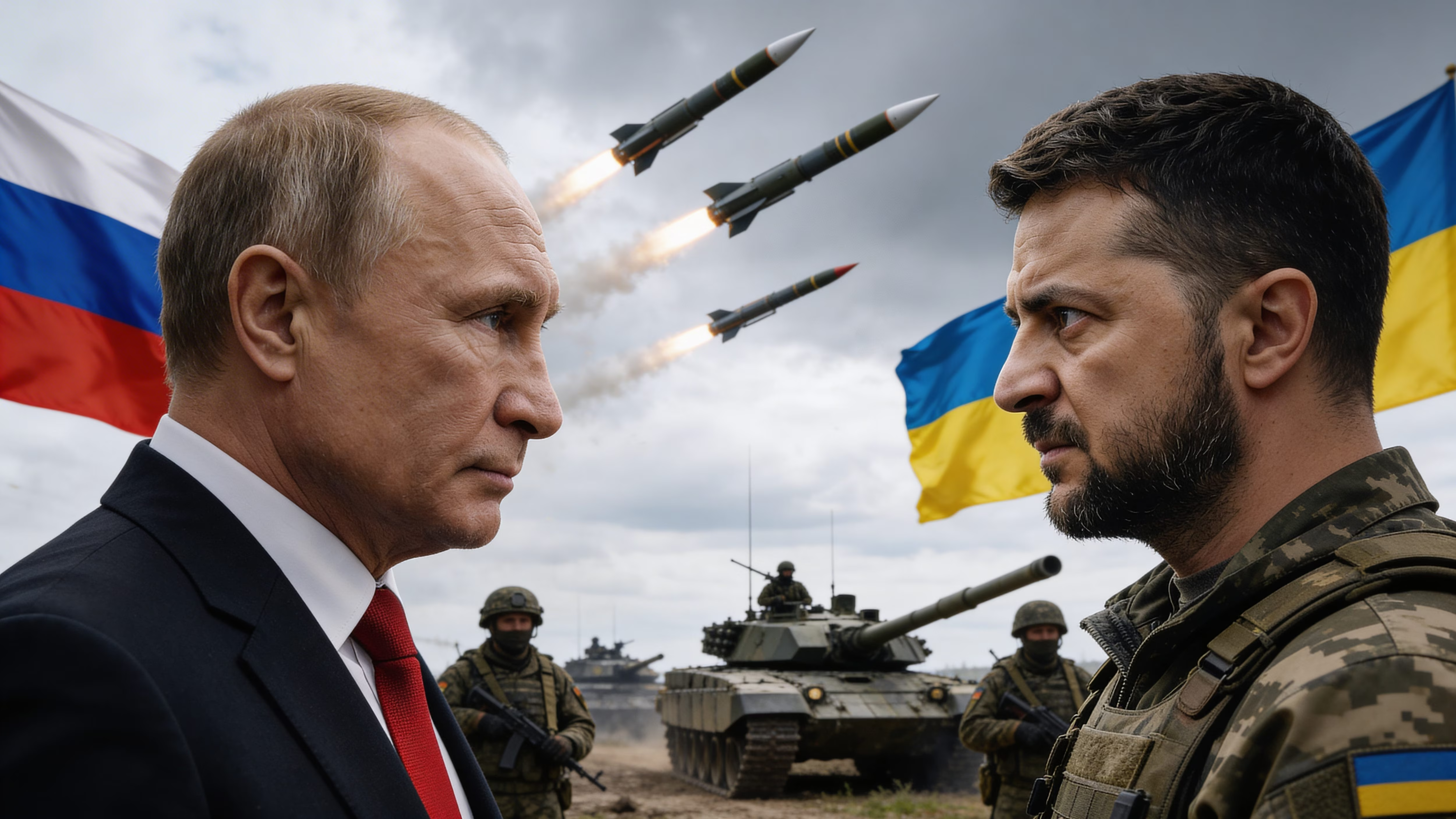
On the night between 23 and 24 February 2022, the Armed Forces of the Russian Federation began what in Russia is still defined as a “Special Military Operation” but which for the rest of the world is the “Russian-Ukrainian War”. Originally conceived as a “blitzkrieg” with the objective of subverting the constitutional order in Kiev, the conflict soon degenerated into an exhausting military and geopolitical tug-of-war between Russia and the entire broader West, which supported Ukraine from a political, economic-financial (in these four years Europe has paid Ukraine more than 194 billion euro), military and humanitarian points of view, thus avoiding its defeat to date but while at the same time condemning the rest of the world to a prolonged period of uncertainty and tension.
2022: the year of the Russian invasion and Ukrainian resistance
The Russian-Ukrainian War formally began on the night between 23 and 24 February 2022, at the height of a period of tensions that had already begun in 2014 with the events of Euromaidan and the subsequent annexation of Crimea and the outbreak of the War in Donbass, with the large-scale invasion of the Republic of Ukraine by the Armed Forces of the Russian Federation and those of the self-proclaimed People’s Republics of Donetsk and Lugansk with the de facto connivance of the Republic of Belarus which – although not directly participating in the military operations – however made its territory and airspace available to Moscow.
The Russian military action, despite the violence and speed with which it developed, however failed in its objective of overthrowing the government of President Volodymyr Zelensky and instead gave rise to an unnerving war of attrition, mostly located in the southern and south-eastern areas of the country where the Russians continued to maintain the tactical initiative while advancing at a snail’s pace. The success of the Ukrainian resistance in this first phase of the war allowed President Zelensky to galvanize the internal front on the one hand and on the other to accredit himself as a strong man and undisputed leader of the Ukrainian cause as well as an ideal candidate to benefit from a generous program of all-round military, economic-financial and humanitarian aid.
2023-2025: the years of endless battles
In the period between 2023 and 2025, except for some sensational events such as the Ukrainian counter-offensive on the southern front in the summer of 2023 and the Ukrainian offensive in Russian territory (to be precise in the Kursk area) in the late summer of 2024, the fighting has mostly acquired the characteristics of trench warfare, or in any case characterized by very expensive operations in terms of losses of men and equipment and dragged on over time, with the contenders engaged in exhausting battles lasting many months to conquer what, before the war, were small towns of little strategic weight.
This period also saw an exponential growth in the use by both sides of drones of all types and sizes and electronic warfare systems to saturate battlefield communications and make tactical maneuvers impossible. Starting from the winter of 2022-2023, Russia has also inaugurated a methodical aeroballistic campaign aimed at destroying the Ukrainian energy grid. This effort never really ended, and continues today, and has seriously impaired Ukraine’s ability to produce and distribute energy. On the other hand, Western sanctions aimed at hitting the Russian economy have achieved mixed results, making the country pay a very high cost but completely failing in their objective of causing Russia to collapse or even just stopping its war machine.
What to expect in the future: forecasts
Four years after the start of the war, the time has come to take stock.
Far from being associated with the short and limited conventional wars that had characterized the panorama of the military world in the thirty years following the end of the Cold War, the Russo-Ukrainian War took the form of a very long and extremely costly conflict in terms of human, material, economic-financial and political-ideological-moral costs. Russia blatantly violated international law and order but did so to protect what it considered to be its inalienable national interests.
On the other hand, the broader West has thrown all its strategic weight behind Ukraine but to date has failed in the objective of turning the tide of the war and making Russia desist from persevering in its strategy with the result that if at the beginning of the conflict some important names in international geopolitics such as the late Henry Kissinger warned about “what could have happened to Russia in the event of defeat”, the new reality that is appearing before our eyes (also thanks to the political changes that are taking place in the USA) must indeed make us reflect on the possibility that the “defeat of the West” (to use an expression of the demographer and sociologist Emmanuel Todd) leads, on the contrary, to a complete dislocation of our Western societies.