On the one hand, the decrease in energy income. On the other, greater consumption, thanks to physical activity. The human body, albeit with many subjective variables, experiences the process of rebalancing its weight in the event of excess weight on the basis of these two elements.
Obviously, in terms of evaluating the results of a diet and physical activity regime, it is necessary to identify effective measurement systems that can really tell what is happening.
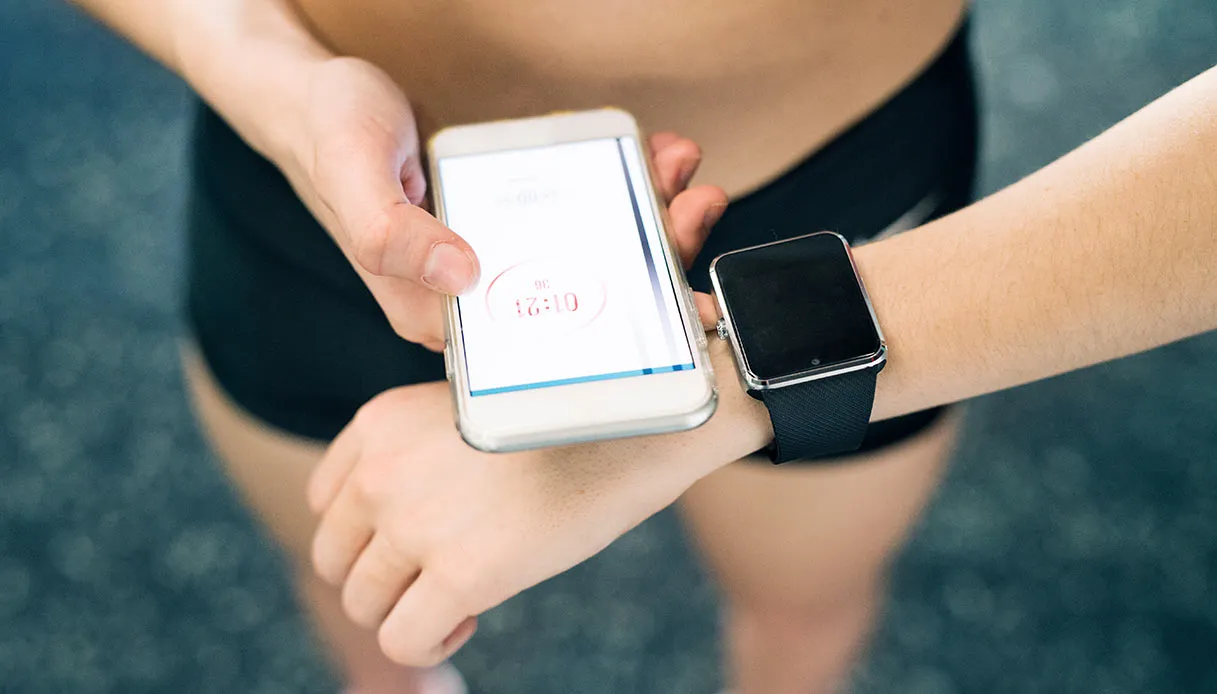
And it is precisely on this aspect that the research of a group of scholars from Harvard University, presented in Communications Engineering, focused. In fact, the study presents OpenMetabolics, an open source activity system designed for smartphones that uses automatic learning and leg movement to estimate calories burned, going beyond, at least this is the perspective and at the same time the hope, what is now available on various smartwatches and trackers.
Looking for measurement
The objective of the study is clear. Providing a reliable system available to everyone that allows you to finish a workout and have a more precise perception of calorie consumption to read directly on the smartwatch. Sometimes, in fact, the measurements start indirectly, perhaps by calculating other parameters such as wrist movement, height in relation to weight, heart rate with targeted software, combining them together. OpenMetabolics, at least according to what the laboratory studies presented show, could allow for greater precision in this sense.
As reported in a news from Harvard’s John A. Paulson School of Engineering and Applied Sciences (SEAS) presenting the research conducted by experts coordinated by Patrick Slade, associate professor of bioengineering, everything is based on an open source smartphone-based activity monitor called OpenMetabolics. The system uses machine learning to convert a person’s leg muscle activity into calories burned. A laboratory study conducted on human subjects found that the device would have much higher accuracy than smartwatches and commercial activity trackers. The research could not only provide more accurate measurements of exercise, but it could also help scientists create higher-quality studies on the health effects of physical activity.
How it works
As the note from the American university reports, the study was led more specifically by Haedo Cho, who reworked a machine learning model already evaluated by researchers led by Slade. The system had already demonstrated that it could precisely extract energy expenditure values from leg movement. The model uses continuous motion data acquired from the smartphone’s gyroscope and accelerometer and interprets these oscillations and movements as values of expended energy.
The development of the research led to overcoming the need to have a highly personalized system, as was previously the case, fixed to a person’s leg in two points. The new system instead operates only via smartphone sensors, on different types of people, movements and activities. His work brings the technology closer to a widely deployable, commercial or high-quality research device. Above all, by evaluating everyday movements in the laboratory on a small population, from running to climbing a flight of stairs, the system aims to capture and monitor real activities. In the laboratory, these daily activity scenarios were emulated using audio suggestions.
Further information must be considered: a potential correction model for pocket motion artifacts was also identified to preserve the accuracy of the energy data despite the smartphone bouncing in people’s pockets, with different styles of clothing and from different angles.