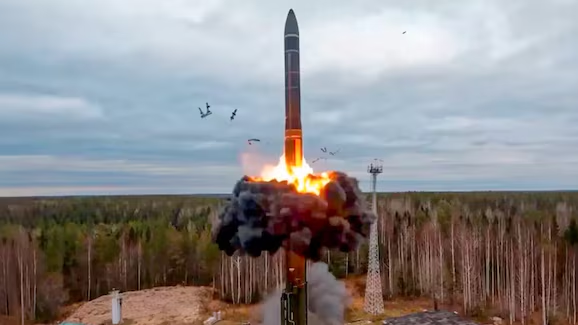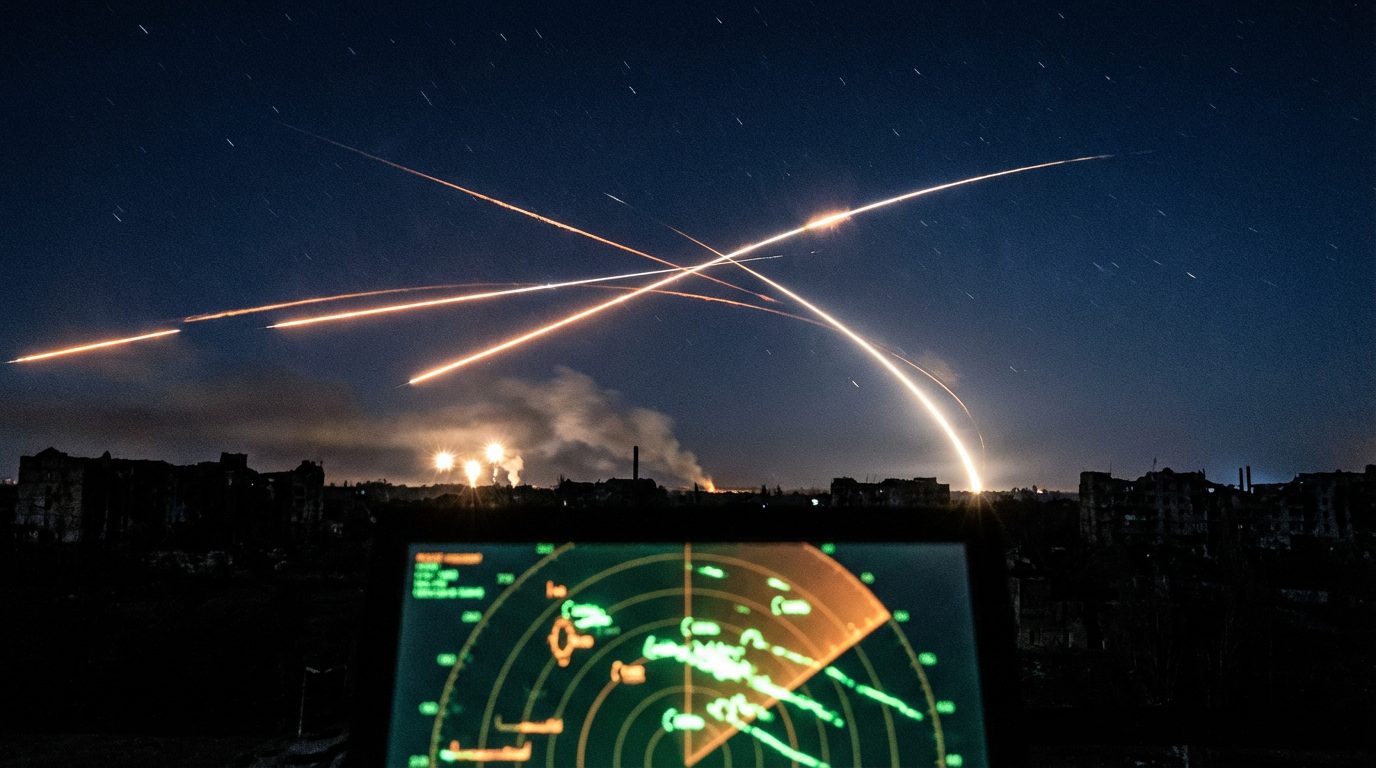
From the beginning of the Russian invasion on February 24, 2022 — the start of the Russo-Ukrainian War — to now, the Russian Armed Forces have been subjecting Ukraine to constant fire pressure using their arsenal of long-range weapons, particularly ballistic and cruise missiles.
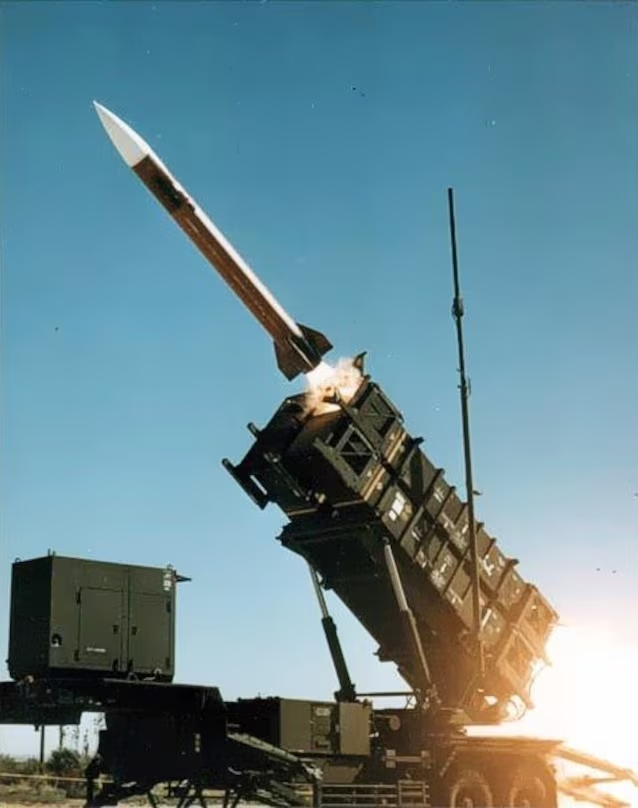
Ukraine responded to this prolonged offensive by using both its own arsenal of anti-aircraft and anti-missile missiles (such as the S-300), and newly supplied systems supplied by Western partners, such as the famous Patriot. Although the capacity of the systems available to the Ukrainians in principle guaranteed a good interception capability against Russian long-range weapons, the acquisition of new capabilities by the latter (such as the installation of new maneuvering warheads) led to a sharp decline in the interception rate.
The Russian arsenal between Iskander and Kinzhal and the Ukrainian Patriot defense
Among the many weapon systems that the Armed Forces of the Russian Federation deployed during the war, few have captured the collective imagination like the 9K720 Iskander ground-launched ballistic missile and its “air-launched relative”, the Kh-47M2 Kinzhal, which belongs to the category of the so-called “hypersonic missiles”.
Both the Iskander and the Kinzhal have been used on several occasions by the Russians during their multi-year strategic aeroballistic campaign aimed at degrading the Ukrainian state’s ability to defend itself against mounting Russian pressure.
The effectiveness demonstrated by these and other Russian long-range weapons forced the Ukrainians to take action and organize their defense, also thanks to the support of their Western partners in Kiev. The anti-aircraft and anti-missile defense systems of Soviet origin supplied to the Ukrainians at the beginning of hostilities were therefore reinforced with the arrival of their counterparts of Western origin, first of all the MIM-104 Patriot, which allowed Kiev’s armed forces to significantly increase the rate of interception of Russian long-range weapons.
How the Russians modified warheads to make them more maneuverable
Even if the Ukrainians have never managed to shoot down Russian long-range weapons at the rates declared by official propaganda and the mainstream media, undoubtedly the technical characteristics of their defense systems of both Soviet and Western origin and the abundance of missiles initially available have undoubtedly helped the Ukrainian Armed Forces to effectively protect a series of strategic objectives.
However, the Russians did not remain idle and, in parallel with the continuation of the bombing campaign, they launched an ambitious development plan for their missiles, incorporating the lessons learned on the battlefield.
One of the modifications that had the greatest effect was to apply new retractable fins on the body of the missiles in order to make the warheads more maneuverable especially during the terminal phase of the trajectory, contributing to confusing the missile systems supplied to the Ukrainians and further complicating the already difficult process of intercepting targets which thus present a smaller “window of opportunity” to achieve the killing of the target.
The impact of this change on Ukrainian defenses
As time passed, the large-scale introduction of these modifications on new batches of Russian missiles fresh from the factories had the effect of once again changing the balance of force between defense and attack. As proof of this, according to a US Defense Intelligence Agency report cited in an October 2025 Economist article, the Iskander and Kinzhal kill rate plummeted from an already uninspiring 37% in August 2025 to a paltry 6% recorded in September.
The net result was a significant increase in the destructive capacity of Russian aeroballistic waves, which were able to accelerate the process of degradation and destruction of Ukrainian strategic infrastructure, further complicating Kiev’s ability to defend itself.
Due to the extreme uncertainty currently prevailing on the international scene, the recent developments in the missile and drone warfare in Ukraine must be kept under review by the political and military decision-makers of our Western countries to avoid falling prey to unpleasant surprises in the future should it be our turn to be directly involved in hostilities.