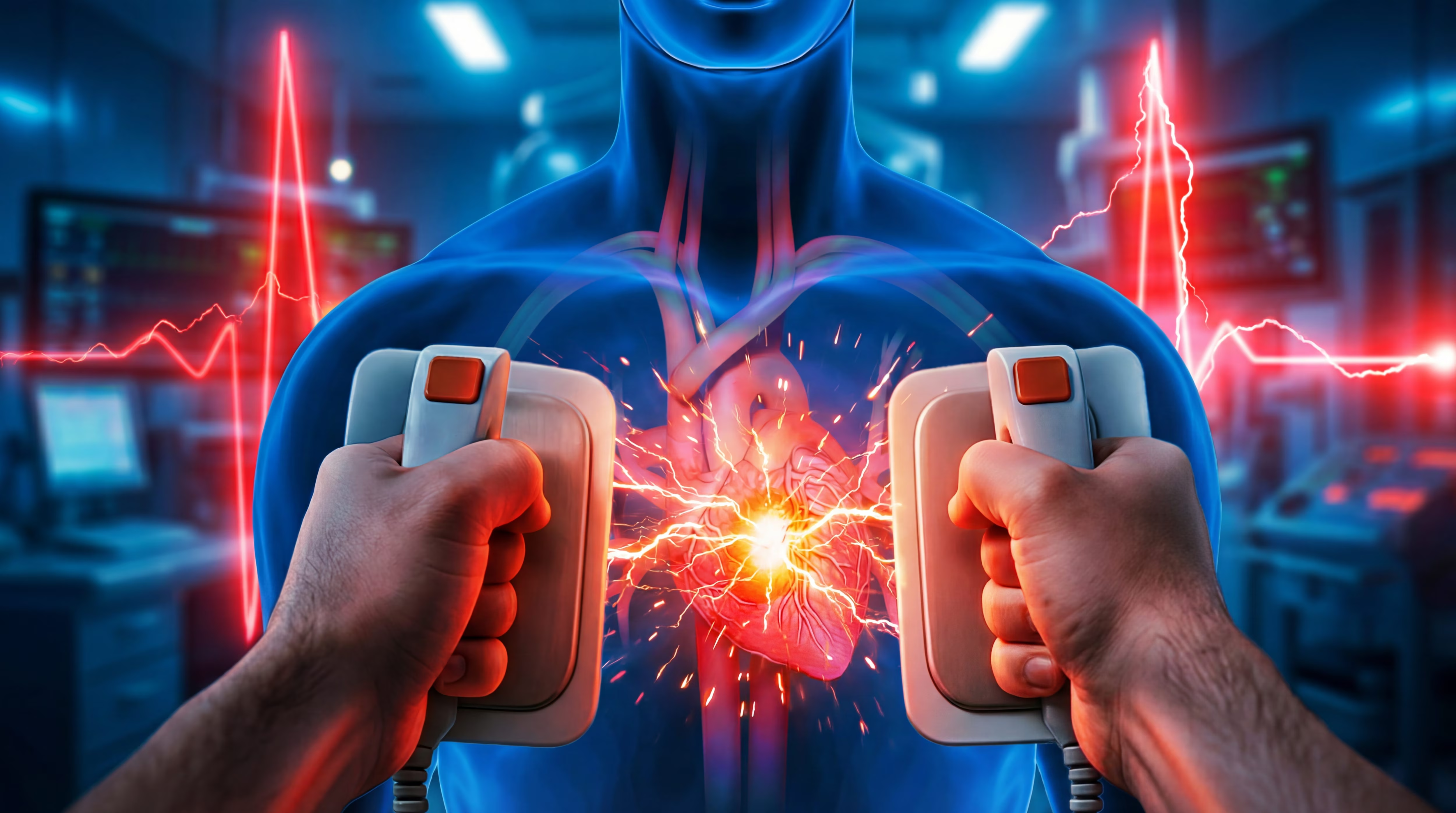
How does a defibrillator work? What effects does its electric discharge have on the heart? And above all: why in some emergencies is an electric shock given to the heart… while in others not? The defibrillator is a life-saving medical device that recognizes some fatal cardiac arrhythmias and, if indicated, delivers an electrical shock to “reset” the electrical activity of the heart. In recent years, automated external defibrillators (AEDs) have become increasingly popular in public spaces. We find them in stations, airports, schools, sports facilities and increasingly also on the streets, in specially marked display cases.
What is a defibrillator and what is it for
A defibrillator is a medical device designed to recognize certain potentially fatal cardiac arrhythmias and, when indicated, deliver an electrical shock to the heart with the goal of restoring an effective heart rhythm. We are talking about potentially fatal arrhythmias when the electrical activity of the heart is present but completely disorganized: the heart is no longer able to contract in a coordinated way and is therefore unable to pump blood. In these cases, the electrical discharge from the defibrillator acts as a sort of “reset” of the cardiac electrical activity.
It is important to clarify that not all arrhythmias are shockable. In reality, there are only two cases in which defibrillation is useful, and we will see them later.
Because AED defibrillators are in public places
In the case of cardiac arrest, time is a decisive factor: every minute that passes without intervention drastically reduces the chances of survival. Having a defibrillator on hand can therefore save a life. Precisely for this reason there are training courses called BLS-D (Basic Life Support and Defibrillation), aimed at everyone, which teach:
- to recognize cardiac arrest,
- to perform cardiopulmonary resuscitation,
- to correctly use an automatic external defibrillator.
AEDs are designed to be used even by non-healthcare people: they automatically analyze the heart rhythm and indicate whether the shock is necessary, preventing delivery if it is not appropriate.
How the heart normally works
To understand what a defibrillator does, we must first understand how the heart works under normal conditions. From a mechanical point of view, the heart is a muscular pump: through alternating phases of relaxation and contraction, it receives blood and puts it back into circulation throughout the body.
From a blood flow perspective:
- receives oxygen-poor blood,
- sends it to the lungs to oxygenate it,
- receives oxygenated blood,
- pumps it towards all the organs.
Anatomically, the heart is divided into a right and a left part, each composed of an atrium, which receives the blood, and a ventricle, which pushes it into circulation. The passage of blood is regulated by one-way valves, which ensure that the flow always occurs in the correct direction.
The heart does not contract on its own: each beat is the result of an electrical impulse. The heart walls are made up of billions of muscle cells that contract when they receive an electrical stimulus. This stimulus arises spontaneously in a specific area of the heart called the sinoatrial node, which works like a real natural pacemaker.
The electrical signal starts from the sino-atrial node and makes the atria contract, reaches the atrio-ventricular node, propagates along the bundle of His, reaches the ventricles, making them contract and allowing the expulsion of the blood. This orderly sequence is what we call a normal heart rhythm. When this mechanism is altered, we talk about arrhythmias.
What defibrillator shock really does
Defibrillation serves to interrupt chaotic electrical activity of the heart. An easy way to understand this is to think of an electronic device that freezes: often the solution is to turn it off and on again. The defibrillator does something similar, without “turning off” the heart, but by blocking the disorganized electrical activity for an instant and giving the heart’s natural system the opportunity to restart in a coordinated way. The electrical discharge does not “restart” the heart: it eliminates the electrical chaos, allowing the natural pacemaker to regain control.
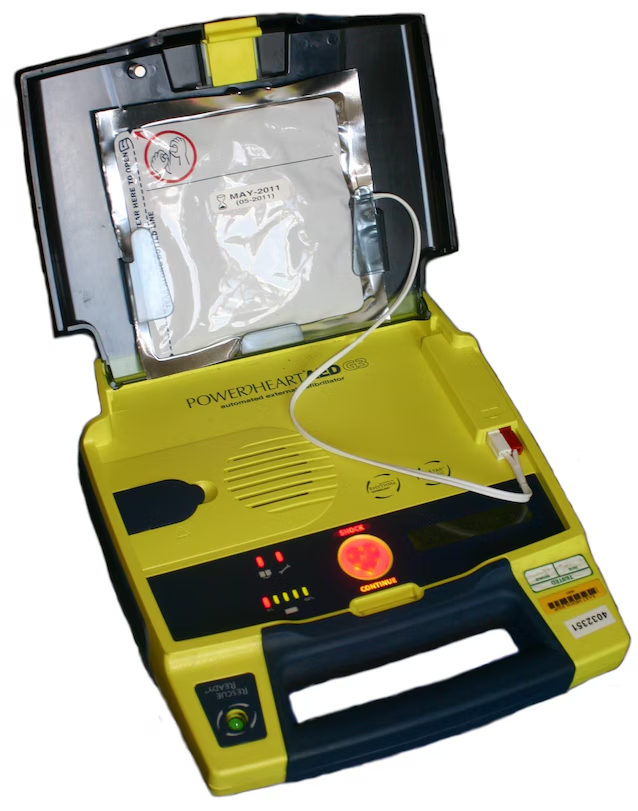
There are only two arrhythmias in which the defibrillator is effective
- Ventricular fibrillation. It is a condition in which the electrical activity of the ventricles is completely chaotic. The ventricles no longer contract, but vibrate rapidly, making blood circulation impossible.
- Pulseless ventricular tachycardia. In this case the ventricles beat, but at such a high rate that they cannot fill with blood. In fact, the heart does not pump effectively.
These arrhythmias can be recognized by a doctor via electrocardiogram, or automatically by an AED, which decides whether the shock is indicated.
A fundamental point that is often unclear is that defibrillation does not replace cardiac massage. International guidelines indicate that, in the event of cardiac arrest, the absolute priority is to start cardiac massage immediately, because it allows minimal blood circulation, especially towards the brain.
The defibrillator is a very powerful tool, but it works together with cardiopulmonary resuscitation, not in its place.