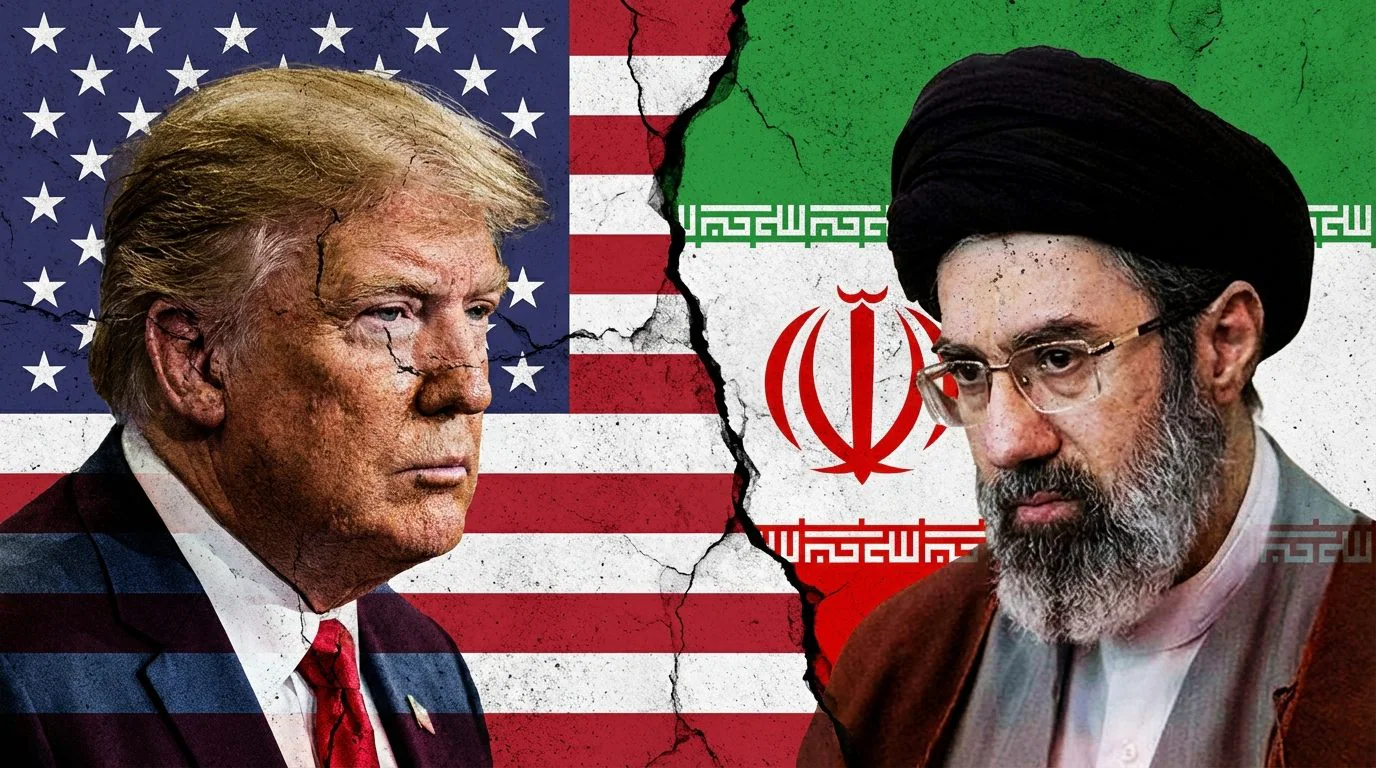
The United States and Iran have accepted Pakistan’s proposal for a two-week ceasefire at the start of the 40th day of war in the Middle East: bombing will therefore be suspended for 14 days and the Strait of Hormuz should reopen, still under Iranian control. After the news of the ceasefire, the price of oil per barrel suffered the most significant reduction in recent weeks, falling below 95 dollars and suffering a reduction of 15%.
US President Donald Trump accepted the ceasefire less than two hours before the expiration of his ultimatum (with which he had promised the “death of Iranian civilization”), defining the proposal with a precise word: “workable”. Not “good”, not “definitive”. Practicable as a basis for negotiation. It’s a distinction worth keeping in mind, given that there won’t be an agreement to sign on the table at the peace talks – scheduled for April 10 in Islamabad, Pakistan. Instead there will be two proposals: an Iranian one, in 10 points, and an American one, in 15 points, which at the moment seem further apart than the official statements make them seem.
In any case, neither Washington nor Tehran have published an official document containing the “points for peace”: those that are circulating, therefore, are possible reconstructions based on diplomatic indiscretions, partial declarations of the Iranian Supreme National Security Council and what was revealed by press agencies close to the Iranian government.
The Iranian proposal in 10 points
As anticipated, neither Washington nor Tehran have published the full text of their respective proposals. What we know therefore comes from indirect sources: in the case of the 10 points advanced by Iran, the information comes from news agencies close to the Iranian government (such as Tasnim News, Mehr News and IRNA), Pakistani, Egyptian and Turkish officials involved in the mediation.
Based on what has been communicated by sources close to the Tehran government, we know that the 10 points of the Iranian proposal would include:
- Non-Aggression Guarantee: Binding U.S. commitment to no longer attack Iran.
- Control of the Strait of Hormuz: reopening of the Strait under Iranian military management, with a transit protocol defined by Tehran. According to the New York Times, Tehran could impose a tax of 2 million dollars per ship.
- US recognition of Iran’s right to enrich uranium.
- Lifting of all primary sanctions against Iran, such as economic restrictions imposed by the US.
- Lifting of all secondary sanctions against Iran, i.e. those imposed on those who trade with Iran.
- Cancellation of all UN Security Council resolutions against Iran.
- Cancellation of all IAEA (International Atomic Energy Agency) resolutions against Iran.
- War damage compensation: full payment of damages suffered, plus the release of Iranian assets frozen abroad.
- Withdrawal of US forces from the region: Withdrawal of all American contingents from bases and deployment points in the Middle East.
- Cessation of hostilities on all fronts: end of the war in Iran and Lebanon, to protect Hezbollah and the Axis of Resistance.
The American proposal in 15 points
In the case of the American proposal, the summary of the 15 points was published by the Israeli channel Channel 12 and only partially confirmed by anonymous sources close to the White House. More specifically, an American official clarified that the Channel 12 version reflects only a preliminary draft, to which changes have been made. Given this premise, the 15 American points would include:
- Dismantlement of Iran’s nuclear capabilities, with the decommissioning of its military nuclear facilities.
- Formal commitment not to develop nuclear weapons.
- Stop uranium enrichment in Iranian territory.
- Transfer of enriched uranium to the IAEA within an agreed timeline.
- Decommissioning of Iranian nuclear sites at Natanz, Isfahan and Fordow.
- Abandoning the network of Iranian-funded armed groups such as Hezbollah, Houthis and regional militias.
- Reopening of the Strait of Hormuz and free transit of ships in the Persian Gulf.
- Limitation of Iran’s missile program to defensive purposes only.
- Lifting of American sanctions in exchange for concessions on Iran’s nuclear program.
- Support for the Bushehr nuclear power plant for civil electricity production in Iran.
The American proposal would contain another 5 points: nevertheless, the proposals from points 11 to 15 have not been released by any source.
What do the two proposals have in common
Analyzing the two proposals in more detail, there are three elements for which the positions of Tehran and Washington are not structurally incompatible. Specifically, we talk about:
- End of hostilities: both sides want to stop the war, albeit with different geometries. Iran wants a definitive and permanent peace, the USA had initially proposed a 30-day ceasefire (now down to 14). But the fact that both are negotiating the duration of the peace is already a sign.
- Lifting of sanctions against Iran: it is a point present in both proposals. The USA would in fact have offered the removal of sanctions in exchange for nuclear concessions. Iran, however, calls for the lifting of sanctions unconditionally and completely.
- Reopening of the Strait of Hormuz: both countries are calling for the reopening of the Strait, but now the question is who will manage it and under what conditions. But here too: the principle of reopening is not contested. It’s about negotiating the modalities.
How are the two proposals different?
The problem is that the Iranian proposal and the American one also have abysmal differences and on at least two points they seem difficult to overcome in the short term. According to some rumours, Iran formally rejected the American proposal, calling it “extremely maximalist and unreasonable”, while the USA defined the Iranian proposal as “maximalist”.
More specifically, the main problems concern:
- The Iranian nuclear power: the American proposal includes the dismantling of Iranian nuclear facilities, limits on missiles and the reopening of the Strait. The Iranian one, on the contrary, asks for the explicit recognition of the right to enrich uranium and, above all, does not contain any commitment to reduce or stop the nuclear program. This absence from the Iranian proposal is notable, because it was exactly the stated reason why the US and Israel initiated the conflict. The two positions are not similar and, indeed, mutually exclusive.
- The withdrawal of American troops: Iran calls for the withdrawal of all US military forces from bases and deployment points throughout the region. In the American proposal this point does not exist and, above all, it could hardly exist. The USA has around 50,000 soldiers deployed in the Middle East: asking to withdraw them all as a starting condition is a maximalist position: it serves to occupy negotiating space, not to obtain that specific result.
- The financing of armed military groups and the Axis of Resistance: the American proposal calls for restrictions on Iranian support for regional armed groups. The Iranian one instead calls for an end to attacks against Hezbollah and the other components of the Axis of Resistance, explicitly treating them as subjects to be protected, not dismantled. On this point the two visions of the post-war Middle East are incompatible.
- Compensation for damage caused by war: Iran demands full payment of war damages and the release of assets frozen abroad. The American proposal contains nothing similar and Trump has a history of making critical statements about agreements involving the transfer of money to Tehran, dating back to the Obama era.