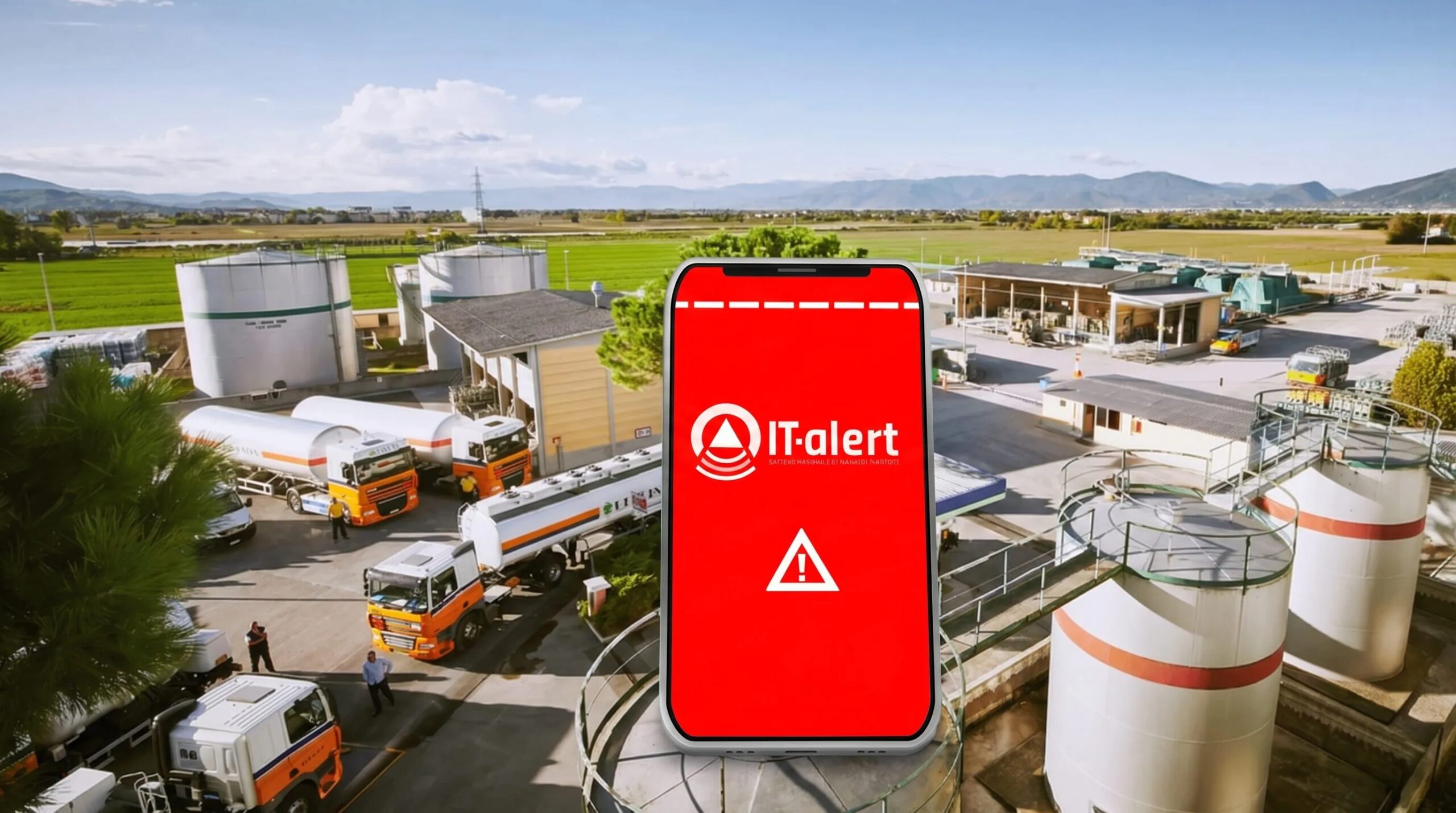
Tomorrow 15 April, at 10.30 am, the first IT-Alert test of 2026 will be held: the national public alert system will be activated in Calabria, simulating the risk of a major industrial accident. The simulation will specifically concern the Gargano gas plant in Montalto Uffugo, in the province of Cosenza, involving all citizens who will be within a 3 km radius around the plant at the time of the test.
Also in this case, all cell phones connected to cell phones in the affected areas will receive a text and sound notification, even in the absence of an internet connection.
Since 2024, the IT-Alert system has been active for four risk scenarios – nuclear accidents, industrial accidents, collapse of a large dam and volcanic activity – while trials are still underway for tsunamis, the volcanic activity of Stromboli and intense rainfall. The objective of the simulation on 15 April is to improve the effectiveness of the system and, specifically for industrial risk, and allow a greater number of industrial plants to exercise their response capacity in the event of emergencies.
Where and when the IT-Alert test will sound in Calabria
The test of 15 April 2026 will involve all municipalities within 3 km of the Gargano gas industrial plant in Montalto Uffugo, in the province of Cosenza (Calabria): the specific risk simulated is that of a major industrial accident, by which we mean «an event such as an emission, a fire or an explosion of large magnitude, due to uncontrolled developments that occur during the activity of an industrial plant classified as at risk of a major accident by the Seveso directive and which gives rise to a serious danger, immediate or deferred, to human health and the environment, inside or outside the establishment”.
In particular, the calendar provides that:
- 10.30 am – IT-Alert test for a major industrial accident at the Gargano gas plant in Montalto Uffugo (CS). The municipalities within 3 km of the industrial plant are affected. The text contained in the notification will be as follows:
TEST TEST IT-alert test message. A SIMULATION of an accident is underway in an industrial plant in the area where you are located. To find out the message you will receive in case of real danger and to fill out the questionnaire go to www.it-alert.gov.it TEST TEST
What to do when the alarm message sounds on your cell phone
Like all previous simulations, the first one in 2026 in Calabria also involves sending a text message accompanied by an audible alarm directed to all smartphones turned on and connected to the cells covering the areas affected by the specific risks being simulated. Since this is a test, no subsequent action is required on the part of the citizens involved and the messages sent by the IT-Alert system do not require responses or interactions.
Those who receive the alert will still be able to choose to fill out a short questionnaire (optional) to indicate whether the message has been received correctly, provide overall feedback and thus contribute to improving the alert system in view of any future emergencies.
What would the message be like in the event of a real accident in an industrial plant
The Montalto Uffugo IT-Alert test therefore represents a simulation. In case of real danger from an accident in an industrial plant, cell phones in the areas near the affected plants would receive an IT-alert message like this:
Civil Protection Alarm DD/MM/YY 00:00 – Accident in the XYZ industrial plant with presence of dangerous substances, in the Municipality of XYZ (PROVINCE). FIND SHELTER INDOORS AND DO NOT GO NEAR the system. Keep up to date and follow the instructions of the authorities.
However, the possibility remains that some devices do not receive the message, despite being present in the areas affected by the emergency: this is due to the limits of cell-broadcast technology, with which it is impossible to perfectly overlap the area potentially affected by the emergency with the area covered by the telephone operators’ antennas.