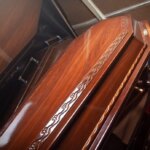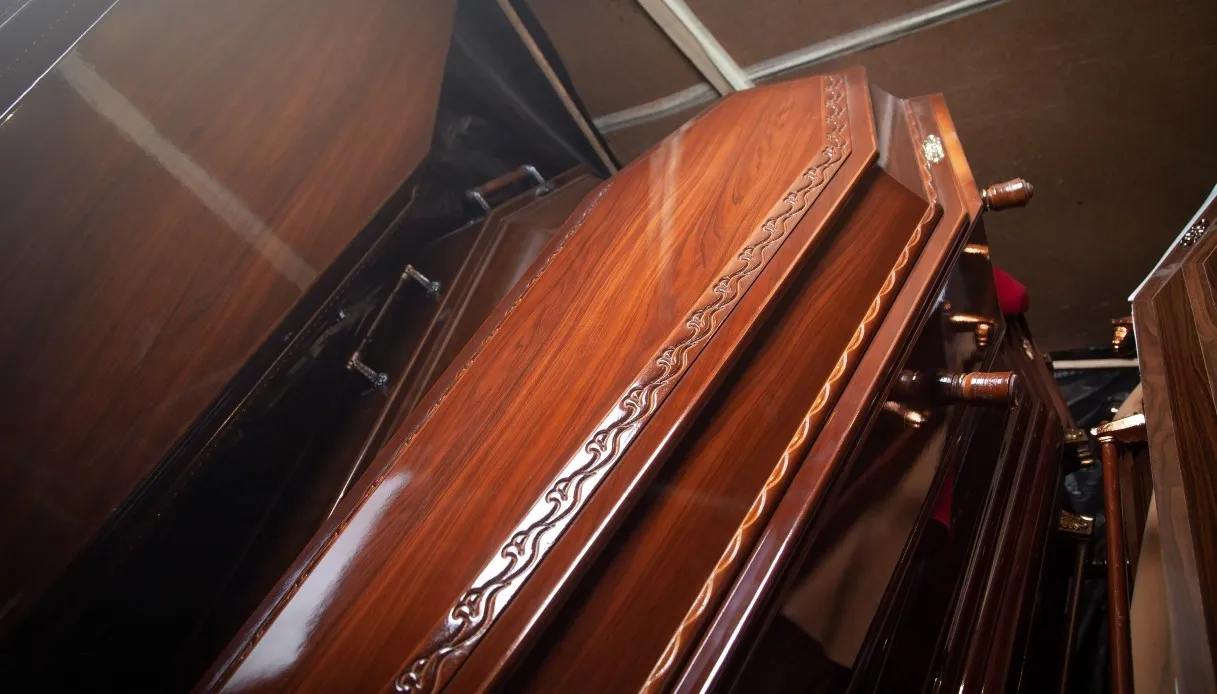
Funeral companies are reporting the influx of coffins from China. Even the speakers become one of the made in China products that are spreading in Europe. The sector is traditionally linked to local production, but in recent years the arrival of Asian products at lower prices is putting European producers under pressure.
United, they turned to the European Commission to ask for an anti-dumping investigation to ascertain whether Chinese companies are selling in the European Union at artificially low prices thanks to public subsidies and advantageous production conditions.
The numbers of the crisis in the funeral sector
The funeral sector is traditionally linked to local production. In Europe there were around 120 coffin manufacturers, stable over time. In recent years, particularly in the last five years, the pressure from Asian products at lower prices has led to a real crisis.
We went from 120 to 90 European producers, which means that around a quarter of the companies in the sector have disappeared. In the same period, however, the value of the import of wooden coffins from China went from 16 million euros in 2022 to 28 million euros in 2025. This is an increase of approximately 75%.
Low cost Chinese coffins: prices
The trump card for Chinese manufacturers would be the price. According to data contained in a question from Fratelli d’Italia MEPs to Trade Commissioner Maroš Šefčovič, the cost of producing a coffin in Italy is on average 260 euros, while in China it is just 80 euros.
For this reason, Asian producers can sell them on the European market for between 100 and 110 euros, in exchange for lower production costs due to cheaper labor and also a lower cost of wood. According to the European producers who requested the investigation, even state aid from China, such as export incentives, allows them to spend little and earn from exporting to Europe.
Security and the “Ikea loophole”
In the request for investigation there are two other questions submitted to Europe, all of which still need to be verified. It’s about materials and the so-called “Ikea loophole”.
The first point concerns what could be toxic substances, specifically the paints banned in the European Union for Chinese coffins. These paints could, during cremation, release carcinogenic microparticles.
The second issue is the “Ikea loophole”, meaning that the coffins would be shipped disassembled in flat packages and declared to customs with generic wood-furniture codes, to then be assembled in Italy or other European countries and sold as a finished product. If confirmed, this practice would make it difficult to trace imports and would therefore allow any duties to be eliminated.
However, these are accusations from European producers against Asian ones and not investigations by the authorities. For now the request is for action from Brussels, an investigation to support local producers. The case of Chinese coffins adds to other sectors at risk due to lower Chinese costs, such as the case of solar panels, electric cars and household appliances.