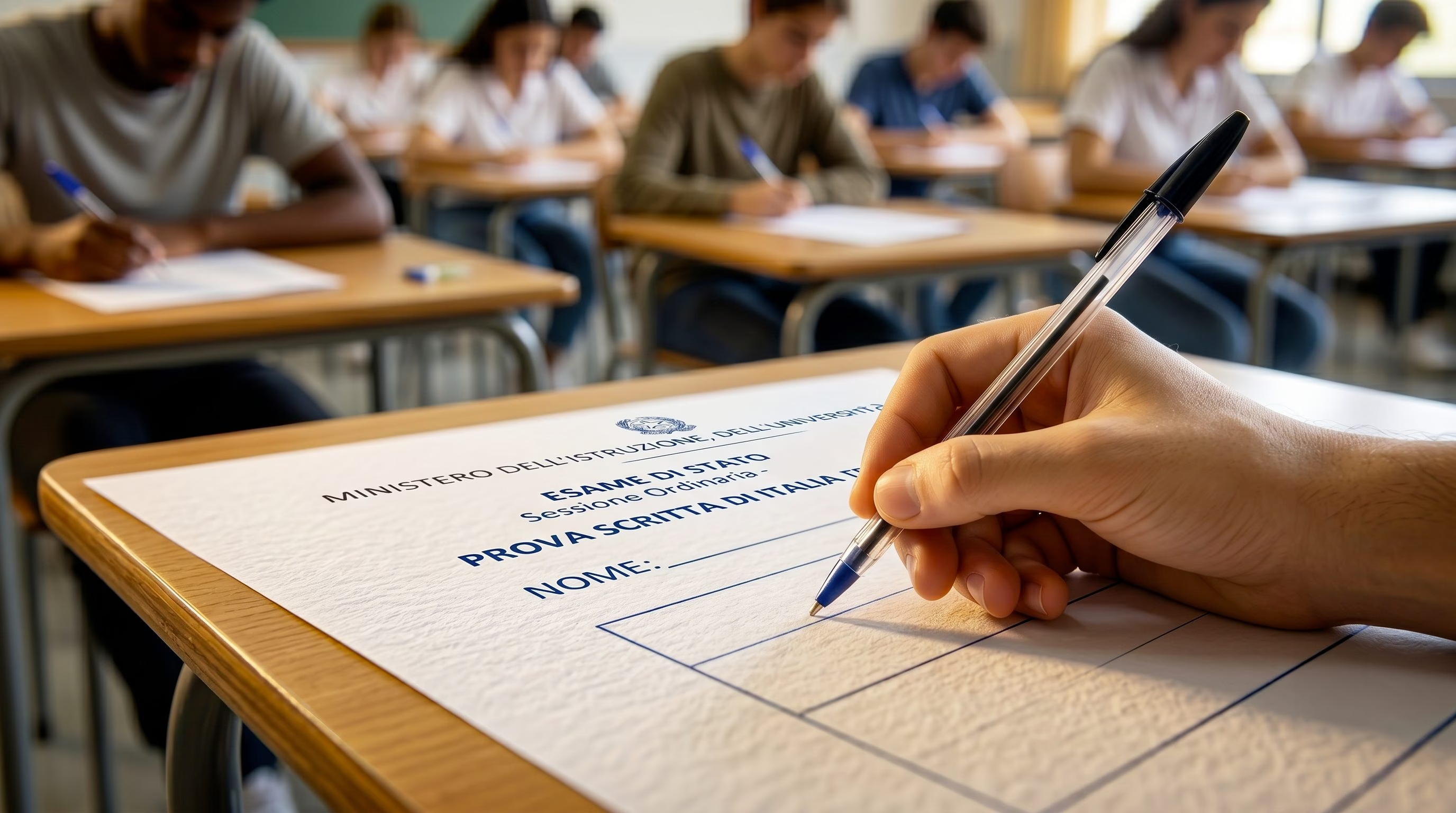
There is less and less to go until the first test of the 2026 Maturity, scheduled for 18 June, and the “tototracce” ritual for the Italian theme has already started. Every year, on the eve of the first test, students from all over Italy start making predictions on which topics might come up. The most accredited hypotheses are divided by type of theme, namely:
- Type A: analysis and interpretation of an Italian literary text.
- Type B: analysis and production of an argumentative text.
- Type C: critical reflection of an expository-argumentative nature on current issues.
Before moving forward, however, an honest premise: the “tototrace” is almost always an exercise in hope rather than prediction, and the MIM often manages to surprise everyone. Having said that, the most popular names and themes this year are clear: Grazia Deledda for type A, the 80 years of the Italian Republic for B, and artificial intelligence in relation to young people for C.
In the meantime, this year’s high school graduates can already find out how their exam commission will be made up, using the search engine created by the MIM to consult the names of the external commissioners.
Type A
2026 is a year unusually full of literary anniversaries, and the MIM usually doesn’t miss them. The names that circulate most insistently are:
- Grazia Deledda: she is the absolute favourite. 2026 marks the 100th anniversary of her Nobel Prize for Literature, the first and only ever awarded to an Italian woman. She never graduated from high school, which makes her an almost irresistible candidate.
- Luigi Pirandello: celebrates two anniversaries this year: 90 years since his death and 100 years since the publication of One, Nobody and One Hundred Thousand.
- Gabriele D’Annunzio: he has been missing from the tracks since 1999. Sooner or later he has to come out, and this year his name promptly returns among the favourites.
- Eugenio Montale: He appeared three times in the coming-of-age story (2004, 2008, 2012), but has been missing for 14 years. He too has been on the waiting list for too long.
- Filippo Tommaso Marinetti: 2026 marks the 150th anniversary of his birth. Founder of Futurism, he is an author that fifth year students know well.
- Giovanni Pascoli and Giovanni Verga: they tend to be among the favorite authors for the tracks of the first final exam and (perhaps) they could be there this year too.
Type B
For the argumentative text, the MIM builds the tracks around historical documents and anniversaries: this year there are some particularly significant ones. We at Geopop have also covered some of these topics, with in-depth analysis or summary video articles, found linked below:
- The 80 years of the Italian Republic: at the referendum of 2 June 1946 the Italians chose the Republic and all the women voted for the first time. A round anniversary, linked to democracy, citizenship and the Constitution, which several experts define as “a very strong suggestion” for an exam that also measures the civic awareness of students.
- Chernobyl: On April 26, 1986, 40 years ago, reactor number 4 of the Ukrainian nuclear power plant exploded. An anniversary that lends itself to reflections on energy, environment and technological responsibility.
- Saint Francis of Assisi: 2026 marks the 800th anniversary of his death. A figure that lends itself to many connections, from the relationship between man and nature to the theme of peace, up to the Canticle of the Creatures (a text which, written in the year 1200, speaks of respect for creation with a sensitivity that anticipates the modern environmentalist one by centuries).
- September 11, 2001: 2026 marks the 25th anniversary of the attacks on the Twin Towers, a watershed in contemporary history that opens up reflections on terrorism, geopolitics and global security.
Type C
Type C, however, is the one that most students choose, and the forecasts this year converge quite clearly on some major themes:
- Artificial intelligence: it is the most awaited topic, and it can be declined in two directions: the daily relationship between young people, social media and AI; or the deeper transformations it is producing in the world of work and information, between deepfakes and disinformation.
- Climate crisis and eco-anxiety: climate change is one of the issues most felt by generation Z, not only for its environmental consequences but also for the psychological impact it produces.
- Geopolitics and the right to peace: The ongoing conflicts around the world make this topic impossible to ignore. Some forecasts hypothesize a connection with the 80 years of the Republic and with article 11 of the Constitution, the one in which Italy declares to “repudiate the war”.
- Mental health and youth distress: social pressure, constant comparison on social media, performance anxiety. The psychological well-being of the new generations has become a central theme in the public debate, and could also find space in a ministerial outline.
- Migrations and identities: a theme that never ceases to be current, with its intertwining of globalization, cultural belonging and coexistence.









