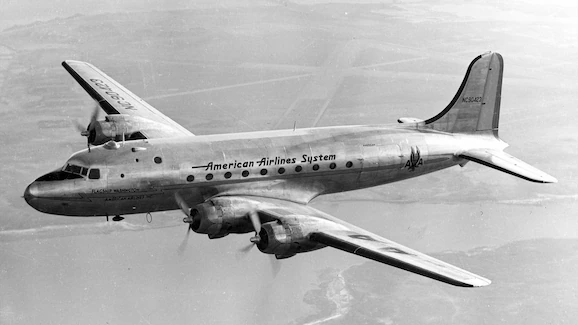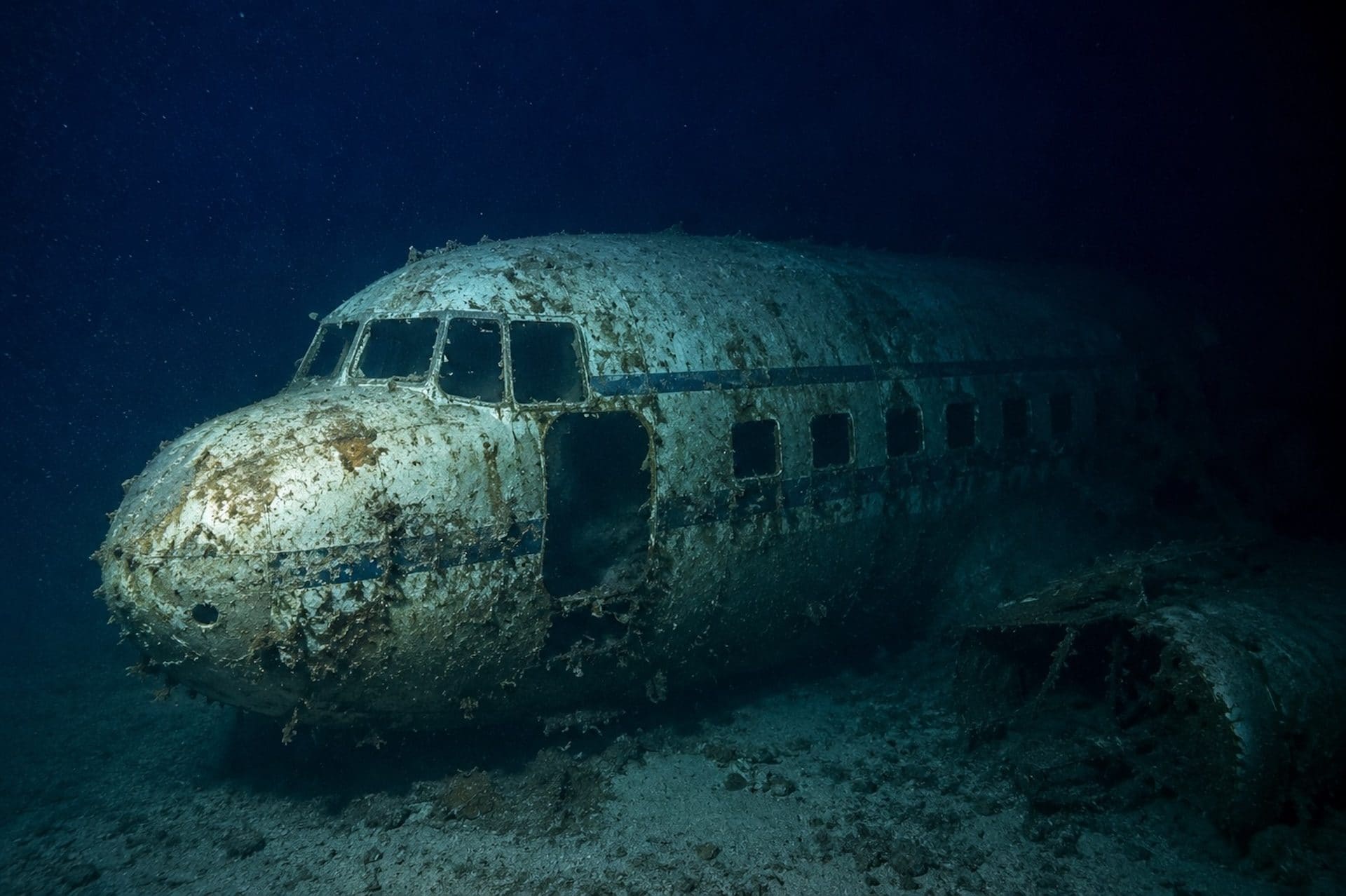
For over 70 years it lay in the dark, 610 meters below the surface of the Atlantic Ocean, off the coast of Puerto Rico. The wreckage of the Douglas DC-4 plane (called Clipper Endeavor) of Pan American Airways, which sank on 11 April 1952, following the failure of several engines shortly after take-off, was found 74 years after it crashed with the help of an underwater drone.
The expedition to find it was led by the Air/Sea Heritage Foundation in collaboration with the Discovery Channel’s Expedition Unknown program, which last month discovered the remains of the aircraft clearly showing the plane’s fuselage and tail still recognizable.
What happened on April 11, 1952: From Puerto Rico to New York
The Pan American Airways plane had taken off on April 11, 1952 from San Juan-Isla Grande Airport in Puerto Rico, bound for Idlewild Airport in New York. There were 64 passengers and five crew members on board. A few minutes had passed after takeoff when multiple engines failed almost simultaneously. The pilot had no choice but to attempt a ditching.
According to testimony from the 17 survivors, everyone on board survived the impact, yet some panicked passengers refused to leave the plane and had difficulty locating their life jackets and dinghys as the plane rapidly sank. Of the 69 passengers and crew on board, only 17 survived, rescued by the United States Coast Guard.
This disaster inevitably led to a radical change in aviation safety, including the introduction of safety instructions before every flight. In fact, since then, the crew has been required to show where the exits are, where the jackets are located, how they inflate, a ritual that today many passengers listen to distractedly, but which is the direct legacy of those seventeen survivors and those who didn’t make it.
The disaster that changed the rules of flight
In truth, the discovery was not accidental, on the contrary, it is the result of obstinacy lasting several years. It all started in 2019 when the explorer and historian Russ Matthews read the story of a luggage tag belonging to that flight, pushed by the waves to a beach in Florida. What struck him above all was the idea that such an important story had almost vanished from collective memory, so he began to reconstruct the last moments of the plane.
The turning point then came from a document, a map drawn by hand by some air force pilots who had witnessed the accident. By cross-referencing those signs with meteorological data from the day of the disaster, the researchers managed to narrow down the field to ten square nautical miles of seabed, where the wreckage was presumed to be lying, which then, thanks to the drone, was found during its first passage through the search area, on 2 June.
“Every time you board a plane today, you are safer because of what happened to the Clipper Endeavor and its passengers three-quarters of a century ago,” said Josh Gates, host of Expedition Unknown. The expedition, led by the Air/Sea Heritage Foundation in conjunction with the Discovery Channel’s Expedition Unknown, closed a chapter in aviation history, a history that was about to dissolve into a drifting luggage tag.