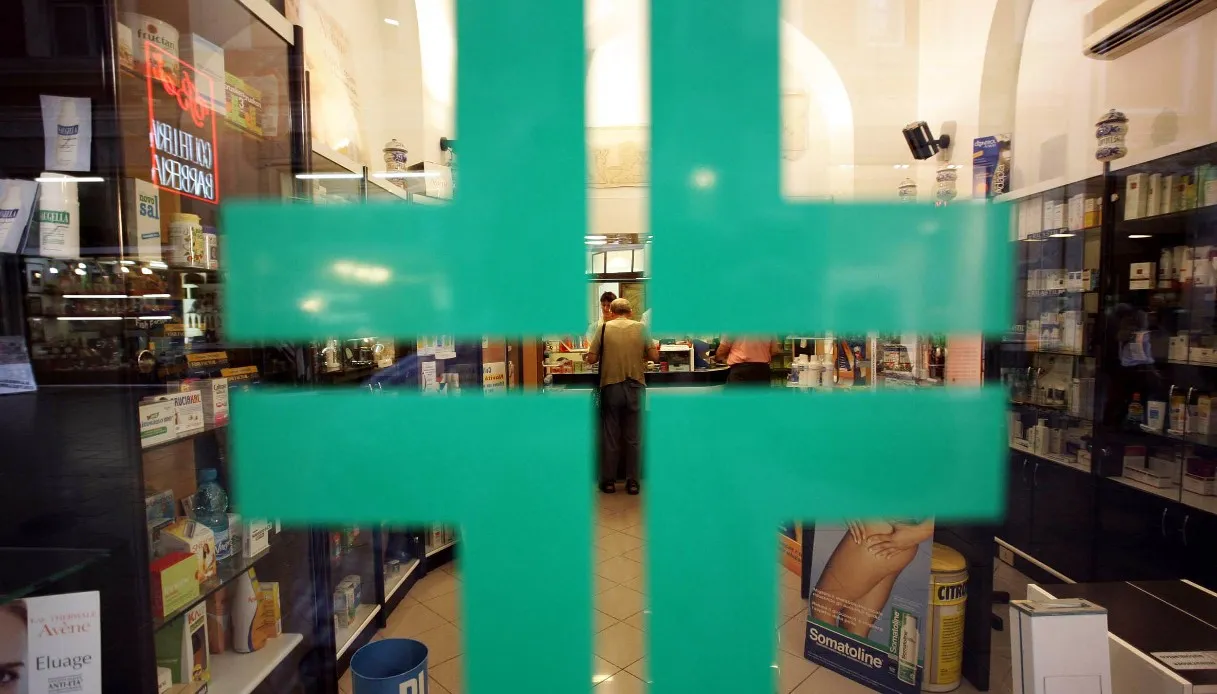
Pharmacies become a point of reference for local healthcare. The latest report created by Censis with Federfarma shows how 8 out of 10 Italians no longer use the pharmacy just to collect medicines. It is a real socio-health facility integrated into the National Health Service.
The reason behind this positive perception of the pharmacy is that it is permanently located in the area and is also very widespread. Almost 100% of Italians recognize that the pharmacy plays a fundamental role in the community and 9 out of 10 believe that it is always available and accessible, particularly in rural areas and especially for elderly people or those with mobility difficulties.
Pharmacies as proximity healthcare
8 out of 10 believe that the pharmacy is a fundamental place in the area. Not just a “medicine shop”, but a social and healthcare facility. This is the positive result that emerged from the latest report “Pharmacy in local healthcare” presented by Censis and Federfarma in Rome.
The photography is very positive and above all shows satisfied Italians. For 76% of those interviewed, in fact, the pharmacy becomes a fundamental unit integrated into the National Health Service. A place where 91.3% of citizens say they have a lot or enough trust and 71.9% underline this relationship by always going to the same pharmacy.
The president of Federfarma, Marco Cossolo, speaks of research as a key tool for reflection. “The evolution that the pharmacy is making is in a state of progress even if not yet completed and it is everyone’s responsibility to complete it in the interest of citizens,” he declared.
The importance on the territory
The pharmacy as a place present in the area, close, convenient and accessible, grows together with the aging of the population. For 80% of citizens, pharmacies become essential healthcare reference points in the area and almost 100% of Italians consider them an essential service.
Other data emerging from the report show how at least 7 out of 10 Italians go to the pharmacy at least once a month and 21.7% at least once a week.
The positive relationship with the pharmacist also increases. This becomes a support, but also an expert listened to in 90.5% of cases. In particular, the elderly see the pharmacy as a fundamental place, both for its proximity to their home and for the human relationship they can form with the expert.
The alternative to hospitals
It is precisely pharmacists and pharmacies that many Italians turn to. 64.5% say they ask the pharmacist directly for advice and recommendations on minor ailments.
Faced with an increasingly overburdened National Health Service, which is perceived as an obstacle, almost eight out of 10 Italians believe that the pharmacy reduces the pressure of patients on doctors and hospitals.
The evaluation of the transfer of some drugs from direct distribution on behalf of hospitals to pharmacies is also very positive. 68% of Italians declare that they have taken advantage of it and found advantages such as time savings, reduction in travel, reduction in waiting times and more agile procedures.
It is therefore no coincidence that the various services offered by the pharmacy are highly appreciated, such as:
- home delivery of medicines for the most vulnerable people;
- primary healthcare support;
- pressure measurement;
- booking tests and visits;
- tests for measuring cholesterol, blood sugar, glycated hemoglobin, creatinine, transaminase and hematocrit;
- flu and anti-Covid vaccines.
Precisely for this reason, expectations also increase, such as greater collaboration between pharmacists, doctors and other health professionals, the expansion of the types of medicines distributed directly in pharmacies or the strengthening of consultancy activities for citizens. Cossolo focuses precisely on this aspect when he declares that the report represents a starting point for all the objectives of the community pharmacy.