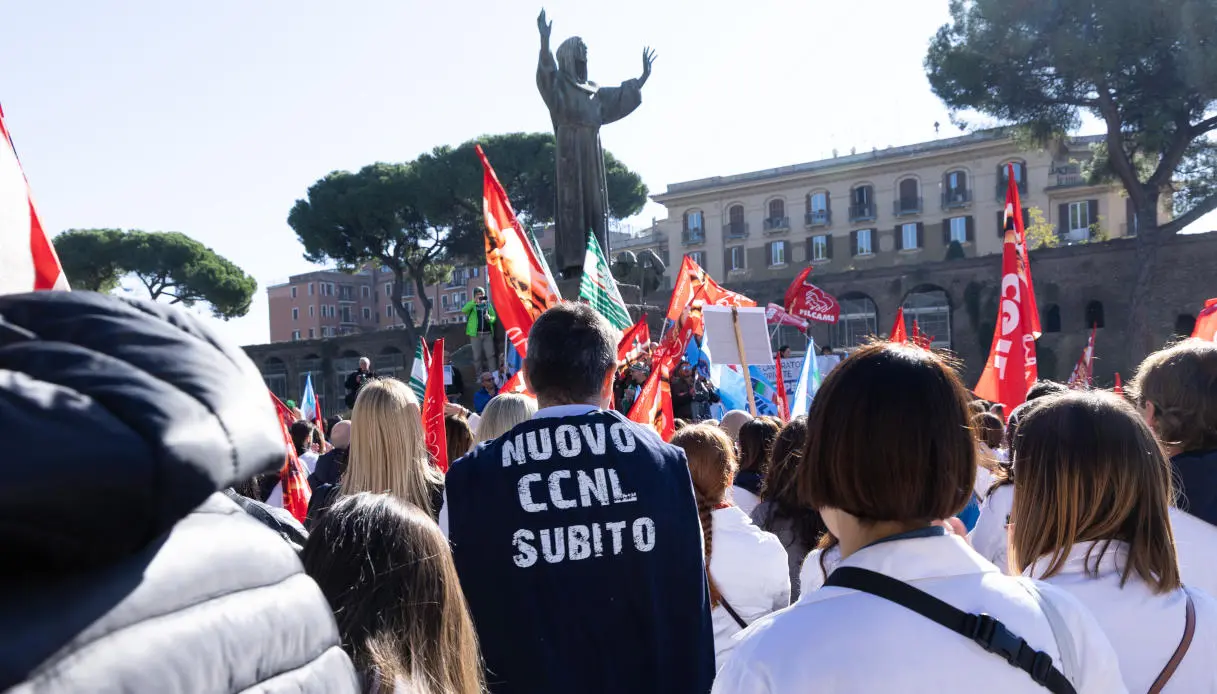
On Monday 13 April 2026, private pharmacies are involved in a 24-hour national strike affecting over 76 thousand workers including pharmacists, collaborators and employees. The strike will last from 00:01 to 24:00 on the same day.
The protest by private sector pharmacists arises from a knot that to date cannot be resolved: the national collective agreement expired on 31 August 2024 and which, after months of negotiations, has not yet been renewed. But pharmacists’ discontent is also due to other critical issues that concern a profession that is transforming.
Pharmacy strike, the situation
The pharmacists’ strike on 13 April 2026 is not a total stop: pharmacies will remain open but with reduced activities.
Since this is a fundamental service for the community, certain minimum conditions must be guaranteed during the strike:
- presence of at least one third of the staff;
- provision of at least 50% of services;
- opening also guaranteed for pharmacies on duty.
In practice, drugs can be purchased and essential services can be accessed, but with longer times and possible limitations. Only in extreme cases (total participation in the strike and organizational impossibility) could a pharmacy close, but it must communicate this to the local authorities.
Why pharmacists are on strike
The unions denounce:
- wages not adequate for the cost of living;
- loss of purchasing power in recent years;
- increased responsibilities without financial recognition;
- working conditions to be updated (shifts, maternity leave, illness).
And then there is another fundamental theme that concerns the transformation of the pharmacy: in recent years, with the so-called “service pharmacy”, pharmacists have become increasingly similar to first-level healthcare workers, offering services that did not exist before. The contract, however, remained stuck in the past. In summary: more work and more responsibilities for the same salary that doesn’t grow.
To frame the scenario, we need to understand that the national health system is downloading more and more functions onto the territory. On the one hand, the aim is to lighten the load on hospitals, which are chronically short of staff. And on the other hand we aim to improve the lives of citizens. In this regard, we would like to remind you that Italians are spread across just under 8 thousand municipalities and that millions of people live in contexts far from hospitals and clinics. A service pharmacy can therefore transform itself into a fundamental resource.
Pharmacists’ demonstration in Rome
The pharmacy strike of April 13th is accompanied by a national mobilization: a procession was staged in Rome starting from Piazza Vittorio Emanuele II and arriving in Piazza San Giovanni, near the Federfarma headquarters. The objective is to reach the unblocking of the negotiation.
It is not the first protest by pharmacists: there had already been a strike on 6 November 2025 which, however, as is evident, did not lead to significant results.
The header Collectivethe CGIL newspaper, reports the voices of the trade union organizations Filcams Cgil, Fisascat Cisl and Uiltucs who ask for “concrete answers on wages, professionalism and quality of work”. The acronyms denounce the stalemate in the negotiations” and highlight how despite the resumption of discussions, starting from the meeting on 4 February, “the distances have not been significantly reduced”. The unions state that “The renewal of the contract must restore salary dignity and prospects to the sector”.