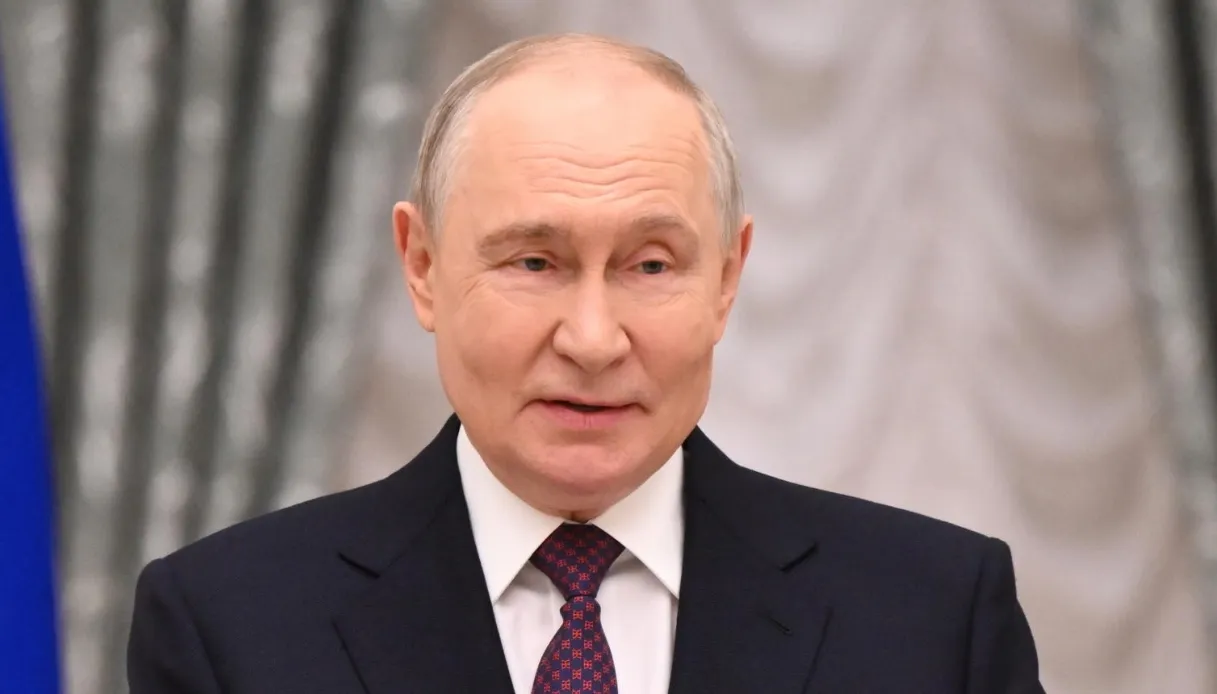
A decisive turning point arrives for UniCredit’s presence in Russia. President Vladimir Putin has signed a special permit authorizing the Italian bank to split its Russian subsidiary, AO UniCredit Bank, in two. Without this signature from the Kremlin, no foreign company could touch or sell its assets in Russia due to the war and sanctions.
Thanks to this green light, the Italian bank can continue with a plan agreed with a private investor from the United Arab Emirates to safely exit the Russian market.
How the division occurs
To understand the operation that can take place following Putin’s signature in Moscow, just imagine a cake cut into two slices, but with completely different roles.
We will call the sold portion the Remaining Bank, which is also the largest part of the bank, the one that manages current accounts, loans and everyday activities in Russia. This slice will be sold 100% by an Arab buyer, completely detaching the Italian bank from the risks of the local market.
Then there is the New Bank, the slice held by UniCredit on Russian territory. And it is a small new bank that will be born from the separation and will remain 100% owned by UniCredit.
What is this operation for?
Since the conflict broke out, Europe and the European Central Bank have asked all Western banks to flee from Russia to avoid financial or reputational dangers. No disarmament operation from Moscow is simple. Suffice it to imagine that Putin’s emancipation from gas is still unthinkable for several EU states, which by law will no longer be able to buy any from 2027.
By selling the main part to a fund based in the United Arab Emirates, UniCredit offloads almost all the risks of management on Russian soil. By holding only the small New Bank, the Gae Aulenti-based credit institution will only be able to act as a bridge for international payments in euros and dollars for Western companies that have yet to close their accounts in Russia or that work in sectors not affected by the sanctions.