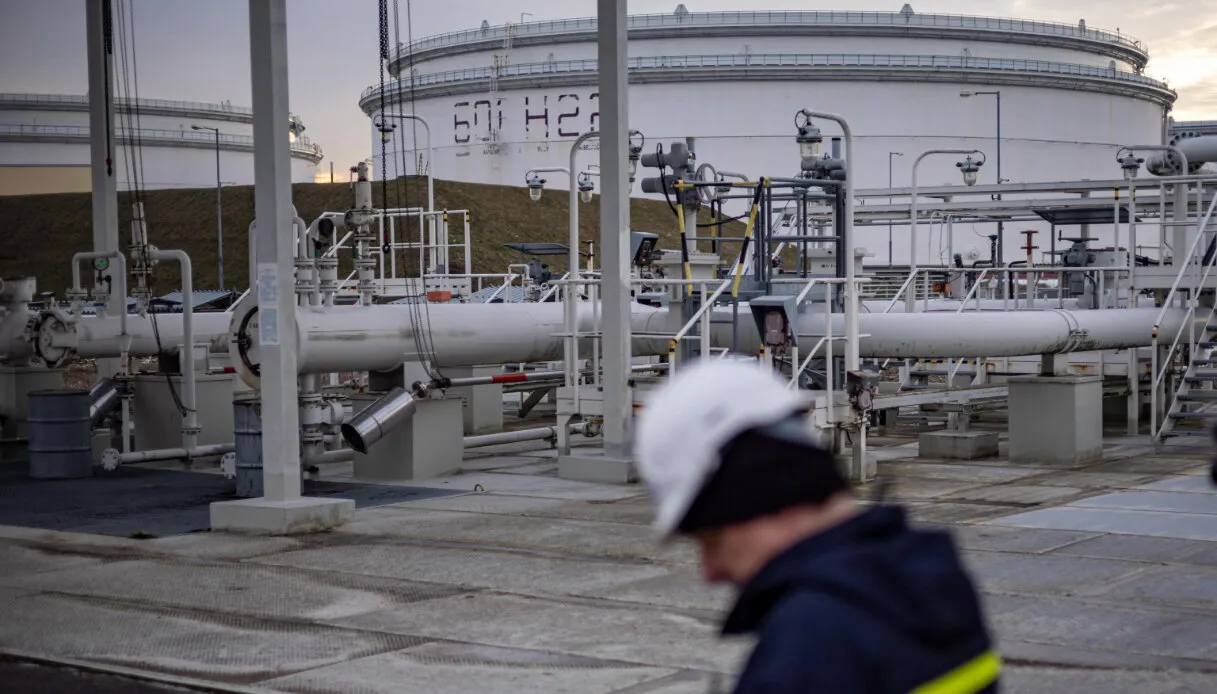
Over the last four years, energy has confirmed itself as a geopolitical weapon of the highest order. We rediscovered it with the war in Ukraine and we understood it very well with the conflict in the Middle East. The large-scale invasion of 2022 tore apart what was an intimate bond between European countries and Russia, based on the flow of oil and gas. However, in a very difficult situation for the United States, hegemonic on our continent, reopening in Moscow represents a lesser evil than other options.
Hence the (predictable) news of the complementary reopening of the Druzhba oil pipeline, literally “of Friendship”, which transports the black gold to the states of central and eastern Europe. All this while sanctions against Russian oil remain, albeit temporarily suspended.
Russian oil returns to the EU, what is happening
Russian oil resumed flowing through the Ukrainian section of the Druzhba pipeline on April 22, after a months-long interruption due to the war and Kiev and Washington’s agreed-upon posture toward Moscow. What seems like a “gift” to Vladimir Putin’s government is actually a compromise between opposing parties with a view to maintaining the only major element of Eurasian stability: the health of the European market.
Indeed, indirectly the recovery of Russian energy supplies to countries such as Hungary also comes to the aid of Ukraine. The return of Moscow oil has in fact pushed Budapest to revoke the veto on the 90 billion euro EU loan that Kiev urgently needs to resist the enemy advance.
It was Ukraine itself that was the first to inform Hungary of the resumption of deliveries of Russian crude oil through the pipelines passing through its territory.
EU loan for Ukraine, the geopolitical “game” behind Druzhba
Energy flows towards Hungary and Slovakia restarted during the night. The following morning, the EU ambassadors, meeting in Brussels, approved the maxi loan in favor of the invaded country. The 27 member states are now expected to sign it jointly by Thursday.
Brussels had approved the loan in 2025 to guarantee liquidity for Ukraine throughout 2026 through 2027. Former Hungarian Prime Minister Viktor Orbán and the Slovakian government however blocked it, accusing Kiev of delaying repairs to the Druzhba pipeline. Hungary and Slovakia are heavily dependent on Russian oil and trade energy for an opening to Russian influence, which from there spreads into the European undergrowth.
Sanctions on Russian oil are suspended, but remain
It might seem like a paradox or hypocrisy, but the purpose of sanctions against an adverse country is anything but moral. It is always a matter of geopolitical calculation, with a great primary objective: to weaken the internal front of the “enemy” state. On a propaganda level, then, all this is sold with the tired “good guys versus bad guys” scheme, but in essence
In the case of Moscow’s oil sanctions, the European Union’s decision followed the dictates of the American hegemons. The aim of which was and remains to detach the industrial heart of Europe, centered on the incredible production capabilities of Germany, from the enormous availability of Russian raw materials. A two-headed monster that represents the worst strategic nightmare for Washington, which fought a world war to prevent it. As well as encouraging the destruction of the artery which, in contemporary times, symbolized this partnership: the Nord Stream.
However, the dispute between the great powers took a turning point with the escalation of the war in Iran. The USA found itself unable to carry out the mission at the basis of its supremacy in the West: the defense of globalization, and therefore also of trade and energy flows. The closure of the Strait of Hormuz forced the reopening of the less hot and less risky front to supply European countries: Russia.
Hence Brussels’ decision to extend the exemption from sanctions on Russian oil transported by sea by 30 days, officially “in order to provide relief to India” and other vulnerable countries due to the Strait of Hormuz crisis. US Treasury Secretary Scott Bessent said the decision was made following requests from ministers from ten countries during meetings of the International Monetary Fund in Washington. Propaganda, but significant.
Despite this temporary move, European sanctions on Russian crude remain on paper. The import ban concerns 90% of oil supplies from the Federation to the Old Continent. There is also a similar ban on coal, which affects a quarter of all Moscow exports worldwide and leads to a loss of revenue estimated at around 8 billion euros per year. Market share, however, abundantly covered by China.
What is the Druzhba pipeline and why is it important
The Druzhba pipeline has become one of Europe’s most controversial pieces of infrastructure since a drone attack damaged its portion of the infrastructure in western Ukraine, disrupting supplies of Russian oil to Hungary and Slovakia. The infrastructure also carries Kazakh oil. The flow rate is between 1.2 and 1.4 million barrels of oil per day, with the possibility of reaching 2 million.
However, flows have shrunk to a small fraction due to Western sanctions and repeated disruptions due to attacks. Built in the early 1960s, Druzhba is the longest oil pipeline in the world and transports oil for approximately 4 thousand kilometers from Russia to Central Europe, with two branches:
- a northern one that supplies Belarus, Poland, Germany, Latvia and Lithuania;
- a southern one that supplies Ukraine, Slovakia, Hungary and Croatia.









