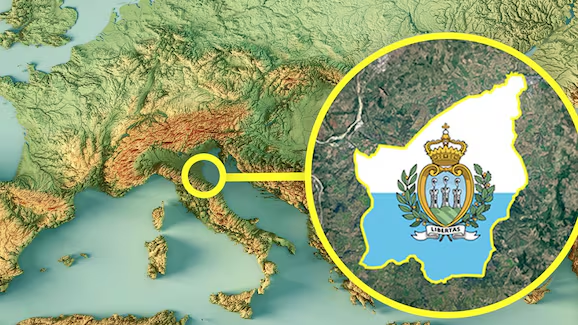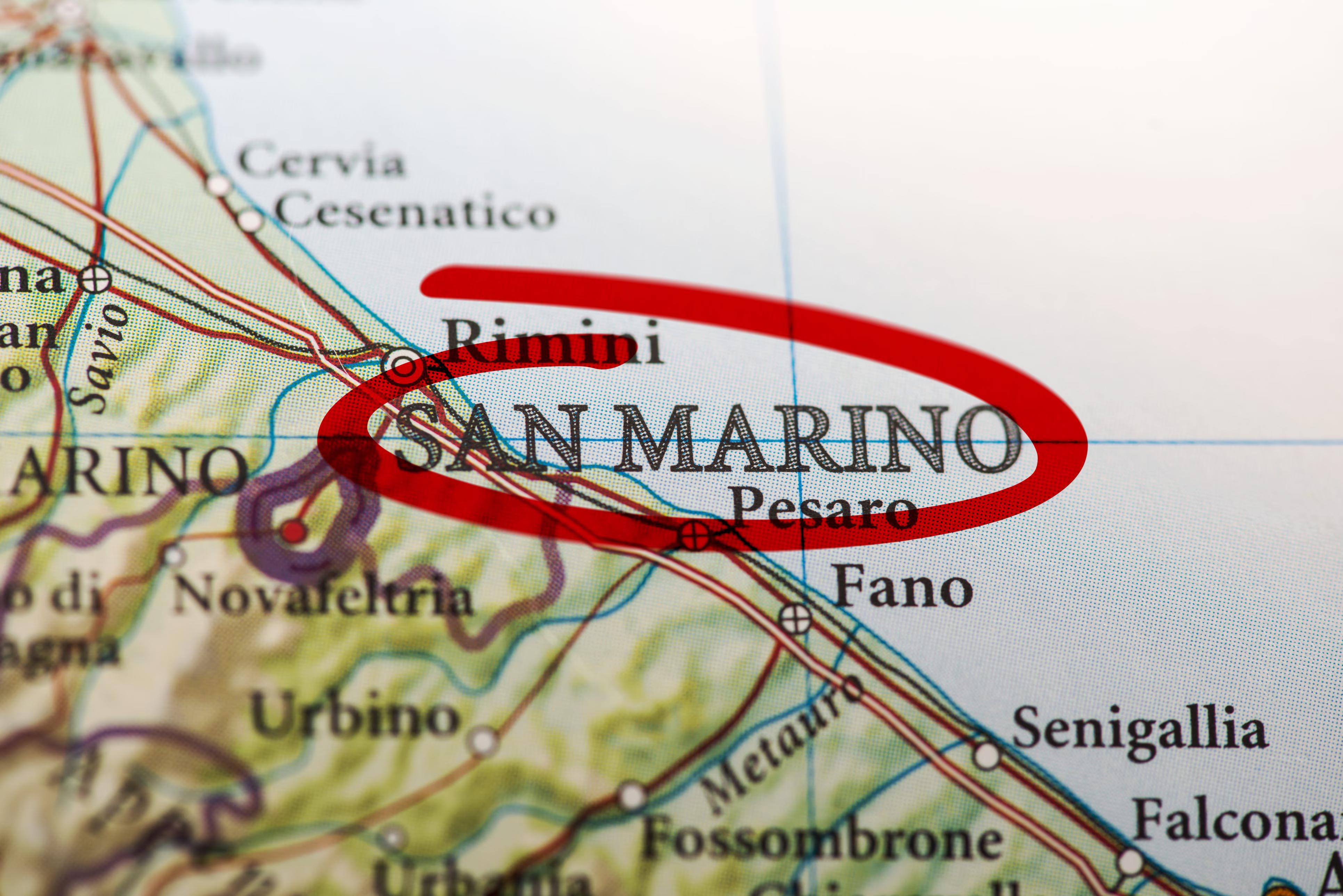
The Republic of San Marino, located between Emilia-Romagna and Marche and with a surface area of 61.19 square km, is considered the oldest republic in the world because, according to an unverifiable tradition, it was founded, as a monastic community, in the year 301 AD. C. Founder was Marino, a stonemason of the Christian religion following the persecutions ordered by the emperor Diocletian. However, there are no certain sources regarding the birth of the community, whose existence has only been confidently attested since the 9th century. The republican institutions date back to the 13th century, when the list of captains regent (originally called consuls) began and the pope formally recognized the independence of the state. Since then San Marino has always remained independent – and today, in fact, anyone born here does not automatically have Italian citizenship, since it is a foreign and independent state. In the nineteenth century, thanks to the prestige of its institutions and diplomacy, it was not involved in the process of Italian unification. Today San Marino, with its just over 34,000 inhabitants, is one of the least populous states among the members of the Council of Europe and the United Nations.
The foundation of San Marino
The traditional date of the foundation of San Marino is 3 September 301. On that date Marino, a Christian stonemason native of the island of Rab (now in Croatia), fleeing from the anti-Christian persecutions of Diocletian, founded a monastic community on Mount Titano, the highest of the hills on which the Republic stands today. After Marino’s death in 366, the territory took on the name Terra di San Marino. However, there are no sources contemporary with the foundation of the community; the date of 301 became established in the modern age.
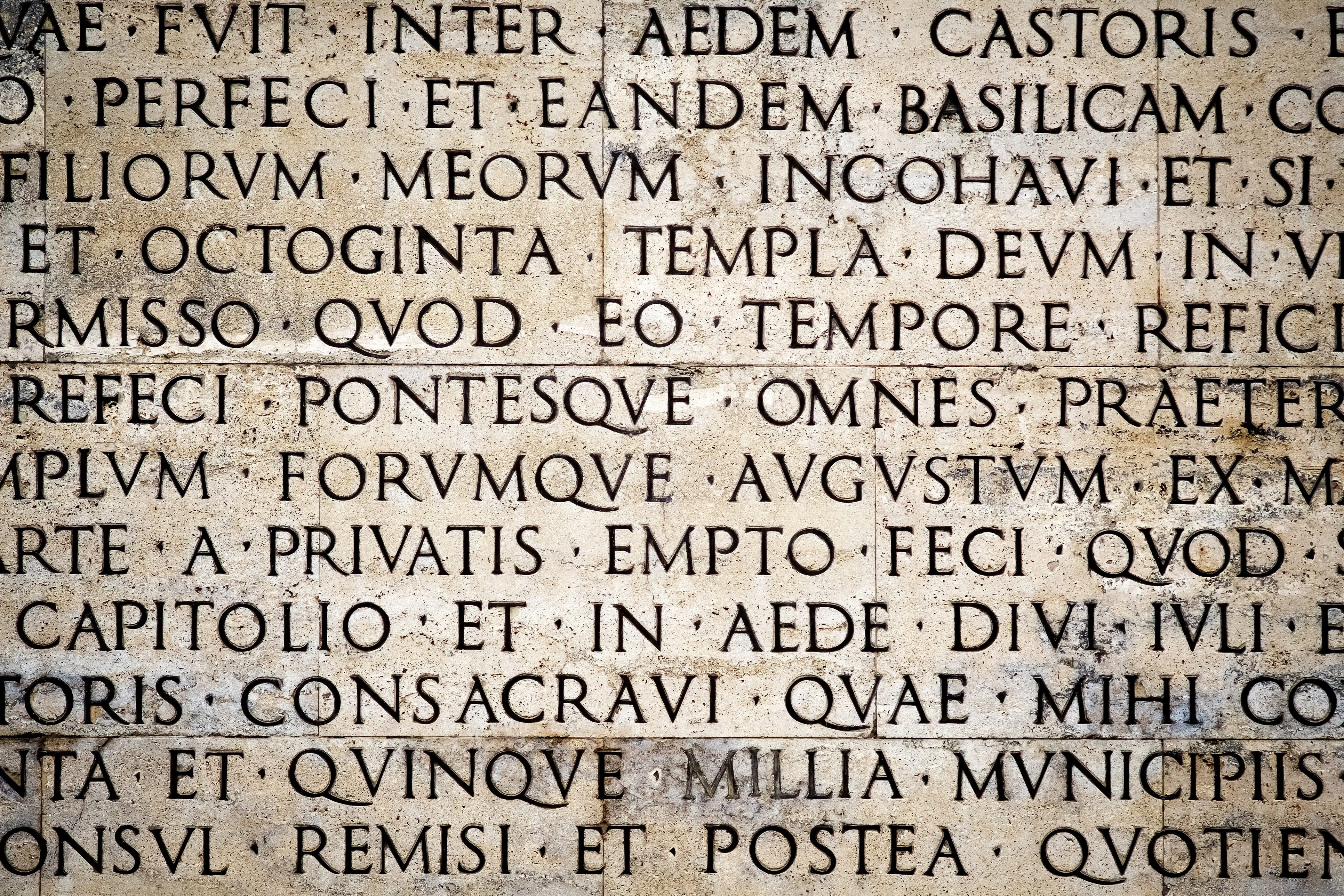
Tradition also has it that, before his death, Marino guaranteed the independence of the territory with the following words: Relinquo vos liberos ab utroque manthat is, “I leave you free from both men”, the emperor and the pope. The phrase is today one of the mottos of the Republic, but it was invented later, considering the fact that it would not have made sense in the 4th century, since the “diarchy” between empire and papacy only established itself in the Middle Ages. The fact is that the territory of Titan remained incorporated first into the Roman Empire and, after its fall, into the Exarchate of Ravenna, the political entity founded by the Byzantine Empire on the Peninsula.
The establishment of the Republic
The first attestation of the existence of an independent monastic community in the Titano area dates back to the year 885, when it was mentioned in the Placito Feretrano, a judicial sentence with which the abbot of San Marino was recognized as independent from the Church, rejecting the claims of the bishop of Rimini, who claimed ownership of some land on the Titano. The Placitus demonstrates that the community did not depend on the power of the bishops.
The existence of republican institutions is later. The institutions developed in the 13th century, at the height of the municipal age, when similar magistracies were born in numerous places in central-northern Italy. The first mention of the consuls (predecessors of the Captains Regent) dates back to 1244 (1243 according to other sources). In 1291 a more important event took place: the citizens of San Marino appealed to the bishop of Arezzo against the tax requests made by the Vicar of Montefeltro and obtained total exemption from taxes. It was, essentially, the recognition of the independence of San Marino.
So is San Marino the oldest Republic in the world?
The institutions of San Marino, as we have seen, were not a unique case; on the contrary, they were similar to those developed in the communal age in numerous other localities. The peculiarity of the Republic is that the municipal institutions, unlike what happened in other localities, survived: while the other medieval municipalities transformed into lordships and were later annexed by larger states, San Marino remained independent.
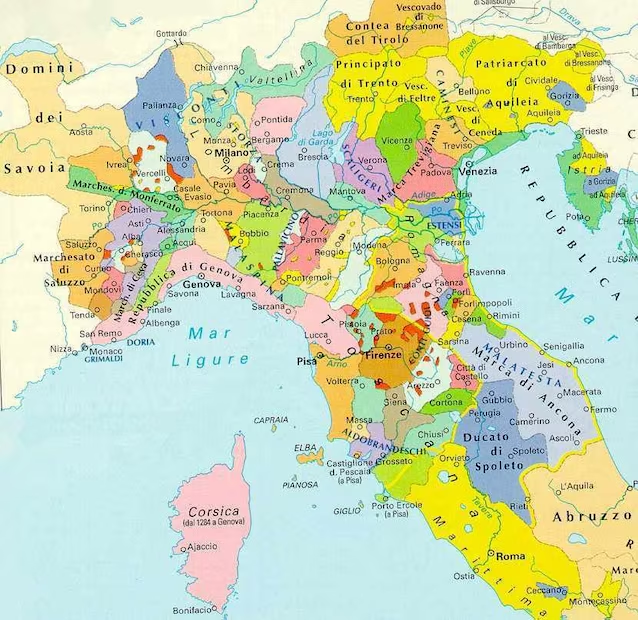
Therefore, stating that it is the oldest Republic in the world is formally correct, considering, however, that it is the oldest among the republics still in existence (other republican states had already existed previously, such as the Greek poleis or the Republic of Rome) and that it was born in the 13th century and not in the year 301.
Because San Marino was not annexed to Italy
The Republic retained its independence throughout the Middle Ages and the Modern Age. In 1600 the Statutes were promulgated, which are still in force today.
Independence was confirmed in 1797 by Napoleon, who came to the Peninsula for the Italian campaign: the future French emperor admired the institutions of the Republic to the point that he wanted to expand the borders to the sea (a proposal rejected by the San Marino people). The Congress of Vienna of 1814-15, which redrew the map of Europe, also confirmed the independence of the Republic.
During the Risorgimento, San Marino was the only territory of the Peninsula not included in the project of Italian unification: the ancient independence, the skilled diplomacy of its rulers and the geographical position meant that the Republic was not involved in the Risorgimento wars and that the territory was not annexed to the Kingdom of Italy. San Marino, moreover, supported the patriots of the Risorgimento and in 1849, when the Roman Republic was overthrown, it also gave asylum to Garibaldi.
In 1862 the Republic and the newly formed Kingdom of Italy signed a treaty of friendship: the independence of the Republic was thus definitively recognised.