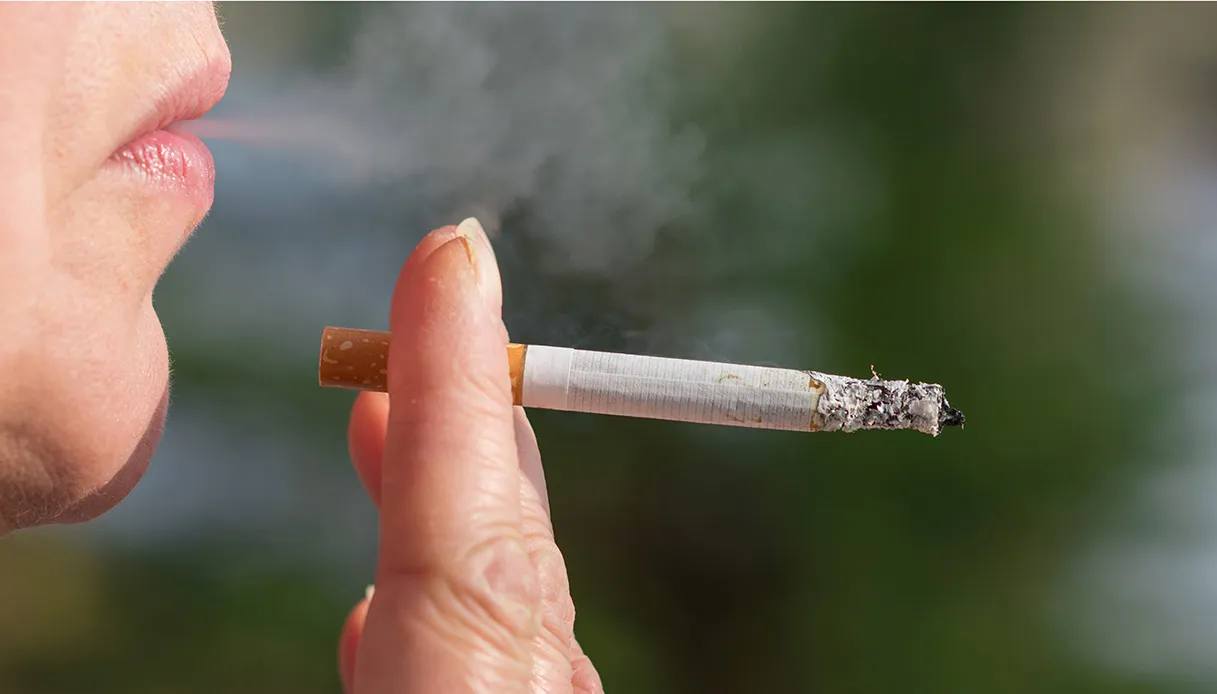
Nine out of ten lung cancers are attributable to cigarette consumption: in 2024 this addiction contributed to 420 thousand oncological deaths in Europe, 55 thousand of which in Italy and to 885 thousand new diagnoses – 130 thousand in our country – confirming itself as the main avoidable risk factor for one of the most lethal and widespread neoplasms. This was remembered by the experts of the Alliance Against Cancer, the National Oncology Network of the Ministry of Health.
Not only that: what is also worrying is the future which sees smoking remaining by far one of the most dangerous oncological risk factors. The widespread diffusion it continues to have, especially among younger people, is also worrying. In Italy as many as 11% of under 19s smoke regularly and among them 10% already consume at least half a pack of cigarettes a day.
Not just respiratory tracts
According to the International Agency for Research on Cancer (IARC), smoking is not only associated with almost all lung cases: it also significantly increases the risk of at least sixteen other types of cancer, including those of the oral cavity, throat, pancreas, colorectal, bladder, kidney and esophagus. Added to this is the contribution to cardiovascular and respiratory diseases, which still make it the main avoidable cause of illness and death.
In short: saying stop smoking, or even better keeping away from it, means well-being. For everyone. Just think: the analysis of European oncology registers conducted by the Network shows a difference of up to three times in the incidence of lung cancer between women residing in countries with the greatest prevalence of smoking and those in countries where the habit is less frequent. In 2024, approximately 22 thousand excess cases have been estimated in countries with incidence levels higher than the European average.
“The data demonstrate that anti-smoking policies produce concrete effects when they are applied continuously. The reduction recorded in Italian men confirms the effectiveness of prevention interventions, while the critical issues remain more evident in the female population, where cigarette consumption spread later and continues to generate significant health consequences”
reports observes Diego Serraino, epidemiologist and consultant for the Alliance Against Cancer.
How we are doing in Italy
Italy offers an example of how important getting busy is. The measures of the last two decades have produced a strong decrease in the incidence and mortality from lung cancer in the male population, with approximately 67 thousand deaths avoided between 2007 and 2019. Among women, however, the balance remains negative, with approximately 16 thousand more deaths compared to the 2003-2007 period, confirming an epidemiological transition that follows different times from those observed in men.
The geographical dimension is accompanied by the social one: according to the PASSI indicators, in the two-year period 2023-2024 24% of Italians aged between 18 and 69 smoked; however, the prevalence is higher among those with a lower level of education and among those experiencing more difficult economic conditions, demonstrating how smoking also remains an indicator of inequality.
It is important to act with targeted projects
The fight against smoking therefore represents a stable priority of health policies, not only as an individual prevention intervention, but as a concrete measure of equity and public health. Confirmation also comes from the experts gathered in Chicago on the occasion of the American Society of Clinical Oncology (ASCO) congress. In particular, we talked about research just published in the Journal of Clinical Oncology, which evaluated 324 specific smoking cessation programs promoted by the American College of Surgeons on women with breast cancer. In total, 446 thousand patients were involved for 12 months. 63% of smokers received specific assistance with a strong increase in the cessation rate, which went from 48% to 67.5%.
“Care for cancer patients is constantly evolving and it is necessary to improve the preparation of specialists also for tertiary prevention. Smoking is an addiction that affects one in four adults in our country and has a significant percentage, over 10%, even among cancer patients. As has emerged from numerous scientific studies, the damage of smoking continues even after a cancer diagnosis and subsequent treatments”
comments Rossana Berardi, President Elect AIOM/Italian Association of Medical Oncology.
But be careful: it’s never too late to say goodbye to cigarettes. 3 months of abstinence from smoking is enough to reduce cancer mortality in a patient by 26%, as demonstrated by a study published in Jama Oncology. Fundamental, therefore, are individual virtual counseling, group courses, nicotine replacement therapies, telephone support and other tools. Assistance with cessation must become an integral part of the treatment system and training and awareness-raising courses are needed to encourage it also among doctors.
In view of the importance of action in the fight against smoking, it should finally be remembered that over 51 thousand signatures have been collected by AIOM, AIRC Foundation, Veronesi Foundation and AIOM Foundation for a popular initiative law to increase the cost of all smoking and nicotine inhalation products by 5 euros. The quota of 50 thousand signatures required by the Constitution has already been reached and therefore delivery to Parliament for discussion is awaited.