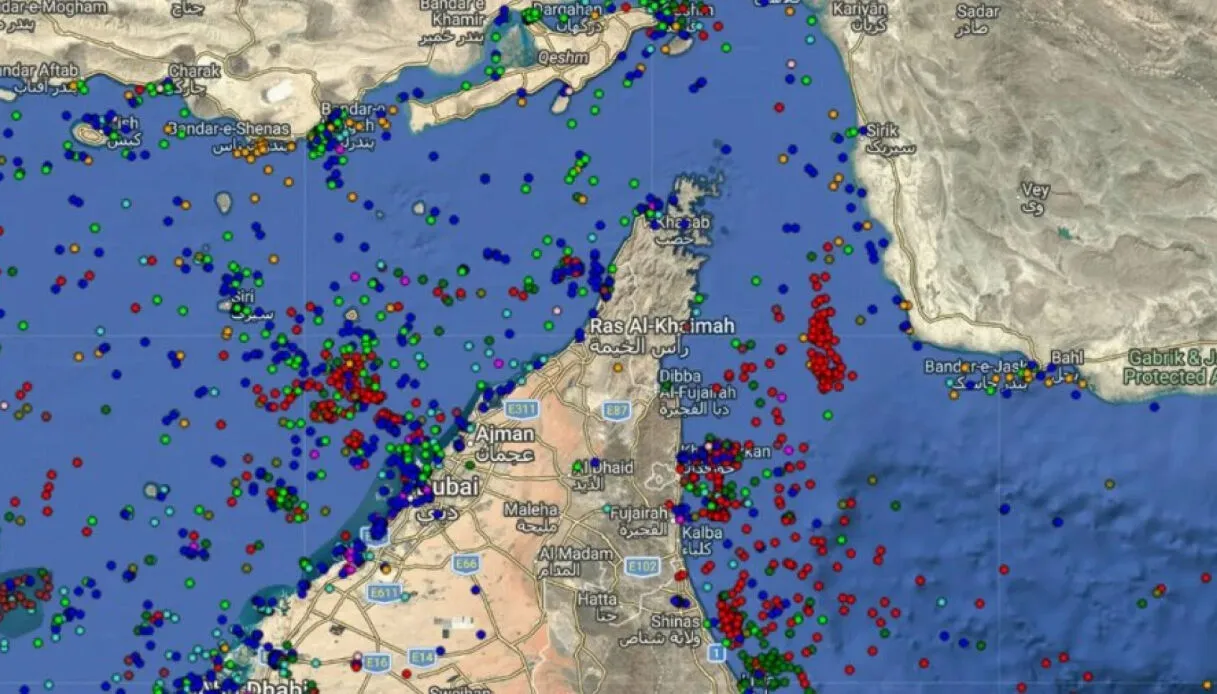
While, after the recent US intelligence assessments broadcast by CNN, Tehran’s military capabilities are at the center of the international debate, three possible general scenarios emerge regarding the evolution of the war waged against Iran by the United States and Israel. According to recent US intelligence assessments after a month of war, about half of Iran’s missile launchers are still intact and Tehran still has thousands of attack drones at its disposal. According to the report, Tehran still has around 50% of the drones and a vast amount of cruise missiles that constitute a key strategic capability to threaten maritime traffic in the Strait of Hormuz. In the worst case scenario, with a prolonged duration of the war – according to an analysis by Karsten Junius, chief economist of J. Safra Sarasin – the stock market risks a decline of up to 15%. The Swiss private bank is betting, however, on the hypothesis of “contained conflict” with the stock market at -5% and S&P500 above 6,500 points
Central scenario: contained conflict (50%)
The air campaign continues for several weeks. Iranian military capabilities are sufficiently weakened, limiting their ability to sustain attacks in the region. However, the regime retains some military strength, including through its representatives in the region. Political considerations incentivize the US administration to end the campaign before rising oil prices impact the domestic auto season and the economy more generally. Both sides return to the negotiating table, even if the results remain uncertain and geopolitical ambiguity persists. The Strait of Hormuz reopens without significant damage to regional energy infrastructure. There remains a residual geopolitical risk premium, with oil prices stabilizing around $75 a barrel, about 15% above levels at the start of the year. Headline inflation in advanced economies increases on average by about 0.5 percentage points after 2-3 months, with a slightly larger impact in Europe and a more moderate effect in the United States. Emerging markets recorded a more pronounced increase of 1-2 percentage points. Inflationary pressures prove transitory, with limited second-round effects; the impact on core inflation is less than half the increase in overall inflation. Most central banks maintain a pause in the short term, but eventually proceed with previously anticipated rate cuts (notably the Bank of England and the Federal Reserve). Rising energy prices and greater political uncertainty are putting a modest drag on global growth by around 0.2 percentage points
Fixed Income – Yield curves remain unchanged. Some of the risk aversion flows will reverse and lead to moderately higher returns across currency markets. The upside in yields will be limited by uncertainty about the labor market effects of the artificial intelligence revolution and negative news from private credit markets. Credit spreads are expected to remain stable or widen only moderately
Currencies and Gold – The US dollar is expected to continue trading around current levels, with the trade-weighted DXY index ranging between 98 and 100 in the near term. We also expect the euro and Swiss franc to trade around current levels, while gold should be supported above $5k per troy ounce.
Equities – “We expect – highlights Junius – that volatility will remain high until risks to oil supply and the global economy abate (VIX>20). The decline in the stock market should be limited to around 5% compared to pre-air campaign levels, leaving the S&P500 above 6,500 points. As the end of the military campaign approaches, markets are set to recover. Our end-of-year target for the S&P 500 of 7,400 points remains unchanged.
Worst case scenario: prolonged regional conflict (25%)
Iranian military capabilities prove more resilient than initially expected. The conflict extends regionally, involving additional actors and preventing US disengagement. The Strait of Hormuz remains closed, causing damage to energy infrastructure; Oil prices exceed $100 per barrel and remain high for an extended period. Headline inflation increases by at least 2 percentage points in most economies, accompanied by more pronounced second-round effects and rising inflation expectations. A recession becomes likely in several economies, particularly in Europe and oil-importing emerging markets. A stagflationary environment complicates monetary policy calibration for central banks. Economic gap between net oil exporters and importers widens, with Europe and Japan harder hit than the US
Fixed Income – Yields could decline more significantly as high oil prices and geopolitical uncertainty cause markets to price in a greater likelihood of recession. Credit spreads could widen significantly to account for the weakening economy.
Currencies and Gold – In this scenario, the US dollar is expected to see a significant increase, with the trade-weighted DXY index rising above 100 in the near term. The surge in oil prices will impact cyclical currencies more significantly, likely pushing the EURUSD towards 1.15, while the EURCHF could fall below 0.90, increasing the risk of currency market interventions by the SNB. In this scenario, we expect gold to rise towards $6,000 per troy ounce and will likely revise our year-end targets if that happens.
Equities – “We expect – underlines the analyst – an increase in volatility (VIX>40). The stock market will suffer a decline of up to 15% (S&P500<6,200). Defensive and energy sectors should outperform. Net oil importing countries will be the most affected: for example India, Korea, Japan, euro area markets. Our end-of-year target for the S&P500 should probably be lowered to <7,000, as the economic fallout from the sharp rise in oil prices would be a major drag on earnings in 2026.
Optimistic scenario: the conflict subsides quickly (25%)
In this scenario, the overall macroeconomic impact remains limited. The active conflict subsides within a few weeks. The military campaign proves highly effective in reducing Iran’s military capabilities. Missile and drone attacks cease. The Strait of Hormuz reopens promptly, with minimal damage to energy infrastructure. The Iranian regime relents on key issues, particularly its nuclear and ballistic weapons programs. President Trump declares strategic success and withdraws most US military assets from the region. Oil prices drop rapidly to around $65 a barrel.
Fixed Income – Yield curves steepen moderately as some of the risk aversion flows reverse. Ten-year bond yields will likely return to previous levels. 4.25% average yield on 10-year US Treasury bonds, 2.8% on 10-year Bunds. The upside in yields will be limited by uncertainty about the labor market effects of the artificial intelligence revolution and negative news from private credit markets. Credit spreads will likely tighten slightly from current levels.
Currencies and Gold – The US dollar is expected to fall again, reversing recent gains, with the trade-weighted DXY index returning to around 97 in the near term. This scenario would also allow the euro to recover recent highs and ease upward pressure on the Swiss franc, while gold should return towards $5,000 per troy ounce in the near term.
Equities – Volatility is expected to decline (VIX<20). Gains in the energy sector and losses in the discretionary/airline sector are expected to reverse the trend. The decline in stocks should remain very limited (the S&P 500 should remain above 6,700 points). Our year-end target for the S&P 500 of 7,400 points remains unchanged.