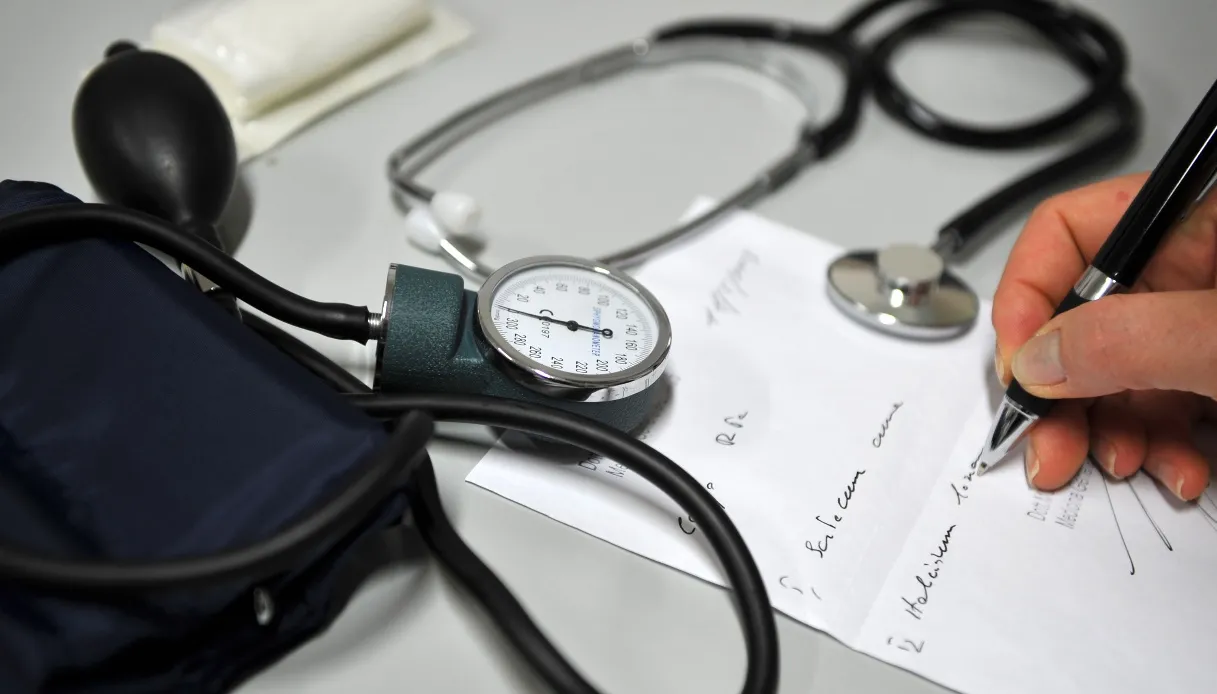
The healthcare problem in Italy is not only due to a shortage of staff or excessively long waiting lists. According to what was reported by the Minister of Health Schillaci, the problem is also an excess of medical prescriptions dictated by an often exaggerated prudence compared to real critical needs.
The minister explained the phenomenon at the Ansa forum, describing a scenario in which tests are often requested even when not necessary and this ends up fueling a vicious circle made up of overdiagnosis, waste of resources and times that are too long for those with real emergencies. To deal with this phenomenon, the Minister of Health and the Istituto Superiore di Sanità are working to develop and disseminate “recommendations of good clinical-care practice”.
Long waiting lists: too many requests for “useless” tests
The Minister of Health Orazio Schillaci, at the Ansa forum, exposed a phenomenon that would contribute to making the Italian healthcare system perceived as inefficient. Of course there is a shortage of staff, but public health waiting lists are often overwhelmed by an excess of medical prescriptions.
Schillaci states:
There is an increasing number of requests for tests from citizens and a high rate of inappropriateness.
Starting from this phenomenon, the Ministry of Health and the Istituto Superiore di Sanità are working to help in prescribing the tests.
According to Schillaci:
Sometimes, unfortunately, I say this as a doctor, it is easier to accept an inappropriate request from a citizen than to reject it.
Useless exams: what are they?
Again according to the minister, there is a list of “useless” tests due to the request of citizens who, scared for their health, turn to doctors and propose to carry out specific visits. Again from his experience, the minister talks about how it is often easy to end up satisfying these requests, rather than investigating at a preliminary stage to understand if a need really exists.
Cite for example:
- abdominal ultrasound;
- wrist resonances;
- PET for prostate cancer.
It refers in particular to complete abdominal ultrasound, one of the most requested services and frequently affected by phenomena of oprescriptive veruse.
The most cited examples are those for which part of the documents that will make up the final text of the “Recommendations for good clinical care practice” have already been designed.
The minister himself gives a preview when he mentions how ultrasound often fails to bring real clinical value because it is used without a precise diagnostic suspicion or repeated without justification. But also the management of carpal tunnel syndrome, one of the most widespread neuropathies and for which ultrasound represents a useful tool also as a replacement for magnetic resonance imaging, which is more detailed, but also more expensive.
The gap between regions
Still speaking in the space of the Ansa forum, Minister Schillaci explained why there is still so much regional heterogeneity in the positive results of the management of waiting lists.
The minister stated that:
The Single Cup is achieving positive results, but there is still work to be done to ensure that the law on waiting lists is applied everywhere.
What emerges therefore is that where the law is applied, the trend is positive and there is an increase in services and a reduction in waiting times. At the moment there are regions that are doing better and others that are doing worse. Among the causes, also the inappropriateness of some requests for examinations which overwhelm the waiting lists.