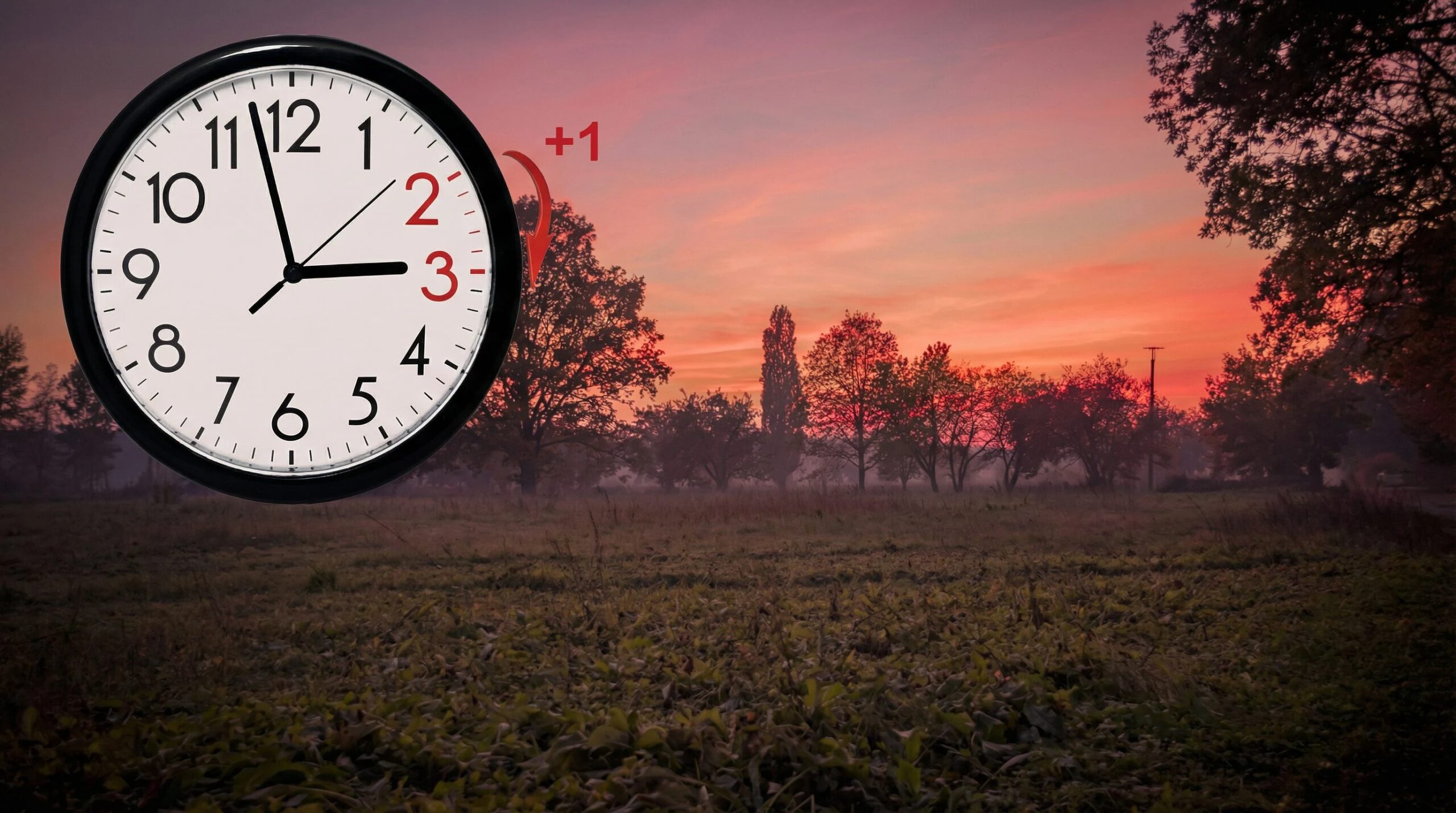
With the start of spring, summer time also returns: on the night between Saturday 28th and Sunday 29th March the clock hands will move one hour forward, with 02:00 becoming 03:00. This means that we will sleep an hour less, but we will be able to enjoy an hour more of light in the late afternoon, since the sunset will fall an hour later than before.
As always, the time change will come into force throughout the European Union: digital devices connected to the internet will update the time automatically, while analogue ones will require manual intervention.
The alternation between solar time and summer time (which officially came into force in Italy in 1966) is still the subject of debate today: this shift, however, is maintained for the savings on the electricity bill linked to the greater availability of natural light. More specifically, according to Terna data, summer time will allow savings of 80 million euros throughout 2026, with 302 million fewer kWh consumed.
Daylight saving time will accompany us until Sunday 25 October 2026, when solar time will be restored and the hands will be moved back one hour, from 03:00 to 02:00.
What time will we switch to daylight saving time in March 2026
Like every year, the change between solar time and summer time takes place on the last Sunday of March. This year the transition to summer time is scheduled for March 29, 2026: on the night between Saturday 28 and Sunday 29 March, in fact, the hands will be moved forward one hour, with 2:00 becoming 3:00.
The clocks on smartphones, tablets and computers will update automatically, while analogue clocks (such as wrist ones or those found on older cars) will have to be adjusted by hand.
The time change will not come into force only for Italy, but for the entire European Union: according to EU directives, in fact, all the countries of the Union will have to move the hands forward by one hour to 01:00 UTC (coordinated universal time, i.e. the time in the Greenwich Mean Time, which corresponds to 02:00 in the morning in Italy) during the last Sunday of March.
You sleep an hour less (but there is a reward)
Due to the time change, therefore, we will sleep one hour less, since 02:00 on March 29, 2026 will automatically become 03:00. This, however, will allow us to enjoy an additional hour of light in the evening, given that sunset will also move one hour forward.
Summer time, however, has not always existed: in Italy, after several experiments between the First and Second World Wars, summer time was officially introduced in 1966 with Law n.1144, with a view to making the most of solar hours and reducing the waste of daylight.
Because we keep moving the clock
As anticipated, the main reason for the introduction of summer time is the energy savings achieved by making greater use of sunlight: according to measurements by Terna (the manager of the national transmission network), the return to summer time in 2026 will allow economic savings of around 80 million euros, thanks to a lower electricity consumption of around 302 million kWh, which is equivalent to the average annual requirement of 115 thousand families. This will allow a cut in CO emissions2 in the atmosphere equal to approximately 142,000 tons.
In economic terms, between 2004 and 2025 the change to summer time resulted in savings for citizens of approximately 2.3 billion euros, with over 12 billion kWh of electricity not consumed.
The change now, however, remains a topic still debated due to the potential disadvantages: in March 2026, the









