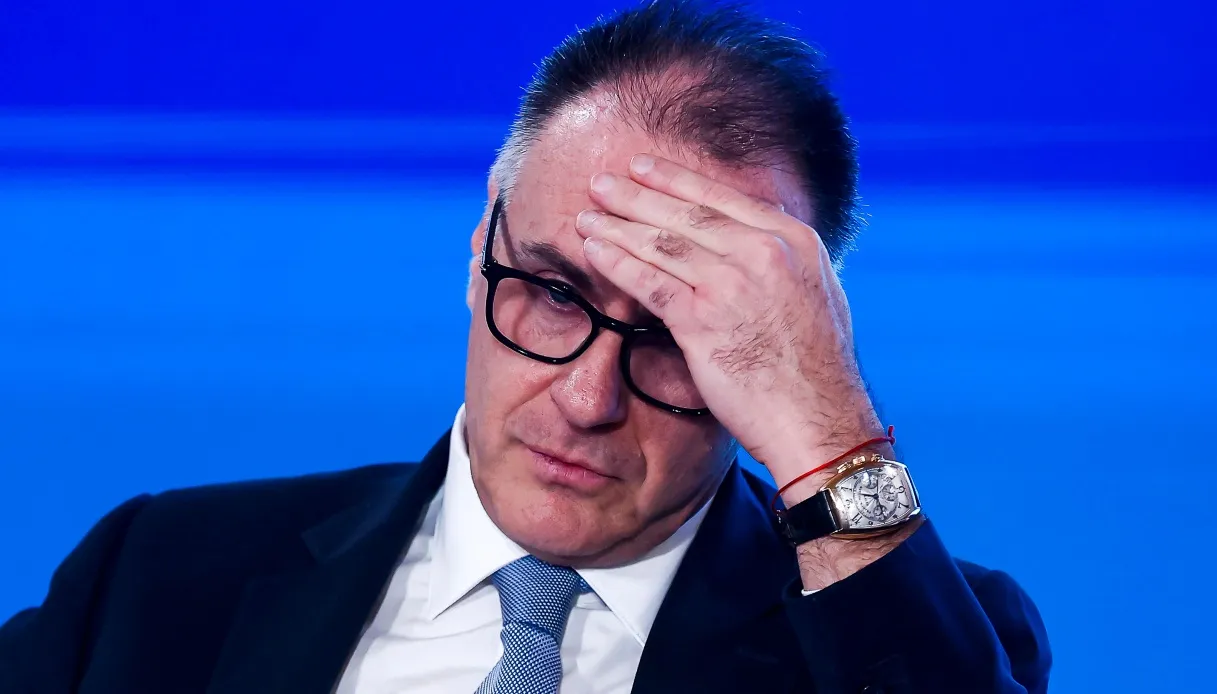
The president of Confindustria, Emanuele Orsini, asks for a discussion table with the Government. An urgency that he addresses to the Executive from the stage of the XXII Small Industry Forum. In the meantime, the majority summit on the Budget Law is being prepared at Palazzo Chigi. The target is the rule that spreads the use of Superbonus credits over 10 years, a highly contested step of the 2027 budget.
The measure concerns credits for approximately 20.5 billion euros. In 2027 they would weigh on public accounts for just over 2 billion, while the remaining 18 would be postponed to the following nine years. For the State it is a way to buy time, for the companies that hold those credits, an estimated approximately 2 billion, it is a liquidity problem. “We can’t afford it,” he warns of companies.
New discussion table on the Superbonus
Emanuele Orsini, president of Confindustria, is not the only critic of the Government’s choice on the Superbonus in Maneuver, but in chronological order he is the last to make a point and ask for a new discussion table.
Not only for the 2027 Budget, but also for the future. In fact, Orsini sets a deadline, April 14, 2027, as the moment in which a text will be produced to be given to all political parties. It is the first chapter of the bill, the one for which Orsini says “we hope that politics listens to us”, and it is the chapter on the Superbonus.
Currently, the 2027 budget is designed to spread the credits on renovations over 10 years. There are 20.5 billion euros which in 2027 will weigh on the state coffers for just over 2 billion, while the others are postponed to the following nine years. Critics of this choice point out that this is a serious problem for those who are waiting for those credits.
Orsini declares:
We cannot afford the 10-year Superbonus credits. There is a risk of putting companies that believed and relied on the State at risk. It is an issue of legal certainty.
Hence the request to the Government for a discussion table.
The clash with Intesa Sanpaolo
Orsini’s new request joins a previous irritation, which seems to have been resolved with a clarifying phone call between the CEO of Intesa Sanpaolo Carlo Messina and Giorgia Meloni.
In that case, Messina had spoken of “South American” measures. What created tension was the issue of the intervention of banks, insurance companies and other operators for the Maneuver and therefore for the country.
Meloni’s response was critical, underlining to Messina that we must help ourselves. The problem is that in the Budget Plan the Government had already foreseen a contribution of around 5 billion euros from the financial sector in a budget that weighs over 26 billion, but it is not yet clear how this burden will be distributed.
Messina invited us to look at the banks’ balance sheets from the other side, not only the profits, but also the taxes that the sector pays to the State. Because every day, Messina underlined at the Coldiretti Forum in Rome, news of the banks’ profits comes out:
But what is not said is that for the 50 billion in profits the State will collect 25 billion in taxes.
A figure which, according to Messina, should enter into the debate on the contribution requested from the institutes, so as not to be seen as “profiteers of this country”.