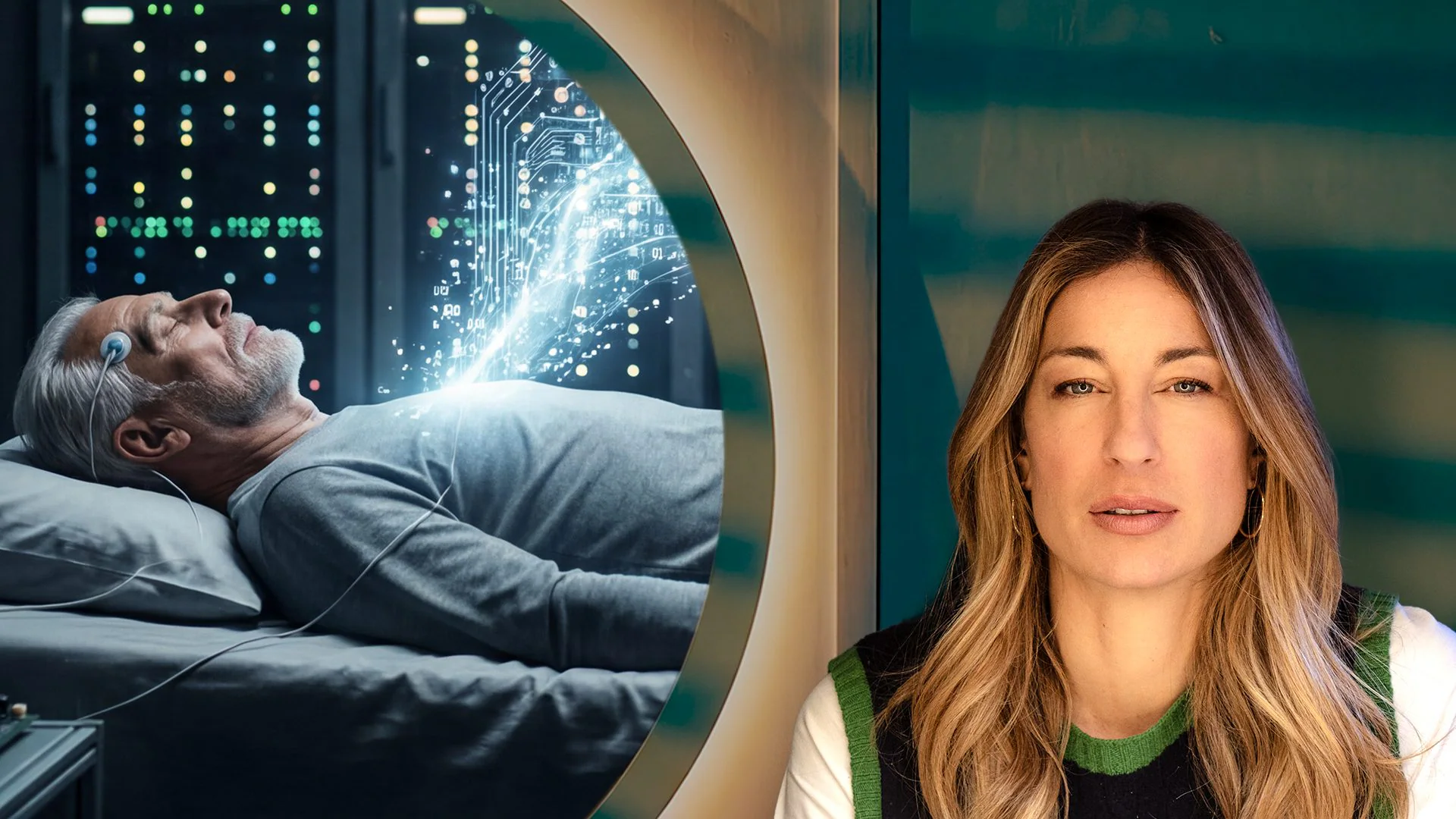
It sounds like the plot of an episode of Black Mirrorbut it is already reality. Today there are applications based on Artificial Intelligence that allow you to recreate the avatar of a deceased person and talk to them, call them or exchange messages whenever you want. Welcome to the world of Grief Technology (the “pain technology”), a market that in 2025 exceeded the value of 30 billion dollars. But are we sure that evading the mourning process by continuing to relate to a digital entity is really good for our psyche? We analyze the aspects of this possibility in the first episode of Specchio Giallo, the Geopop series in which we reflect on how technology and AI are silently changing our psychology, our relationships and our most intimate life.
How digital immortality works (and how much it costs).
Creating a digital double of a person who is no longer with us is technically very simple. AI only needs the data we already have in our smartphones: photographs, videos, WhatsApp conversations or simple voice notes. In a few minutes, the AI takes in this information and generates a replica capable of shockingly imitating accents, tones of voice and facial expressions. The more material provided, the more accurate the simulation. It is a process that can also be done personally by registering your data today to leave an “interactive avatar” as a legacy to your children and grandchildren.
There are already several dedicated platforms on the market such as ReliveAble which allows you to build a vocal memorial of the deceased, with packages ranging from 100 to 1,000 dollars or Seance AI with which you can do free text simulations (similar to a chat). Other examples are HereAfter AI to record stories and memories while you are alive to create a “Life Story Avatar” or, again, App2Wai – co-founded by former Disney star Calum Worthy – which creates a conversational avatar from just three minutes of video of the live person.
The psychological impact: between comfort and emotional dependence
From a therapeutic point of view, the debate is heated. Some experts believe that these apps can offer temporary help in a transition phase, allowing you to manage regret over “words left unsaid”. However, serious doubts arise regarding long-term use. Simulating the presence of a dead person with AI could prevent people from accepting the reality of the loss, and delay the process of adapting to life without their loved one. There is the risk of creating emotional dependence on the bot, especially in the most fragile, but also of creating a confusing universe where real memories are confused with memories generated by AI, up to the risk of actual hallucinations that make the management of reality more complex. Finally, there are still many unpredictable reactions generated by artificial intelligence that could leave us perplexed about a reconstruction that generates conflicts in the family or offended by something that is said.
The ethical void and the Deepfake risk
At the basis of Grief Technology there is a huge ethical problem, the consent. Unless the process is initiated by the person themselves before death, the avatar is created without the consent of the deceased. Furthermore, the ease with which someone’s identity can be cloned today opens the door to dangerous scams. The data speaks clearly: the number of deepfake online went from 500,000 in 2023 to 8 million in 2025. Among the most sensational cases is the scam that took place in Hong Kong in 2024, where an employee transferred 25 million dollars after a video call with colleagues who, in reality, were avatars generated by AI. Not to mention telephone fraud, in which a cloned voice is enough to convince someone to send money to a “family member” in feigned danger.
Law, as often happens, chases technology. In Italy there is protection for the data of deceased people (managed by their heirs), but there is no specific law regulating the creation of avatars and chatbots post-mortem.
Digital cemeteries and the Robin Williams case
The intertwining of death, social media and AI is already changing the web. Facebook, for example, is becoming the largest digital cemetery in the world: with 50 million deaths per year among users, it is estimated that between 2070 and 2098 Memorial accounts will outnumber active accounts.
But seeing a dead person relive can be very painful for those who remain. He knows it well Zelda Williamsdaughter of the famous actor Robin Williams (who died in 2014). Zelda had to publicly ask users to stop generating and disseminating videos of her father recreated with AI. Those who create this content may think they are paying homage, but for the family it is a painful intrusion over which, at the moment, they have no veto power.
All this pushes us to deep reflection. Is the grief of a loss a “problem” to be solved through technology or a necessary human experience? Mourning makes us vulnerable and ineffective, but it also forces us to seek comfort in other human beings, training empathy and real understanding and not that simulated by a server.
And at the thought of when we will no longer be there tomorrow, is the idea of leaving a version of us that speaks, chats and chats with our children, with our companions, but without having any idea what they might say when interacting with them, more comforting or disturbing?









