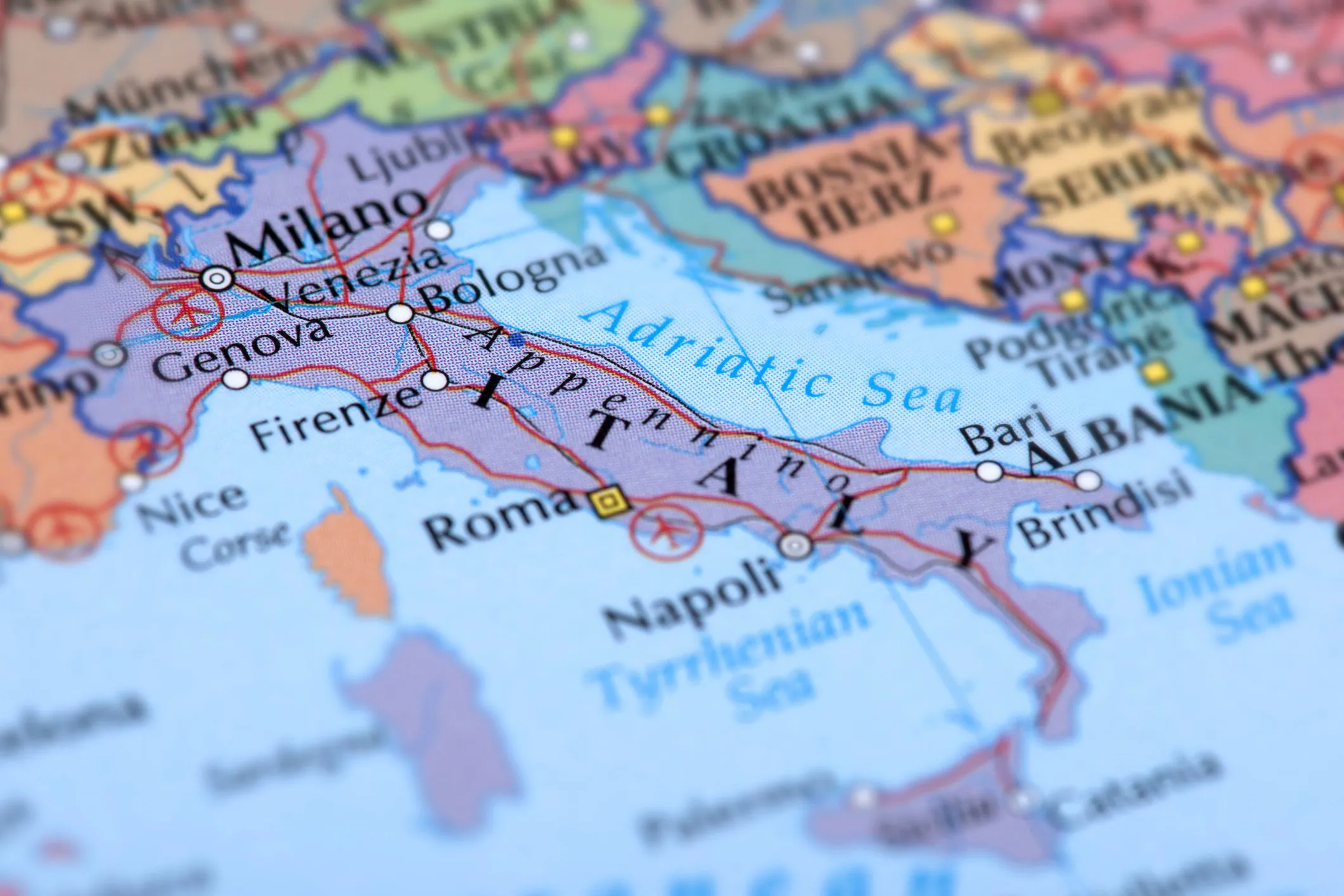
Today Italy has a population of approximately 58.9 million inhabitants, distributed over an area of 302,073 km² divided into over 100 provinces and metropolitan cities: but which are the most populous?
According to the latest data released by ISTAT and relating to 1 January 2026, the capital Rome is confirmed in first place with over 4.2 million residents, followed by Milan and Naples, which alone have around 6.3 million people. From a geographical point of view, the ranking is rather balanced between North and South: overall, the 10 provinces (or metropolitan cities) with the most inhabitants are home to over 19.5 million residents, equal to approximately a third of the entire national population.
So let’s see the complete ranking and what the latest ISTAT data say about the country’s demographic trend.
The ranking of the 10 provinces/metropolitan cities with the most inhabitants in Italy
According to the latest data released by ISTAT, as of 1 January 2026 the 10 most populous Italian provinces are:
- Rome, 4,224,901 residents
- Milan, 3,253,111 residents
- Naples, 2,954,847 residents
- Turin, 2,204,779 residents
- Brescia, 1,271,759 residents
- Bari, 1,218,073 residents
- Palermo, 1,195,307 residents
- Bergamo, 1,119,233 residents
- Catania, 1,067,550 residents
- Salerno, 1,053,302 residents
One fact that is immediately striking is the gap between the first three provinces and all the others: Rome, Milan and Naples alone bring together over 10.4 million people, a number equal to approximately 17.7% of the entire national population. Naples, among other things, is the province with the highest population density in Italy: approximately 2,519 inhabitants per km².
From the point of view of geographical distribution, however, the picture that emerges is rather uniform: of the 10 most populous provinces, 4 are located in the North (Milan, Turin, Brescia and Bergamo, all concentrated between Lombardy, in fact the most populous region in Italy, and Piedmont) and 5 are located in the South, i.e. the South and the Islands (Naples, Bari and Salerno, Palermo and Catania). Central Italy, however, is represented exclusively by the capital Rome.
How the Italian population is changing
But what is Italy’s demographic trend? According to ISTAT’s latest demographic balance, as of 1 January 2026 the total resident population amounted to 58,942,828 inhabitants, a slight decrease compared to 1 January 2025, when the Institute registered 58,943,464 inhabitants.
In general, however, in recent years our country has been recording a persistent decline in births: again according to ISTAT data, in 2025 approximately 355,000 children were born in Italy, a figure which marks a decrease of 15,000 births (-3.9%) compared to 2024, a year which had already marked a negative record. During the same period of time, however, there were approximately 651,830 deaths, therefore actually higher in absolute value than births, thus determining a largely negative natural balance.
Migration flows partially compensated for this imbalance: considering the total share of immigrants from abroad in 2025 (439,916) and emigrants abroad (144,157), last year the net migration from abroad was 295,759 people.
In any case, the underlying trend remains quite clear: Italy is affected by a progressive demographic decline. According to ISTAT forecasts, the resident population could fall to 54.7 million by 2050, with an acceleration of this decline especially between 2030 and 2050.