The 1,000 Swiss franc note is recognized globally as the highest value banknote (approximately 1,069 euros at current exchange rates) still in production. Introduced in 1907 by the Swiss National Bank, the 1,000 franc note does not circulate as much as smaller denominations, yet it has a far from marginal role: it is used for high-value transactions and, above all, it functions as a store of value.
The Swiss franc (indicated by the acronym CHF, where the letters come from the Latin name of Switzerland, “Confoederatio Helvetica” and the F stands for Franc) is the official currency of Switzerland and Liechtenstein and this denomination is in a certain sense its most precious symbol.
One figure explains it well: in 2022 the 1,000 CHF denomination represented over 48 billion Swiss francs out of a total of approximately 87 billion francs in circulation in the form of banknotes.
How the banknote is made and why Switzerland continues to produce it
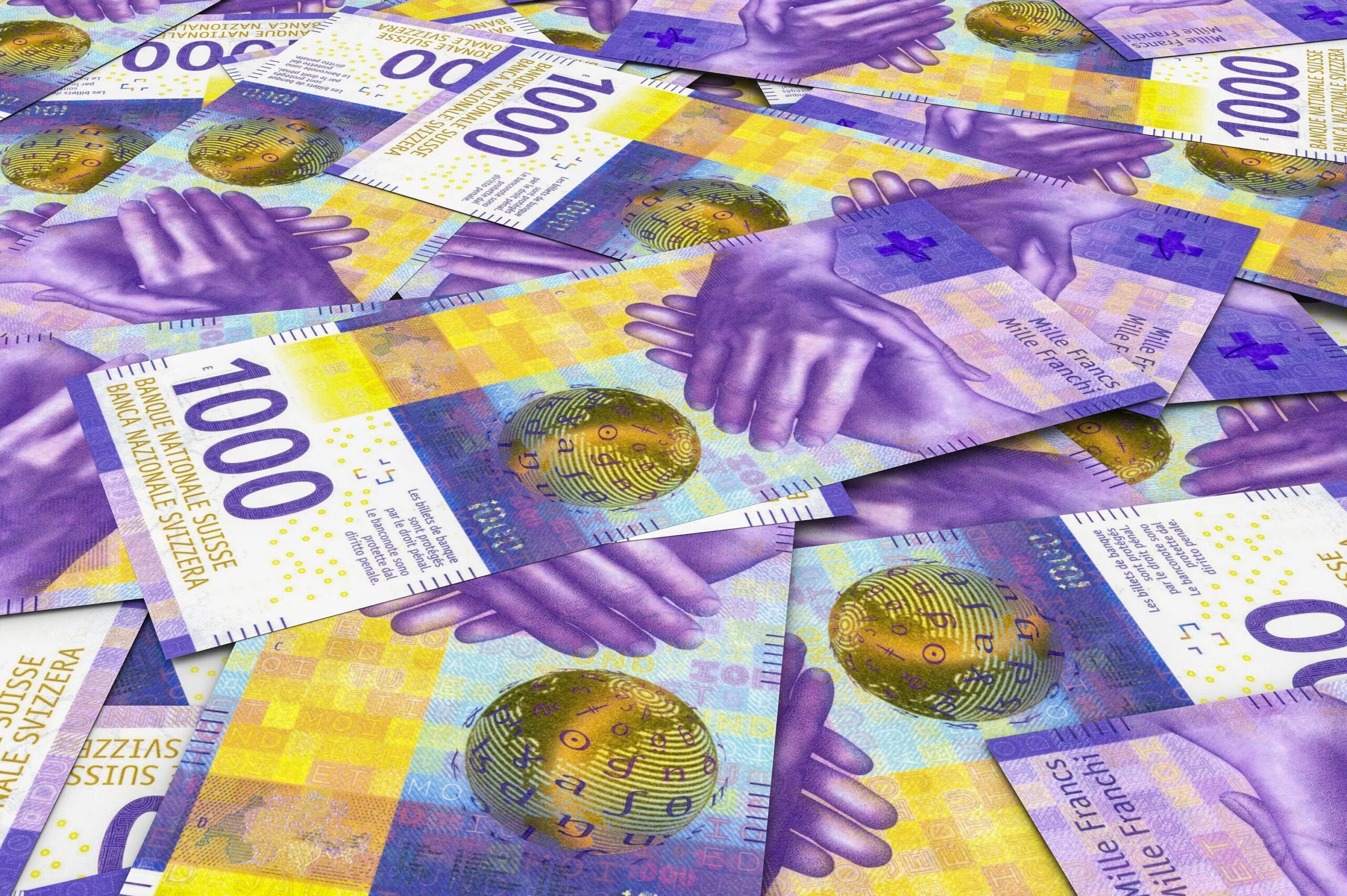
The 1,000 Swiss franc banknote belongs to the ninth series of the SNB (the Swiss National Bank), the one which has as its underlying theme “Switzerland in its many aspects”, and was issued on 13 March 2019. Its predominant color is purple, it measures 70 x 158 mm and is the largest note in the series.
The theme it represents is the culture of communication, with words as the main element: on the ticket there is a handshake which symbolizes communication between people, some phonetic symbols depicted above the globe (those that allow words to be pronounced correctly in different languages), Parliament as a place of public debate and the image of an open connective network. The linguistic regions of Switzerland and neighboring countries are then illustrated on the security strip, with a list of all the cantons.
But the real protagonist, in such a high cut, is safety. The banknote is made on an innovative three-layer substrate, which incorporates numerous security features, some new and others already proven. The combination of these complex elements and a very elaborate graphic design makes the note particularly difficult to counterfeit and the SNB constantly updates these measures to stay one step ahead of counterfeiters.
The most interesting question remains: why does Switzerland continue to print such a high denomination, while elsewhere large denominations are being withdrawn? The European Union, for example, stopped the production of 500 euro banknotes to prevent this denomination from facilitating illicit activities, such as money laundering or drug trafficking.
According to the Federal Office of Police (fedpol), in reality, the franc currency area is too small for such activities and these notes are too flashy. In other words, the Swiss franc circulates in too few countries (of extremely limited geographical size, among other things): the Money Laundering Reporting Office, for its part, has found no indications that these high denominations have been used for criminal purposes. In short, the risk that elsewhere led to the elimination of large cuts is considered under control in Switzerland.
The 10,000 Singapore dollar note, later withdrawn
The large cash cut, however, is not just a Swiss prerogative. Until 2014, this record belonged to Singapore, with its 10,000 Singaporean dollar banknote (around 6,700 euros): from 1 October 2014, however, the Monetary Authority of Singapore (MAS) has stopped its issuance, to reduce money laundering risks. Between 2014 and 2020, however, Brunei continued to issue its own $10,000 denomination, thanks to a monetary interchangeability agreement dating back to the 1960s that allows the two coins to be used freely and accepted at par in both countries.
As of 2020, Brunei has also stopped production, although the cut still remains valid and in circulation. As reported by Ong Chong Tee, deputy managing director of MAS, increasingly advanced and secure payment systems have in fact reduced the demand for high-value cash transactions, making that note less necessary.
Today, therefore, the only country to produce the banknote with the highest value in the world is Switzerland.