Washington is preparing an unprecedented crackdown against Tehran and is also warning countries, banks and companies that they will continue to support its economy. Italy is Iran’s second trading partner in the EU, but the greatest risk is not in the 579 million in direct trade: it passes through payments, energy, oil and the Strait of Hormuz.
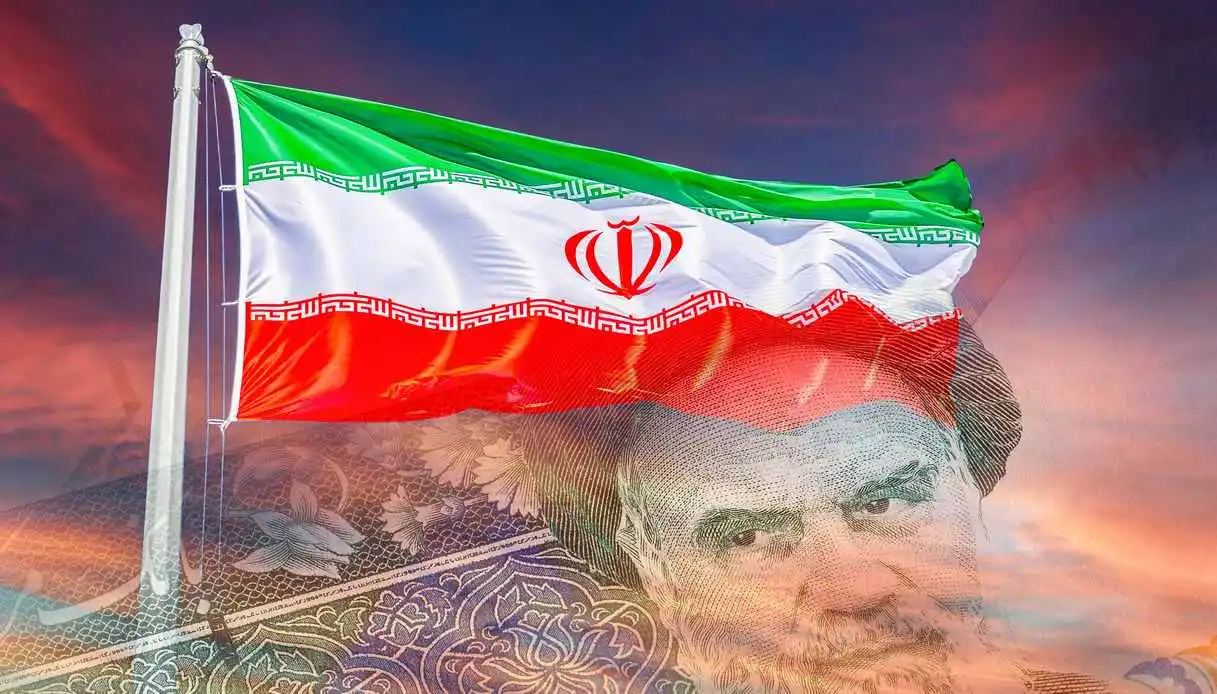
New US sanctions against Iran may reach much further than Tehran. Washington wants to target not only the Iranian economy, but also the companies, banks and intermediaries that will continue to guarantee the country access to trade and the international financial system.
Treasury Secretary Scott Bessent announced what he calls the largest coordinated economic isolation operation ever and, in the CNBC interview, asked Washington’s allies to choose a side.
The detailed package is expected in the Italian evening, but for Italy there is already a fact that makes the story particularly interesting: in 2025 it was Iran’s second trading partner within the European Union, behind only Germany.
Italy is Iran’s second EU partner, but how much is it really worth
In 2025, trade in goods between the European Union and Iran fell to around 3.7 billion euros, with almost 3 billion in European exports and around 750 million in imports.
Italy represents 15.6% of EU-Iran trade. Italian companies exported goods to Tehran for approximately 447 million euros and imported 132 million, for a total of 579 million. Only Germany has more substantial trade relations.
The data, however, must be read correctly. Being Iran’s second European partner does not mean that Tehran is a decisive market for Italy: the 447 million exports represent approximately 0.07% of Italian exports of goods in 2025. Direct commercial exposure is, therefore, limited.
And it is precisely here that the perspective changes: the most relevant risk is not how much Italy sells directly to Iran, but how far Washington decides to extend its sanctions.
What are secondary sanctions and why do they worry companies
The United States can also use so-called secondary sanctions to target non-American individuals who carry out certain transactions with restricted Iranian sectors, companies or institutions.
For a European bank or company, therefore, the issue may become a choice between maintaining some relationships with Iran and preserving access to the US market and financial system.
OFAC rules provide that, when evaluating a transaction, the US Treasury may consider the amount, frequency, nature of the transactions, awareness of the company involved and connections to sanctioned Iranian entities.
It does not mean that every Italian company that trades with Iran will automatically be sanctioned. The scope of the new measures will be decisive and will have to be verified after Washington’s announcement.
For European companies there is also the issue of EU rules
The situation is more complex because the United States and the European Union do not necessarily apply the same system of sanctions.
Brussels already has its own measures against Tehran, but does not recognize in principle the extraterritorial application of the laws of third countries. For some American sanctions against Iran, in fact, there is the so-called European Blocking Statute, designed specifically to protect EU operators from the extraterritorial effects of US rules.
For companies, therefore, a problem arises not only commercially, but also of compliance, banking, insurance and international payments. And it is on this front that the new American decisions could have a much greater impact than the 579 million direct trade between Italy and Iran.
The biggest risk for Italy remains oil
Then there is a second channel, much more immediate: energy.
Traffic through the Strait of Hormuz remains severely limited. Before the war, over 20 million barrels per day passed through the area, about a fifth of world consumption; in recent weeks flows have dropped dramatically.
Oil is correcting today after two weeks of increases, with Brent around 93 dollars a barrel, but the market remains conditioned by the risk of new supply interruptions.
For Italy, a new stable increase in crude oil would mean higher costs for fuel, transport and industrial production and could fuel inflation again.
This is a potentially much greater economic risk than the loss of direct trade with Tehran alone.
China is the real test of US sanctions
Washington will, however, have to deal above all with China.
Beijing is by far the largest buyer of Iranian oil. In 2025 it purchased an average of about 1.4 million barrels per day. Shipments have already decreased: according to Kpler, Reuters estimates around 534 thousand barrels per day in August, compared to 823 thousand in July.
The United States has already sanctioned smaller Chinese refiners and operators and warned some big banks of the risk of secondary sanctions, but has so far avoided direct confrontation with Beijing’s major financial institutions.
The Chinese response to the new package will, therefore, be one of the decisive tests. If Beijing continues to buy Iranian oil, Washington will have to choose whether to actually extend the pressure to much more economically important entities.
What Italy should look at now
For Italy, therefore, the 579 million euros of trade with Iran are only the visible part of the issue.
Three elements will be most important: which companies and transactions will be included in the new American sanctions; how European banks and businesses will react to the risk of secondary measures; and above all what will happen to traffic in the Strait of Hormuz and to the price of oil.
This is the real issue of the new American offensive. Italy trades little directly with Iran, but is much more exposed to the financial and energy consequences of its further isolation.