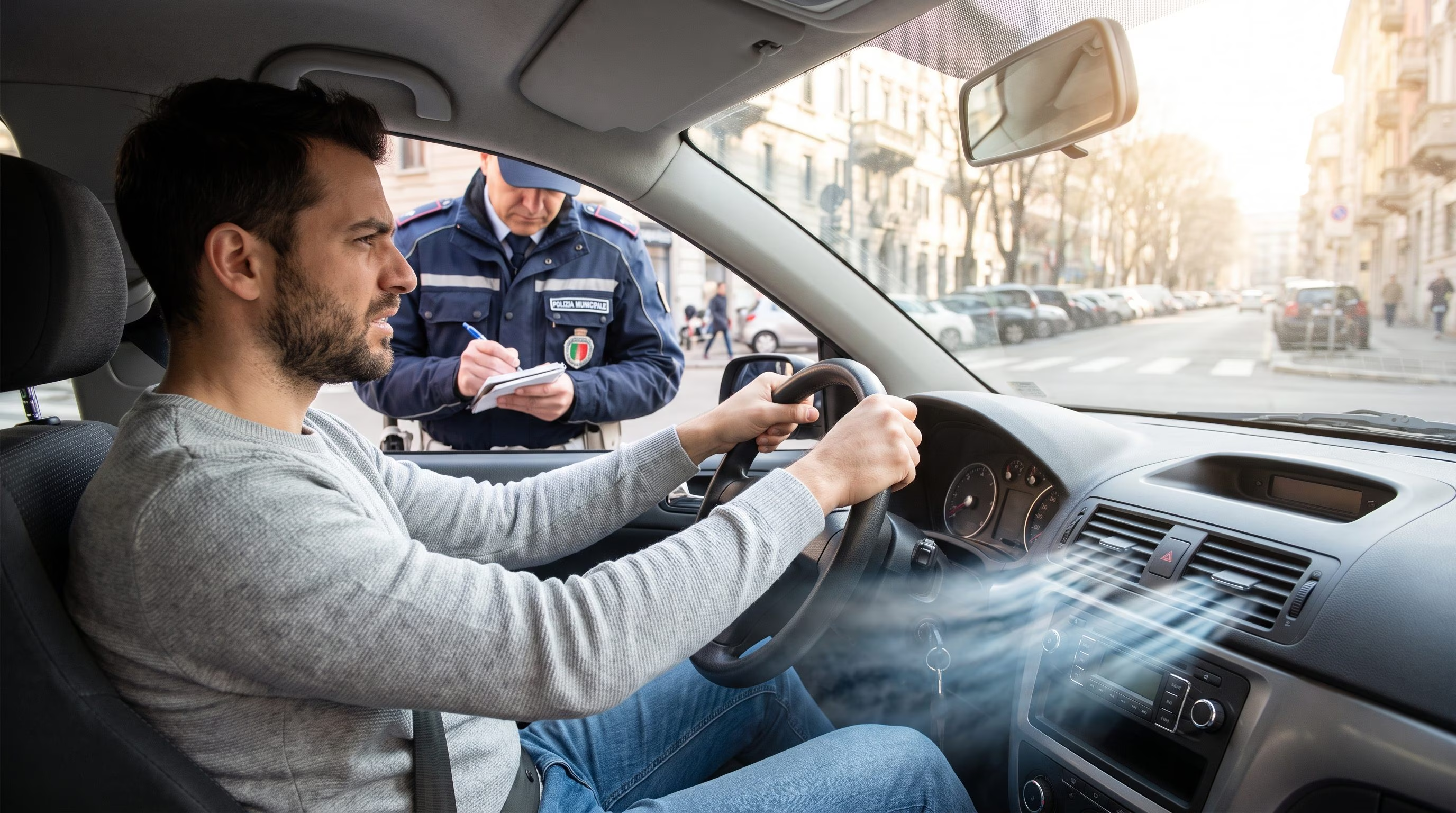
With the arrival of the heat the gesture is almost automatic: you stop for a moment at the edge of the road to wait for the arrival of the other passengers, but you still leave the engine running, with the air conditioning running. It seems like the most harmless thing in the world, yet in certain situations it can be costly. The Highway Code, in fact, explicitly prohibits keeping the engine running while parking just to operate the air conditioning system: in particular, article 157, paragraph 7-bis, provides for administrative fines ranging from 223 to 444 euros.
Be careful, though: it’s not enough to have the car stopped with the air on to risk a fine. Everything revolves around a precise distinction in the Highway Code between stopping, stopping and stopping: understanding the difference is essential to knowing when you are in compliance and when you are not.
What article 157 of the Highway Code says: the fine for parking air conditioning
The rule is written in black and white. The Highway Code, in article 157, paragraph 7-bis, establishes that:
It is forbidden to keep the engine running while the vehicle is parked, in order to keep the air conditioning system in the vehicle running; the violation results in the administrative sanction of paying a sum of between 223 and 444 euros.
There are essentially three reasons for this very strict rule: the first concerns environmental protection. An engine running when the vehicle is stationary continues to burn fuel and, therefore, pollute unnecessarily. The second instead has to do with noise pollution, a factor that is often underestimated but especially relevant in urban areas, where the noise of running engines adds to everything else. The third is more general and has to do with responsibility: the rule was also created to encourage more conscious behavior behind the wheel.
When it is forbidden to use it in the car: the difference between stopping and stopping
Here we arrive at the most delicate point, because the key word of the law is only one: stop. The ban specifically concerns vehicle parking, and not generically any time the car is stationary. The Highway Code, again in art. 157, distinguishes between:
- Stopping, i.e. the interruption of travel due to traffic needs: this is what happens when we stop at a red light, in a queue on the motorway or in front of a level crossing;
- The stop, i.e. the temporary suspension of travel even if in an area where parking is not permitted, to allow people to get on or off, or for other very short-term needs. During the stop, which must not in any case cause an obstacle to traffic, the driver must be present and ready to continue driving;
- Parking, or the suspension of driving for a long time, with the possibility of the driver moving away from the vehicle: is the classic case of those who park on the side of the road to wait for someone or to make a long phone call;
- Emergency stopping, i.e. the interruption of travel in the event that the vehicle is unusable due to breakdown or it is necessary to stop due to physical illness of the driver or a passenger.
This distinction changes everything: the fine is triggered only during parking. If we are stopped at traffic lights or in a queue, and therefore stopped, we can easily keep the engine and air conditioning on. The same goes for very short stops. The problem is that in the Highway Code there is no specific time reference regarding the duration of the stop or stop, in order to clearly distinguish the two cases.
Exceptions to the legislation and rules for electric vehicles
As often happens, there are exceptions to this rule too. The most logical concerns vehicles used in emergency and security services, such as ambulances, firefighters and police forces: these vehicles can keep the engine running when needed to operate the on-board equipment. A similar exemption may apply, but only in certain circumstances, to vehicles used for the transport of people with disabilities, as specified by the Road Safety Information Coordination Center (CCISS), the Italian service of the Ministry of Infrastructure and Transport which offers real-time updates on traffic and road conditions.
Then there is an exception destined to become increasingly relevant: that of electric cars. As we mentioned, the ban on using air conditioning in cars while parked was, in fact, introduced with the aim of reducing air pollution produced by internal combustion engines left running unnecessarily. The rule, therefore, only concerns vehicles powered by petrol, diesel, LPG and methane and does not apply to electric cars. Many models, in fact, allow you to turn on the air conditioning remotely, so that you find the interior already refreshed before you even get in.