The Alcolock becomes official and enters the operational phase, after the Ministry of Transport published the list of official models and authorized workshops on the Motorist Portal. The device, in reality, had already become mandatory with the new Highway Code – which came into force in November 2024 – but, until now, the methods of installation and use had not been established.
The objective of the Alcolock, however, is always the same: to discourage those who have been caught driving with blood alcohol values higher than the norm, the so-called “repeat drivers”. Specifically, use is mandatory for 2 years for those who have been sanctioned for a blood alcohol level over 0.8 g/l, years which rise to 3 for values over 1.5 g/l.
Despite the start of this operational phase, many doubts still remain regarding the methods of use and, above all, installation.
Doubts about how to use the Alcolock
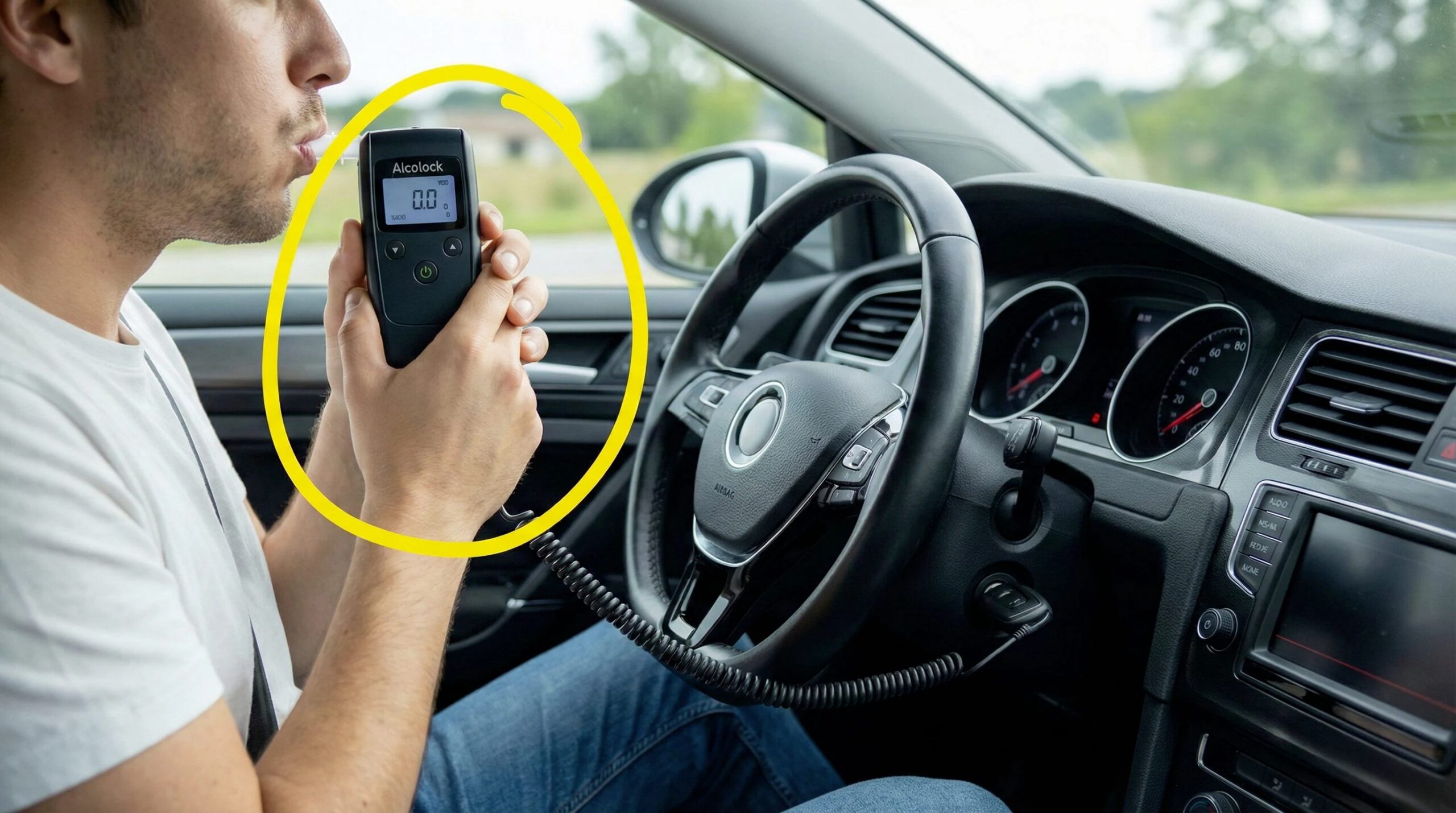
The Alcolock is an electronic device that works like a breathalyzer integrated into the car, which prevents it from turning on when the driver has a blood alcohol level above zero. This means that before starting the car, the driver will have to blow into the device (changing the disposable mouthpiece each time): if complete sobriety is confirmed, then the car engine will start.
At this point, the doubt that arises concerns precisely the methods of use: according to the new Highway Code (art.125, paragraphs 3-ter and 3-quater), all drivers who have codes 68 (“No Alcohol”) and 69 (“Drive only with Alcolock”) on their license are obliged to install the Alcolock and who, therefore, have been caught driving with a blood alcohol level higher than 0.8 g/l.
The problem is that in the case of a family unit, the use of the Alcolock becomes complicated: for sanctioned drivers the tolerance is zero, while for all the others the blood alcohol level is set at a limit of 0.5 g/l.
However, considering that the device physically blocks the starting of the engine if the limit is exceeded, this forces all family members (or anyone else using the car) to respect a blood alcohol level of 0 g/l, even when a higher value is permitted for them.
In short, the fact is that the Alcolock remains a device connected to the car and not to the sanctioned driver, thus affecting anyone who drives that vehicle.
Cost, compatible car models and official installers
To consider, then, there is also the question of installation which, let’s remember, is completely the responsibility of the driver and the cost of which is around 2,000 euros.
In recent months, in fact, the biggest doubts concerned the car models compatible with the Alcolock, with the risk that the breathalyzer could not be installed on older cars. With the publication of the official list, these doubts have been partially resolved, although several critical issues remain.
As reported on the Motorist Portal, in fact, the Zaldy Alcolock device is compatible with all car models (internal combustion engines, hybrid engines, electric propulsion systems): the problem is that, at the moment, there are only 3 workshops authorized to install this device, located respectively in Turin, Pisa and Varese.
Clearly, as also specified in the document, the list is being updated and it is therefore certain that the list will increase. However, even in the case of the second authorized Alcolock brand (Breatech Alcolock B1000), the theme arises again: the Ministry has indicated only 75 official installers for the entire Italian territory, the majority of which are located in Northern Italy (in particular between Milan, Lodi and Vigevano). Central and Southern Italy are covered only by a workshop in Rome, one in Perugia and one in Bari. This brand, among other things, unlike the previous one, is not compatible with all cars, with the models specified in this list.
Finally, to all these considerations there is a question of free competition: for the moment, in fact, there are only two Alcolock producers authorized by the Ministry of Transport for the installation and maintenance of the device.