The price of fuel is increasing throughout Europe due to the war in the Middle East and at the same time consumer interest in electric cars is increasing. Even in Italy, where BEVs are having more difficulty establishing themselves, the increase in registrations in March reached 71.7% per year.
The main obstacle to purchasing these cars remains the entry price, which is still much higher than that of petrol, diesel or hybrid competitors. Some models, however, are standing out for being particularly economical, thus making up for this problem. It is no coincidence that they are the ones that are having the greatest success with the public, even in our country.
Sales of electric cars are increasing in Italy and Europe
Electric cars, or BEVs, therefore cars without any combustion engine, driven only by electric engines, are progressively gaining market share in Europe. According to the data Unraein February on average one in five new cars (21.7%) was electric. Italy stands out negatively in this ranking: only 8% of the cars registered in February were BEVs.
However, things are changing. In March there was a 71.1% increase in BEV registrations, which reached 16,033 units, a historic record according to data from Motus-E. Market share reached 8.6%, up significantly from the previous month. It is the effect of the October incentives, but also of the increase in the cost of fuel due to the war in the Middle East.
The 5 cheapest electric cars in Italy
The new low-cost electric cars that are spreading on the market are also playing a role in the success of BEVs in Italy too. To date, the cheapest are:
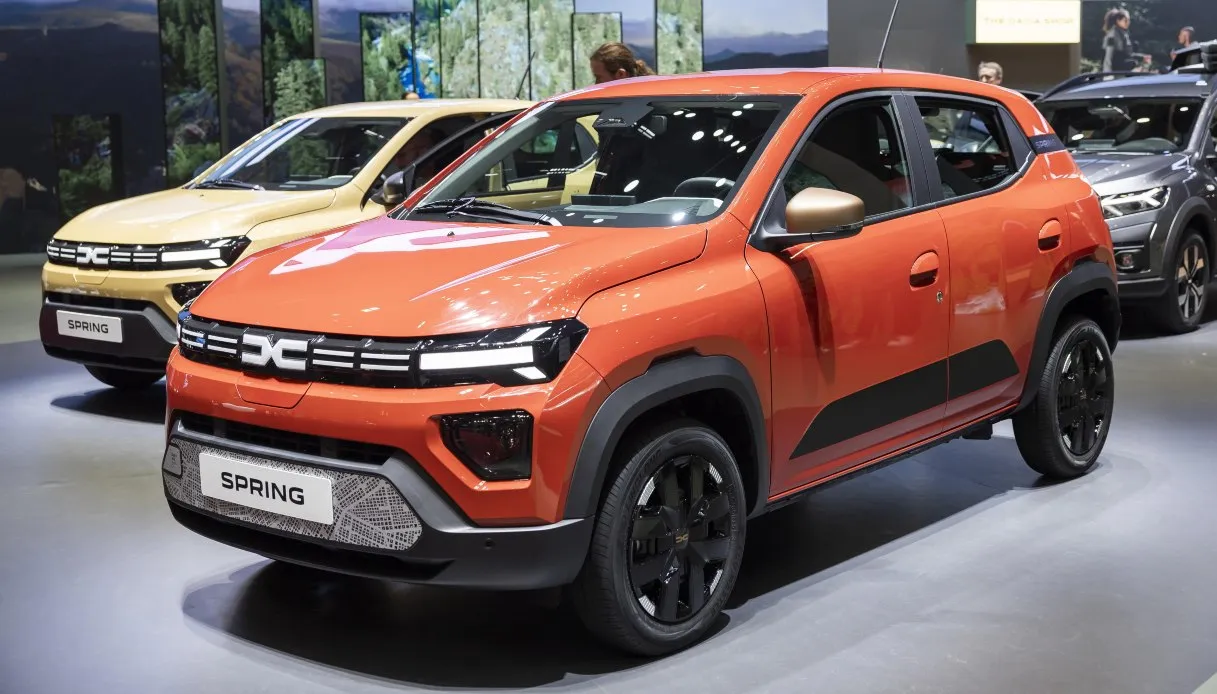
- Dacia Spring, available from 17,900 euros, autonomy of 225 km;
- DR 01, available from 18,900 euros, autonomy of 210 km (almost 300 in urban areas);
- Leapmotor T3, from 18,900 euros, 265 km autonomy;
- Byd Dolphin Surf, from 19,790 euros, autonomy of 220 km.
- Citroën ë-C3, from 20,400 euros, autonomy of 213 km (304 in urban).
All these cars have one characteristic in common: they are designed, and give their best, in the city. Among the least expensive, the only one that allows greater freedom especially in terms of space is the ë-C3. For the rest, these are small cars, suitable for the urban context.
If you are looking for models with greater autonomy, prices quickly rise above 25 thousand euros. The battery and its capacity are in fact the main cost of an electric car, and therefore a more performing one increases the cost by thousands of euros.
How much you save with an electric car
Even if the cost of entry remains high, electric cars provide several savings opportunities. The most obvious, especially in this period, is that of nutrition. With an average consumption car and current fuel costs, traveling 100 km costs:
- 10 euros with a petrol car
- 12.50 euros with a diesel car;
- 4.50 euros with an electric car recharged at home.
The actual costs of electric charging are difficult to calculate. The efficiency of batteries varies greatly both based on how they are used and based on external temperatures. Furthermore, charging stations cost much more than home charging, which not everyone has available. With fast charging you can spend up to 14 euros to travel 100 km.
However, there are also other economic advantages derived from purchasing an electric car:
- in many regions the car tax is eliminated;
- as they do not have a heat engine, maintenance costs are very low.