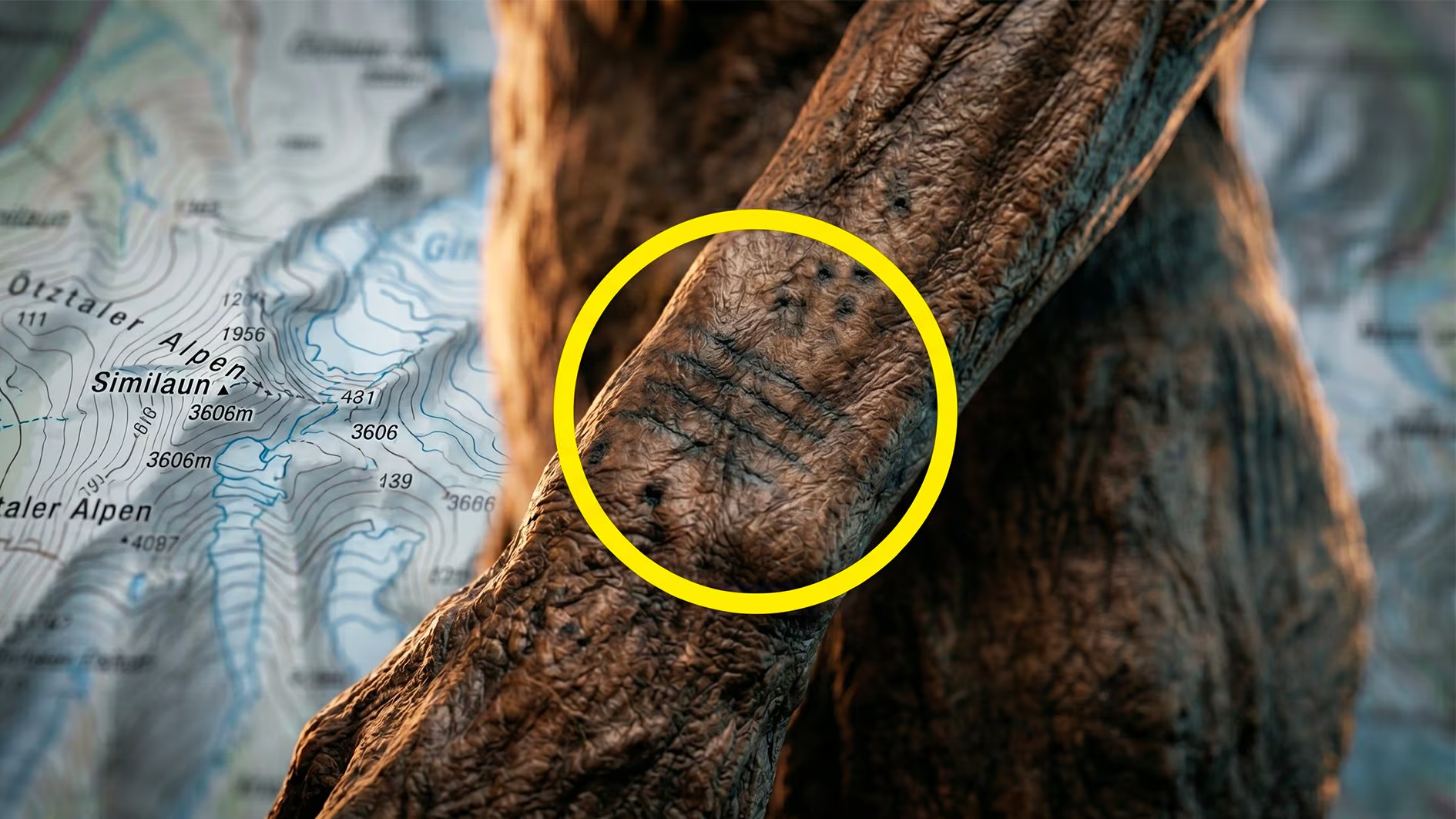
Due to their very nature, tattoos are very difficult to find in the archaeological record. Since these are artistic expressions created on human skin, they are lost with the putrefaction of the bodies, not allowing us to have a general picture of how frequently tattoos were widespread during the different historical eras. However, in some cases, it has been possible to find human remains whose soft tissues have been preserved sufficiently to allow us to see with our own eyes tattoos dating back even more than 5000 years. Naturally this is the case of mummies, which have retained their skin under particular conservation conditions.
For a long time, the title of “oldest tattooed man in the world” was disputed between two mummies in particular, that of Ötzi, the Similaun mummy, and MO1 T28 C22, one belonging to the Chinchorro culture, which lived on the coast of southern Peru and northern Chile between 7000 and 1500 BC. Chinchorro mummies, made from 5000 BC onwards, are the oldest artificial ones in the world, two millennia before the Egyptian ones.
Individual MO1 T28 C22 was found in 1983 at the site of El Morro, near Arica, Chile. It was located in a necropolis that yielded the remains of 95 other individuals. Chinchorro mummies are well known to archaeologists, but the El Morro individual is the only one to date to have tattoos. This is a male individual, who died between the ages of 35 and 40, who has a line of black dots above his upper lip that almost resemble a moustache. The remains were dated with the radiocarbon method already in the 1980s, giving a spectacular result: 3830 BC. C.
According to this data, MO1 T28 C22 would be the oldest tattooed person in the world. However, it was realized quite quickly that the result presented by the scholars had been compromised by an embarrassing and trivial error. In the reference study, radiocarbon dating was presented as 3830 ± 100 BC (Before ChristBC), when in reality it should have been presented as 3830 ± 100 BP (Before Presentstandard system for radiocarbon dating calibrated to 1950, the year in which the method was perfected). The real dating of the El Morro individual would therefore be around 1880 BC. This data was reconfirmed by subsequent studies.
To date, therefore, the oldest tattooed man in the world is the Similaun man, found in the glacier of the same name in the Ötztal Alps, on the border between Austria and Italy, in 1991. Radiocarbon analysis was able to date his remains between 3370 and 3100 BC. Ötzi was a male individual between the ages of 40 and 50, who lived in what is now South Tyrol during the initial phases of the Copper Age, a phase of European prehistory in which metalworking began, approximately between 3500 and 2200 BC. Its discovery represented one of the most important archaeological discoveries ever, not only for the exceptional state of conservation of the frozen body, but also for the set of objects that man had with him (weapons, clothing, tools), which allowed us for the first time to appreciate the workmanship and technique of prehistoric technology.
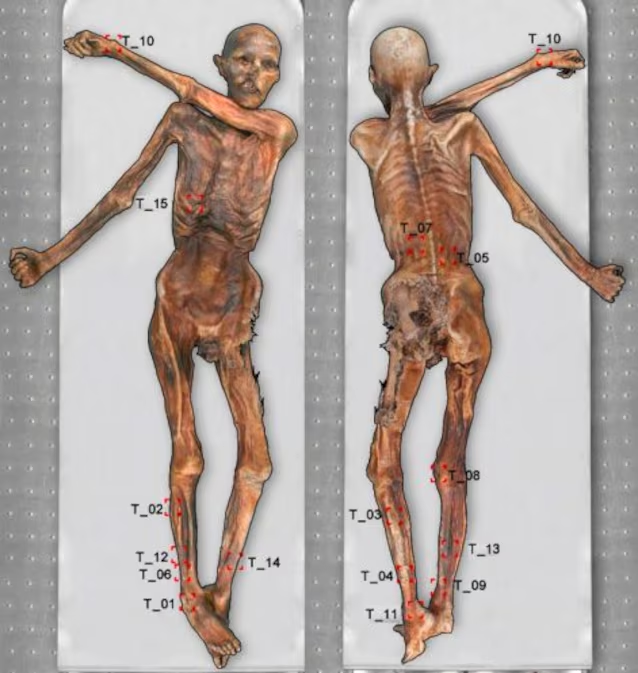
Ötzi also had a large number of tattoos, 61. These are a series of lines, a few millimeters thick, engraved with charcoal dust, made near the joints: on the left wrist, on the right elbow, but above all on the legs. There are also some tattoos in the lower back area. Considering the joint pathologies from which the individual suffered, it is believed that these groups of tattoos had a therapeutic function.