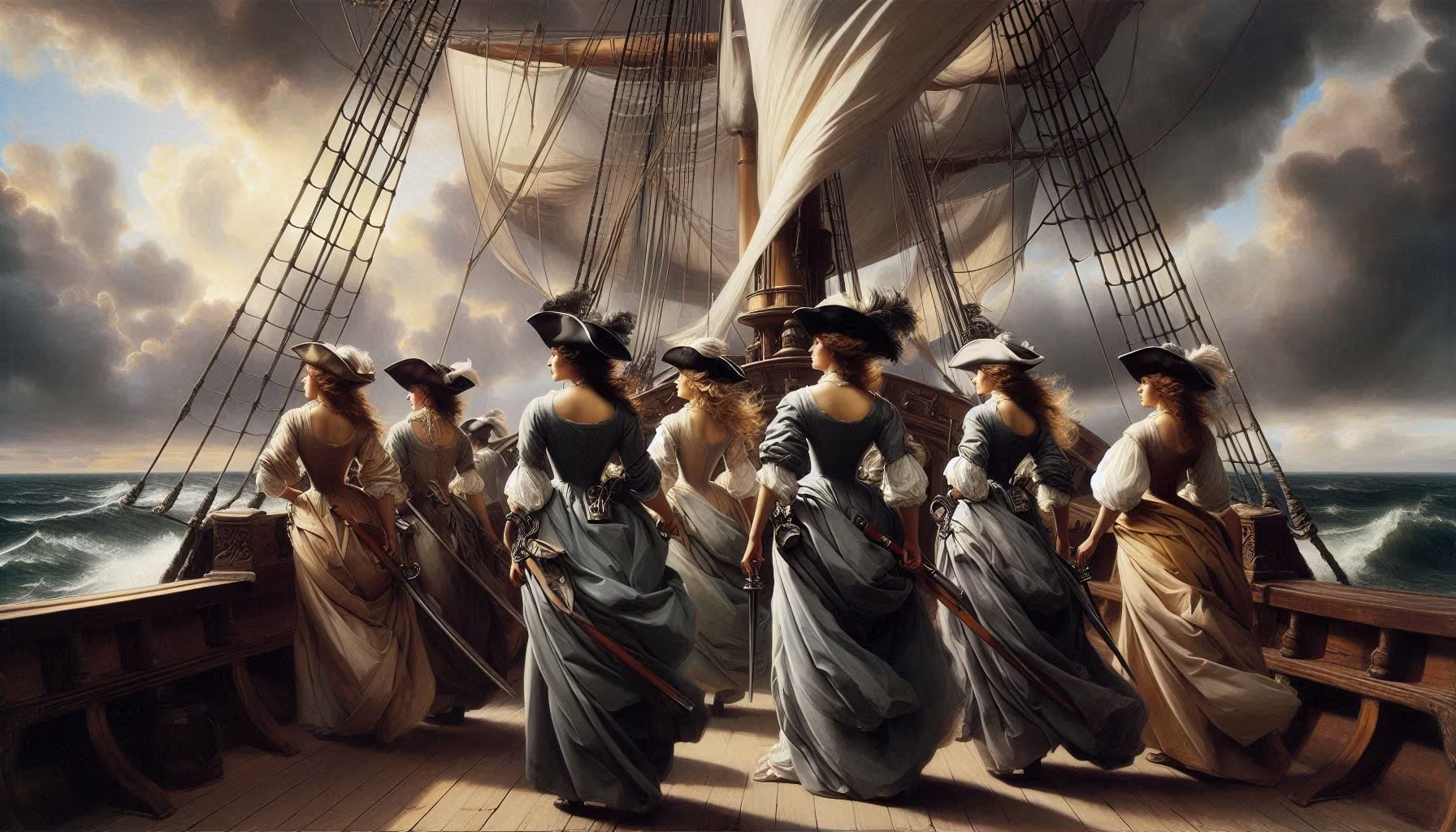
For centuries the sea was not just a trade route, but a space of power, strategy and rebellion. In this world, traditionally dominated by men, some women were able to transform piracy into a means of autonomy and political influence. From 5th century Sweden with Alwilda, who defied arranged marriage and led fleets disguised as a man to 16th century Ireland with Grace O’Malley, bold leader and administrator of a prosperous fleet; to the Caribbean with Anne Bonny and Mary Read, who fought alongside their male companions, and Maria Lindsey, feared for her skill and ferocity. These women, who sailed the seas from the 3rd century BC until the beginning of the 18th century, demonstrated that the sea could become a space of leadershipcourage and female freedom, in typically male spaces and roles.
- 1Teuta
- 2Alwilda
- 3Sayyida al-Hurra
- 4Grace O’Malley
- 5Anne Bonny
- 6Mary Read
- 7Mary Lindsey
Teuta
Upon the death of King Agron, in 231 BC, Teuta assumed the regency of the Illyrian kingdom of the Ardiaei. During his rule, maritime raids in the Adriatic increased, conducted with the Liburnians, fast and effective ships. According to Polybius, the sovereign responded to Rome’s claims by claiming piracy as a traditional practice of her people. The tension resulted in the First Illyrian War (229-228 BC), which ended with the defeat of Teuta and the imposition of tributes and limitations on his authority. The most recent historical research, however, tends to go beyond the simplified image of the “pirate queen”, highlighting her role as a ruler committed to maintaining control of strategic points such as Issa and Corfu and defending the autonomy of her territory.
Alwilda
In the waters that now belong to Sweden, Alwilda rejected an arranged marriage with the crown prince, Alf of Denmark, and chose the sea as her path to freedom. Disguised as a man, she took command of a ship with a group of trusted companions, joining a pirate crew looking for a new captain. Her skills in the Baltic created such havoc that the King of Denmark sent troops to capture her. Irony of fate: it was Alf who led the operation, who after a naval battle also won the heart of Alwilda. Their union ended with marriage and Alwilda’s ascension to queen of Denmark, turning rebellion into power and autonomy.
Sayyida al-Hurra
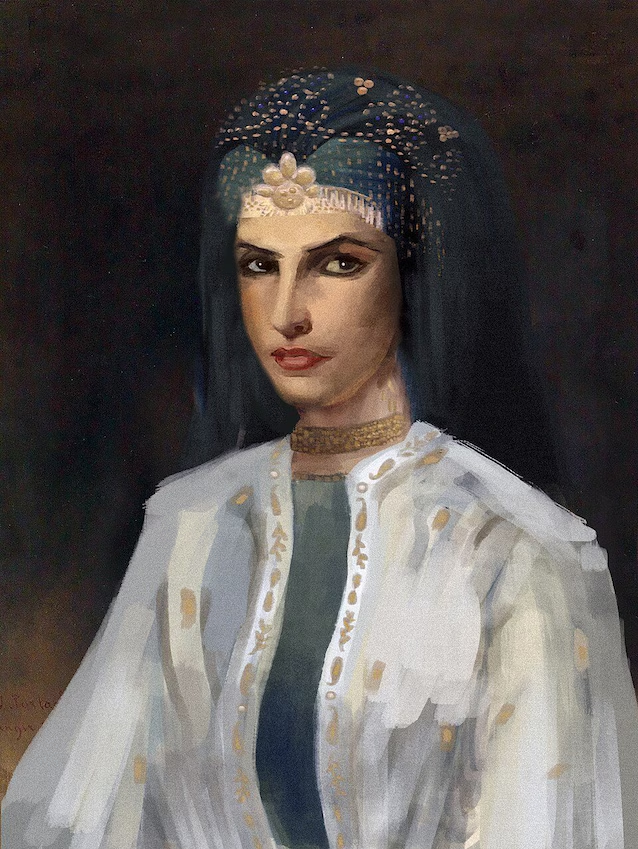
Sayyida al-Hurra was born around 1490 into a family of Andalusian exiles. His personal story is linked to the trauma of the expulsion and the reorganization of Muslim communities in North Africa. After her marriage to the governor of Tétouan, she participated in the reconstruction of the city, which quickly became a major port. Widowed, she assumed power and built a privateer system aimed against the Iberian positions, collaborating with the Barbarossa brothers. The Arab chronicles underline its administrative capacity and role in the economic growth of the city; Spanish sources, on the contrary, describe it as a threat to the safety of the routes. The spoils of the raids in the Strait of Gibraltar and along the coast contributed to the prosperity of Tétouan, transforming it into a point of reference for resistance to European occupations. In 1541 she married the Wattaside sultan, but was deposed the following year.
Grace O’Malley
Grace O’Malley, born around 1530 on the west coast of Ireland, lived from childhood among the sound of the waves and the wood of her father’s ships. Raised among storms, travels and tales of the sea, she soon developed extraordinary courage and determination, earning her the nickname Granuaille, “the bold one”. After her husband’s death, when women could not inherit anything, Grace did not accept surrender: she took to the sea in command of her father’s fleet, plundering merchant ships, protecting the coasts and personally fighting in battle. Her skill and political acumen allowed her to challenge the English Navy and, at the same time, deal with Queen Elizabeth I, maintaining the respect and safety of her men and her city. Grace’s life was a continuous alternation between war, commerce and diplomacy: a woman capable of governing ships, people and her own destiny, becoming a legend in her lifetime.
Anne Bonny

Also born in Ireland between the end of the 17th and the beginning of the 18th century, Anne Bonny rejected the boundaries imposed on her gender and chose the sea as a space of freedom. She sailed to the Caribbean with her lover John “Calico Jack” Rackham, living side by side with pirates in a man’s world and fighting with the same ferocity as her companions. In battle she disguised herself as a man, with courage and determination, and shared command with Mary Read, demonstrating leadership and daring. Anne’s fame does not arise from great battles or accumulated wealth, but from her ability to impose herself in a context that did not include women in command. Captured in 1720, her sentence was suspended due to her pregnancy. The rest of her life remains shrouded in mystery, fueling the legend of a woman who knew how to live by her own rules.
Mary Read
Mary Read, perhaps born in Plymouth around 1690, spent her childhood disguised as a male for support from her family, early developing confidence and skill in the use of weapons and in leading a “man’s” life. After experiences in the army and as a sailor, he decided to seek adventure in the Caribbean, where he joined the pirates and met Anne Bonny. Mary also disguised herself as a man in battle, fighting with sword and pistol like her companions, and contributing to the leadership of the crew. Her life was marked by courage and independence until 1721, when she died of fever in prison after being captured and sentenced to death for piracy, leaving an indelible mark of female daring and determination.
Maria Lindsey
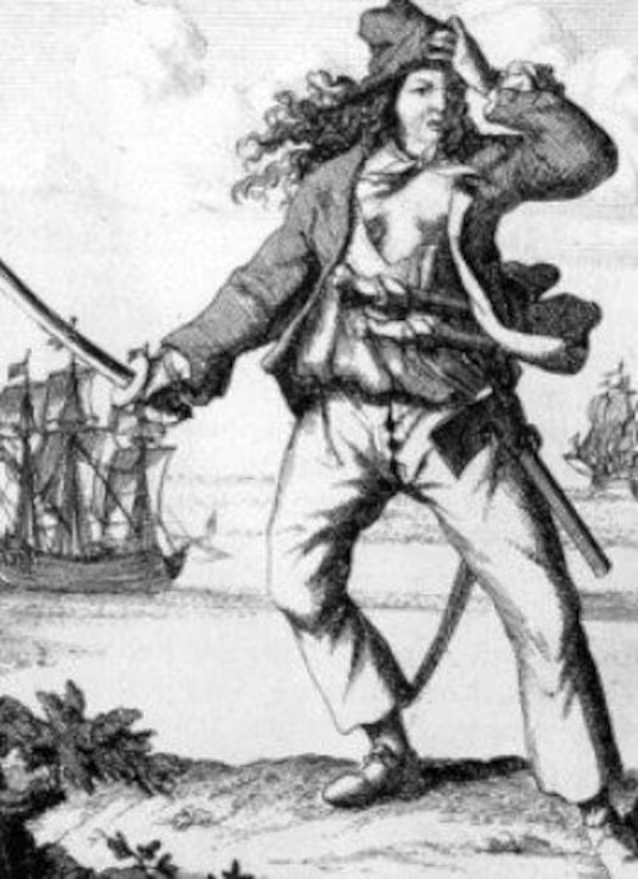
Maria Lindsey, also known as Cobham, lived in the early 18th century and sailed alongside her husband Eric to master the routes around Cape Breton. Famous for his ferocity, legend has it that he used prisoners as shooting targets and did not hesitate to stab rival captains. The couple alternated periods of respectability with new pirate raids, accumulating wealth and reputation. Maria embodied the cruelest and most pragmatic side of piracy, capable of bold strategies and a ferocity capable of instilling fear. Her life ended tragically with suicide, marking the end of a woman who had made the sea and strength her identity.
Sources, interpretations and memory
The testimonies about these women reflect the point of view of those who observed them: for Roman or Iberian authors they were predators of the sea, while in local traditions they could appear as defenders or legitimate rulers. Recent historiography, also thanks to Ottoman documents and naval archeology studies, has contributed to providing a more complex reading. These figures precede female pirates of the modern age by centuries and show how sailing and piracy were also spaces in which female leadership related to war, economics and government could emerge. Beyond the legendary images, their documented presence confirms the active role of women in the political and maritime history of the Mediterranean area.