The CPHI, one of the main global events for the Pharma world, is underway in Milan. And we are talking about CDMO, one of the segments least known to the general public but most important for European industrial competitiveness. The acronym stands for Contract Development and Manufacturing Organization. Simply put, the research, development and production of drugs on behalf of other pharmaceutical and biotech companies.
The sector has become increasingly strategic in recent years. The increase in scientific complexity, the growth of biologic drugs, the need to accelerate development times and the tendency of companies to focus on research and commercialization activities are pushing more and more companies to rely on specialized partners.
Italy in the Europe that leads the world
Italy continues to confirm itself as the main European hub for pharmaceutical CDMOs. According to data from the Farmindustria-Prometeia 2026 survey, the sector’s production value reached 4.3 billion euros, equal to approximately 24% of the European market, ahead of Germany and France. In Europe the sector is worth a total of 17.8 billion euros.
The result does not arise by chance. Over the last ten years the sector has recorded constant growth, supported by the quality of Italian industrial skills, the ability to respond to international regulatory standards and a strong vocation for export. Today a large part of the production is destined for international markets and the main pharmaceutical multinationals. Growth is fueled above all by production with higher added value. Biological drugs, sterile products and highly complex processes are taking on an increasingly significant role in the production mix of the sector, which continues to invest in new industrial capacities: over half of the investments are destined for the creation of new production lines.
Global competition
The picture remains positive, but there is no shortage of challenges. Geopolitical tensions, the acceleration of investments in the United States and the growing competitiveness of China are changing global industrial balances. To maintain leadership it will be necessary to continue investing in innovation, skills and advanced production capabilities. In this scenario, the role of CDMOs is changing profoundly. They are no longer required just to produce drugs, but to contribute to program development, management of regulatory complexity and reduction of the time needed to bring a product to market.
It is in this context that MORPHO fits in, Alfasigma’s CDMO platform created to support pharmaceutical and biotech companies along the entire development and production path of complex products.
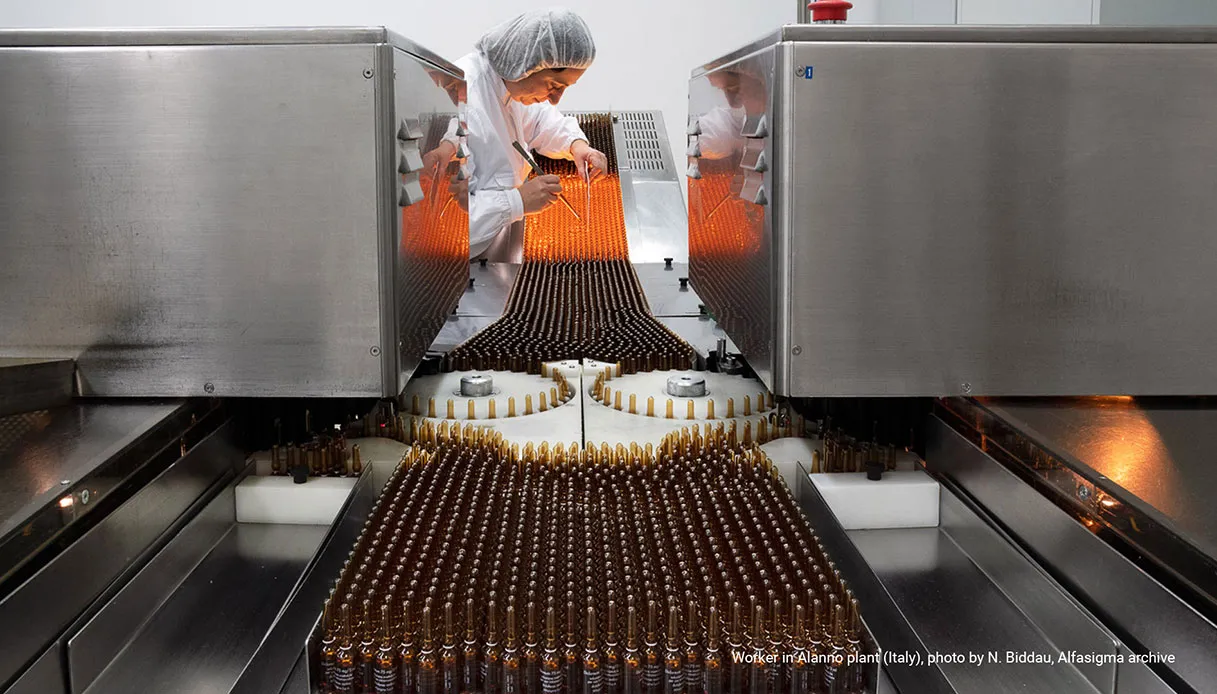
The platform can count on the industrial skills acquired by Alfasigma and on two specialized production hubs: the Pomezia site, center of excellence for oral solid forms, and the Alanno plant, dedicated to sterile production.
The objective is to propose a partnership model that goes beyond simple production capacity, accompanying customers in the technical, regulatory and operational decisions that impact the success of an industrial program. As in the case already known worldwide of Pfizer CentreOne, also in this case the Italian company has decided to build a separate ad hoc division with a clearly identifiable brand specialized in CDMO.
“The market is asking CDMOs for an increasingly strategic role. It is no longer enough to guarantee production excellence: it is necessary to make pharmaceutical experience, skills and execution capabilities available to accompany customers throughout the entire life cycle of the product”
reports Rocco Paracchini, vice president of MORPHO.
The growth of the CDMO represents one of the most interesting opportunities for the Italian pharmaceutical industry. The demand for specialized partners is set to increase along with the development of biologics, advanced therapies and new collaborative research models. For the country it means consolidating a leadership built over time through investments, manufacturing quality and scientific expertise. For companies in the sector it means contributing not only to the production of the medicines of the future, but also to the competitiveness of one of the most advanced industrial supply chains in Europe.