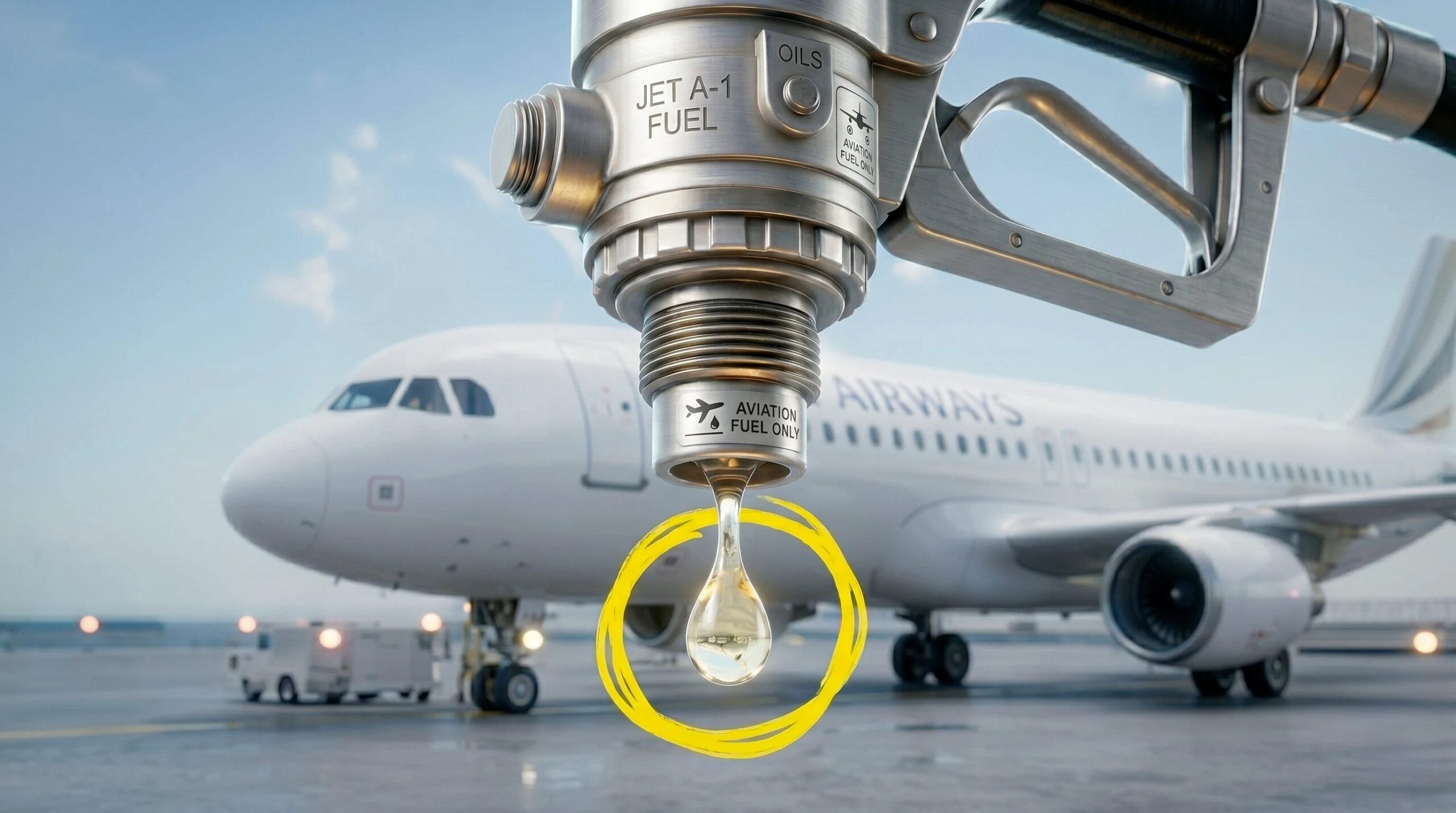
While the second round of negotiations between the United States and Iran now seems to have failed, with US President Donald Trump announcing an extension of the truce, there continues to be a double blockade on the Strait of Hormuz: on one side the Iranian Pasdaran, on the other the US military. In this situation, one of the sectors most affected by the energy crisis is that of air transport, including the Italian one: our country, in fact, depends heavily on imports of jet fuel (an already refined product ready to be loaded onto planes), of which approximately 20% transited through Hormuz before the outbreak of the war.
In the first 16 days of April, the map of Italian imports changed, leaving room for countries such as India, but also Spain, for a total of approximately 105,000 barrels of jet fuel per day. Meanwhile, the European Commissioner for Transport Apostolos Tzitzikostas has clarified what the EU regulations provide for compensation in the event of flight cancellation due to lack of fuel or for reasons related to price increases.
Where does Italy import jet fuel from?
Italy is a country heavily dependent on foreign countries for jet fuel imports and, as also highlighted by the April 2026 report of the International Energy Agency (IEA), jet fuel is one of the petroleum products most affected by the closure of the Strait of Hormuz. According to data provided by UNEM (Energy Union for Mobility), at the beginning of March 20% of the jet fuel that Italy imported passed through Hormuz: after the blockade, however, our country had to quickly reorganize its supplies.
The data processed by the Kpler platform, also taken from Corriere della Serahighlight how in the first 16 days of April Italy imported on average around 105,000 barrels per day of jet fuel, for an estimated value of around 350 million euros. The top supplier in these two weeks was India, with about 33,000 barrels per day of aviation fuel. Close behind are Saudi Arabia and Spain, both with an average of 22,000 barrels per day.
Particularly significant was therefore the increase in supplies from Spain, where eight refineries operate: as also highlighted in the IEA monthly report, Spain has in fact become a net exporter of jet fuel, while our country is positioned among the 6 states that consume the most aviation fuel in Europe. Turkey closes in fourth place (with around 17,000 barrels per day) and Egypt in fifth (around 11,000 barrels per day).
At a European level, a significant figure also concerns the United States: again according to Kpler data, in March US fuel exports to Europe increased by almost 27% on a monthly basis, reaching 414,000 barrels per day. If we then consider all refined petroleum products (including gasoline, diesel and even jet fuel), US global exports reached a quota of approximately 3.11 million barrels per day in March, a sharp increase compared to approximately 2.5 million barrels per day in February: this is the highest monthly level ever recorded by Kpler since 2017.
What the EU Commissioner said on the topic of reimbursements for fuel shortages
But, therefore, in the event that our flight is canceled due to lack of jet fuel, are we entitled to a refund? The EU Transport Commissioner, Apostolos Tzitzikostas, clarified this issue, making a fundamental distinction between shortages and price increases in a video conference held yesterday 21 April.
If a flight is canceled due to an actual physical shortage of fuel (and therefore the material impossibility of refueling the aircraft) the cancellation falls among the so-called “exceptional circumstances” provided for by EC Regulation 261/2004, which regulates the rights of air passengers in the European Union.
In this case, therefore, the airline is not required to pay the financial compensation (which normally varies from 250 to 600 euros, depending on the route), but the passenger still has the right to a full refund of the ticket or, optionally, to be re-routed on another flight. Furthermore, forms of assistance at the airport remain guaranteed: meals, drinks, hotel accommodation if necessary and transport.
The case is different – and here lies the fundamental point – in which the airline cancels a flight due to the too high cost of kerosene, deeming the route no longer economically sustainable. In this scenario, the increase in fuel prices is not considered an exceptional circumstance, because it is part of the company’s business risk. Consequently, in addition to ticket reimbursement and assistance, the passenger is also entitled to financial compensation: more specifically, it is 250 euros for flights up to 1,500 km, 400 euros for routes between 1,500 and 3,500 km and 600 euros for flights over 3,500 km. This compensation, however, is not due only if the cancellation is communicated at least 14 days in advance of the departure date.
However, Commissioner Tzitzikostas reassured by stating that, at the moment, there are no serious fuel shortages in European airports: «up to this moment, the flights that have been canceled have not been due to a lack of jet fuel, but due to its high price. Since the beginning of the crisis in the Gulf, the price of kerosene has more than doubled, pushing many airlines to reduce flights and cut some connections because, financially, maintaining these barely profitable routes made no sense at all.” Precisely because of the high cost of fuel, in the last few hours the airline Lufthansa has announced the cancellation of around 20,000 flights between May and October because they are considered unprofitable routes.









