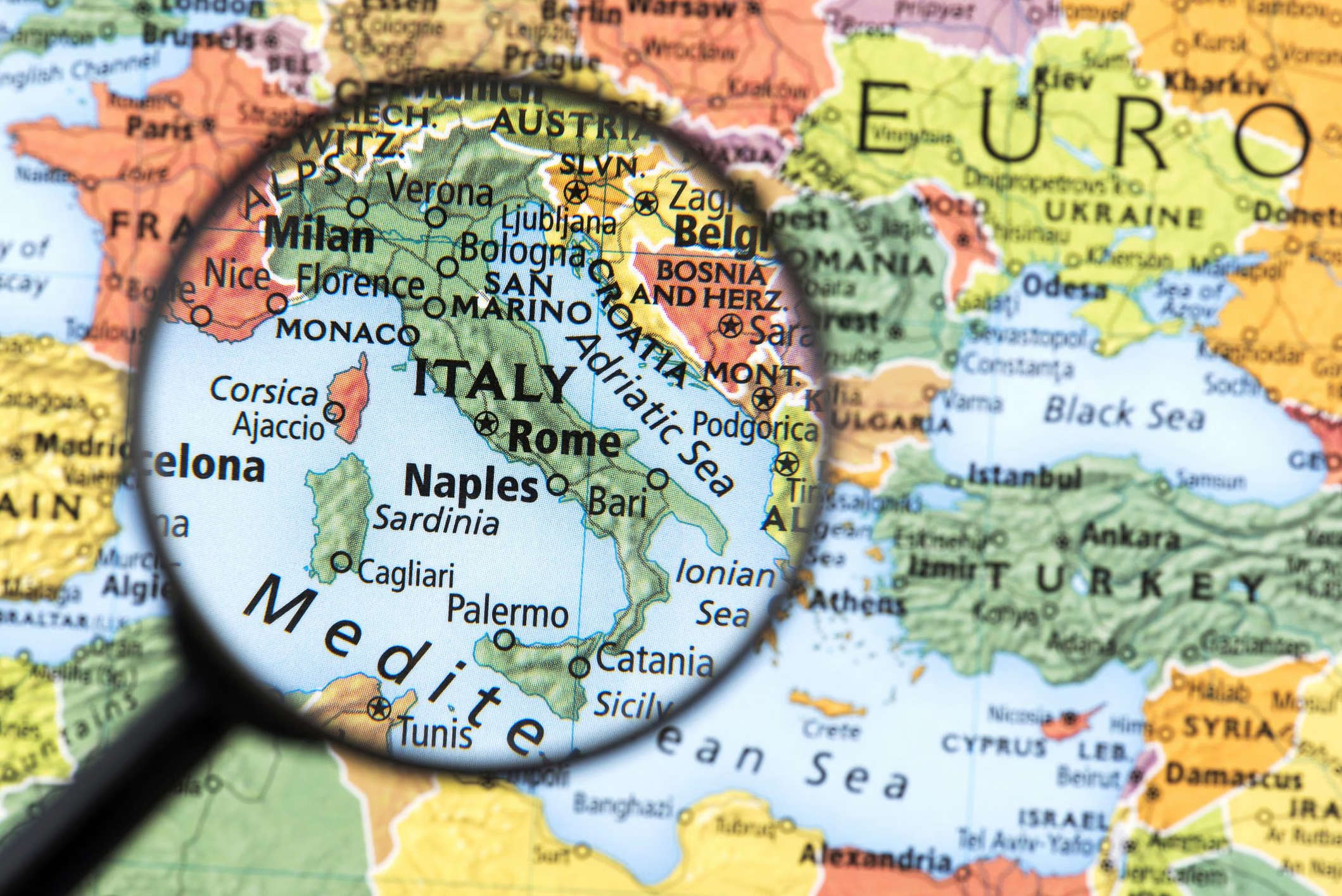
Enzo Ferrari, born in Modena in 1898 and died in the same city in 1988, was an Italian racing driver, sports director and manufacturer and entrepreneur, best known for having founded and directed the Scuderia Ferrari for many years. A racing driver until the early 1930s, he later became sporting director of the Alfa sports department. After the Second World War he founded the Scuderia Ferrari in Maranello, destined for great success in Formula 1 and in the automotive market. The company, partially sold to Fiat in 1968, still continues its activities today both in sport and on the market, but its production is intended only for the richest customers.
Training and career as a racing driver
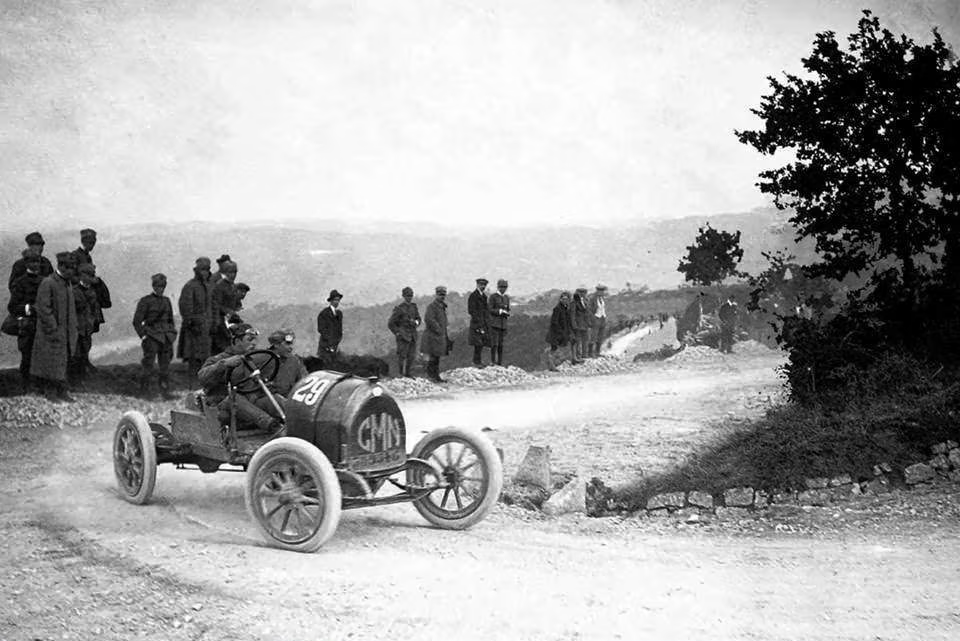
Enzo Ferrari was born on 20 February 1898 in Modena. He was the son of Alfredo Ferrari, a small businessman who owned a metal carpentry company. Since childhood, Enzo was passionate about mechanics, spending many hours in his father’s workshop. In 1908 he witnessed a car race for the first time – at the time a vehicle still in its embryonic stage – and was deeply impressed. Called up to arms during the First World War, he was reformed for health reasons, but had to take care of the family due to the death of his father and older brother, which occurred between 1915 and 1916. He sought employment at Fiat, but his application was rejected. He therefore worked in other factories in Turin and in 1919 he became a test driver for the Costruzioni Meccanica Nazionale company in Milan, a car factory also involved in racing. Hired as a test driver, Ferrari soon became a pilot, which allowed him to overcome the economic problems that had afflicted him after his father’s death.
In 1920 he moved to Alfa Romeo and his racing results began to improve. In the following years he achieved various successes. In 1923 he had a meeting destined to have profound consequences: he met Countess Paolina Biancoli, mother of Francesco Baracca, an aviation hero who died during the First World War, who invited him to use the prancing horse, present on the planes piloted by her son, as a symbol of the cars in which he competed. Therefore the little horse, used by Ferrari since the 1930s, has become the symbol of Ferrari.
Sports director and builder
Ferrari’s career as a driver proceeded with ups and downs, also due to the nervous breakdown of which he suffered in 1924. In the 1920s his private life also changed: he married Laura Dominica Giardiello, with whom in 1932 he had his son Dino (who died prematurely in 1956). Ferrari, however, was not a faithful husband and also began a long relationship with a lover, Lina Lardi, with whom he had his son Piero in 1945.
His professional career underwent an important evolution. In 1929, while continuing to compete as a driver, he took on the role of director of an Alfa experimental department involved in racing. The department took on his name: Scuderia Ferrari (not to be confused, however, with the Scuderia Ferrari founded after the war). In the following years the Scuderia achieved its first successes, also due to the fact that it had hired talented drivers, such as Tazio Nuvolari.
From 1932, however, Enzo Ferrari decided to put an end to his career as a driver and dedicate himself solely to the management of the Scuderia. In 1938, Alfa closed Scuderia Ferrari to found Alfa Corse. Enzo Ferrari worked there for about a year, but in 1939 he left the company due to disagreements with other managers and decided to start his own business. He founded Auto Avio Costruzioni in Modena, which produced cars for the market since, due to a clause in the old contract with Alfa, Ferrari could not work in the racing world for some years. In 1943 the headquarters of Auto Avio Costruzioni was moved to Maranello.
Scuderia Ferrari and Formula 1
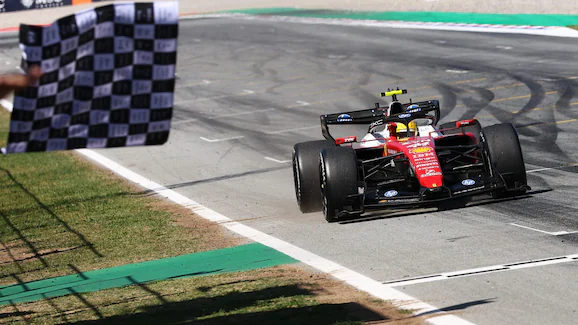
In 1947 the company was renamed Scuderia Ferrari (no connection with the Alfa racing department which had had the same name) and its founder was able to return to the world of motor racing. The Scuderia built its first car, the Ferrari 125S, in 1947 and quickly achieved success both on the track and on the market. In 1950 he made his debut in the Formula 1 world championship and the following year he achieved his first victory, triumphing at the United Kingdom Grand Prix thanks to driver José Froilán González. In 1952 and again in 1953 Ferrari won the world drivers’ title with Alberto Ascari.
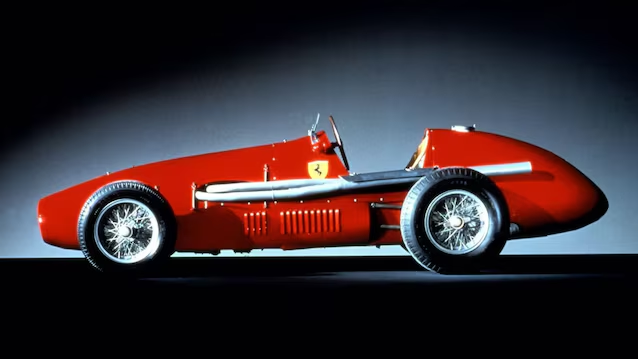
At the end of the 1960s Ferrari sold the majority of the company’s shares to Fiat, but the Scuderia continued to achieve success both on the track and on the market, winning a further seven world drivers’ titles between 1956 and 1979, as well as various constructors’ titles.
In the 1980s, a more difficult period began: victories decreased and for many years the Scuderia did not win any further drivers’ world titles. On the contrary, it proved to be very competitive on the luxury car market, in which highly successful models established themselves, such as the Testarossa, produced since 1984, and the F40, produced since 1987.
The death and legacy of Enzo Ferrari
Enzo Ferrari died in Modena on 14 August 1988. His death did not lead to the end of the Scuderia and the production company. Fiat took over other shares, coming to hold 90% of the ownership (the remaining 10% remained with Piero Ferrari, Enzo’s son) and the activities continued.
Since then, Ferrari has continued to produce successful models and since the 2000s has returned to success in Formula 1, hiring a very talented driver such as Michale Schumacher. Overall, Ferrari has won 31 world titles in its history (16 constructors’ titles and 15 drivers’ titles), making it the most successful team in the history of Formula 1. On the luxury car market, the company has consolidated its presence in Europe and America and has made inroads into new markets, such as Asia. The cars produced by the company continue to be a status symbol of the rich and are known not only for their quality, but also for prices that are inaccessible to the majority of the population.