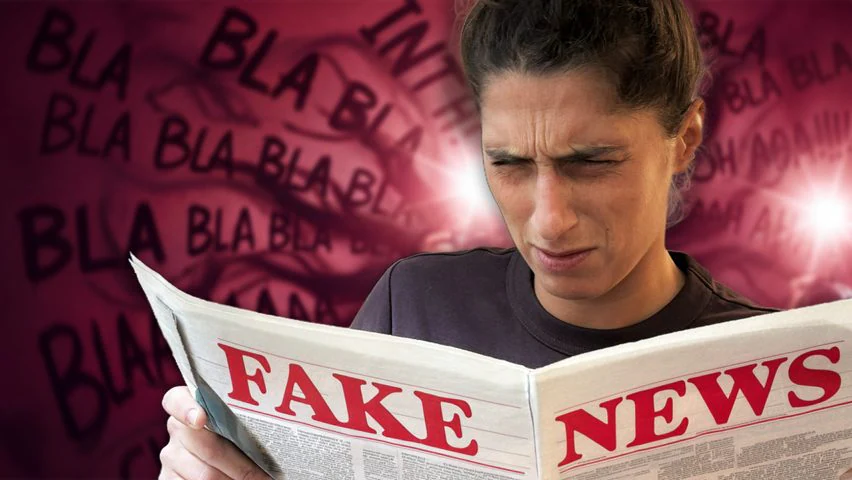
Fake news, or fake news, is considered one of the most dangerous global threats according to surveys by Global Risks Report 2025 of the World Economic Forum. Indeed, misinformation has always existed. In fact, there are different mechanisms in our brain that lead us to indulge in fake news. The era of social media, however, has made fake news increasingly frequent and increasingly attractive thanks to artificial intelligence, bots and precise communication techniques used by those who, for their own political or economic purposes, are inclined to spread misleading news.
In this article we see what fake news is, differentiating disinformation from misinformation and what makes fake news so effective, both from a psychological and technological point of view.
- 1The difference between disinformation and misinformation
- 2Fake news in the social media era: some famous examples
- 2.1Disinformation and memes
- 2.2 Cases of slander
- 2.3Fake news and marketing
- 2.4The political sphere
- 3The cognitive biases that make us believe fake news
- 3.1 Cognitive greed
- 3.2The authority bias
- 3.3The effect of illusory truth
- 3.4The continued influence effect
- 3.5 Confirmation bias
- 4The mechanisms behind disinformation
- 4.1Imitate journalism
- 4.2 Leverage emotions
- 4.3 Artificial intelligence and bots
The difference between disinformation and misinformation
We very often hear about fake news, in short “false news”, and spreading this type of news is called “disinformation”, i.e. DIS-informing, therefore depriving the listener of correct information. However, we must not confuse DIS-information with MIS-information. They are two different concepts: disinformation is the intentional dissemination of false or distorted news – that is, people deliberately lie to favor their own interests, for example political or economic; misinformation, on the other hand, is when we spread false content unknowingly, that is, believing we are saying something true.
For example, each of us misinforms every time we re-share a post or piece of news on social media, because we are convinced that it is true, and instead it is false.
Fake news in the social media era: some famous examples
As we were saying, nowadays fake news spreads like wildfire “thanks” to the power of social media. There are several reasons why this news is gaining traction. There is news given hastily by newspapers which therefore report wrong details, but most of the time misinformation today arises in two different circumstances.
Disinformation and memes
The first is: from jokes, that is, memes that become reality for a few hours or days. A sensational example was that of the alleged murderer of Charlie Kirk. The false news originated from Italy that the killer was called Gustavo LaFessa, a play on words easily understood in Italian, but not in English. So much so that the news was reshared by some American influencers and even ended up on Wikipedia Indonesia.
Cases of slander
Then there are the most serious cases, those of deliberate slander. A very famous example was that of the Algerian boxer Imane Khelif who won against an Italian boxer and the web, enraged, declared her to be a transgender woman. Many politicians spread this fake news to spread propaganda against transsexual people. And fake news in the political sphere is unfortunately very frequent, especially in those states – such as China or Russia – where press freedom is limited.
Fake news and marketing
In the economic field, there is also fake news relating to marketing: brands that tell scientific falsehoods – for example – so as to promote their own very personal product.
The political sphere
Another very recent example – and here we come to a fundamental point – is that of the photos of Giorgia Meloni generated with AI which portrayed her in intimate attitudes spread to discredit her.
If we scroll through social media today, a very high percentage of the images and videos we find are fake, but they are perfect, they are very credible thanks to the giant strides that artificial intelligence has made.
In fact, until last year, it was much easier to recognize general content with AI: hands with 6 fingers, robotic voice, unnatural hair. Or, until very recently AI wasn’t good with geometry, with lights, shadows, with writing.
Eh, today that’s no longer the case. AI improves day by day and fake news mixes more and more violently with reality, especially in this infodemic caused by social media.
But, what is it that makes misinformation so effective?
There are two aspects to consider: one is that the human mind is not that good at distinguishing real news from fake news. And the other is that intentional fake news is constructed ad hoc, that is, with characteristics that make it particularly attractive.
The cognitive biases that make us believe fake news
Let’s look at some of the cognitive mechanisms that can make misinformation particularly attractive.
Cognitive greed
The first is what is called cognitive greed, that is, the tendency to want to understand quickly, minimizing effort. In itself it is not a negative attitude, but in the sea of information that is the internet, it risks leading us to take as good even what – good – is not.
The authority bias
Added to this is the fact that we tend to blindly believe in figures that we consider authoritative, for example an expert or an institution. This is the so-called authority bias. It must be said that it is quite inevitable: we cannot study everything, so it is normal to trust the experts. However, it is always important to check whether those who claim to be experts are truly experts and also to hear multiple voices on the same topic. For example, in the medical field it is often done: multiple doctors are consulted before having a diagnosis.
The illusory truth effect
Then there’s the fact that if we hear a piece of news over and over again, we eventually take it for granted that it’s true. It’s the so-called Illusory Truth Effect, and it happens a lot with social media: as soon as a piece of news comes out, it spreads like wildfire and we see it appear in so many profiles that we think it’s true.
The continued influence effect
And then, even when we discover that the news was actually false – as in the case of autism and vaccines – there is a tendency to not be able to get rid of that thought. It is the so-called continued influence effect, and it is the reason why misinformation continues to influence people’s judgments even after being proven wrong.
The confirmation bias
We therefore arrive at perhaps the most important topic: confirmation bias, that is, that distortion of our thinking which unconsciously – in a sea of information – makes us select precisely those which confirm what we already thought. That is, we like to believe news that is closest to what we already thought, those who confirm our political theses or our lifestyle without questioning the sources.
The mechanisms behind disinformation
From a communication point of view, those who create fake news mainly use these tricks.
Imitate journalism
The first is: imitate real journalism, then base your consistency on well-layout posts, graphics that remind us of official sources or even pretend to exist profiles. To make everything more credible, false quotes from important people are also used or fake experts are created, so as to leverage the authority bias we talked about. Everything is seasoned with simple and effective language, accessible to everyone.
Sensationalist and exaggerated headlines, so-called clickbait headlines, are also often used. They are misleading titles, of articles which then perhaps report correct information within them. In this case the fake news lies in the title, rather than in the content.
Leverage emotions
Then there is the central point: leveraging people’s emotions, especially indignation, fear or worry. If the news grips us, it arouses a reaction in us, for better or for worse. And if they arouse a reaction in us, we tend to reshare them or comment on them, increasing the engagement of that content, and therefore contributing to its diffusion.
Artificial intelligence and bots
From a technological point of view, however, there are two main elements that help fake news spread quickly: artificial intelligence, which makes any fake news extremely credible, because it provides visual support for the words, and fake accounts and bots. There are real factories of fake accounts – the so-called troll farms – which, en masse, spread and comment on fake news so as to spread it like wildfire.
This type of mechanism is mainly used to make political propaganda and manipulate public opinion. And there are many documented cases in which it has been used: the elections in Russia, in Brazil, those in the USA in 2016, the propaganda of the Communist Party in China, but also the Brexit referendum. All episodes in which scholars tell us that political results were influenced by an army of fake profiles ready to spread propaganda.