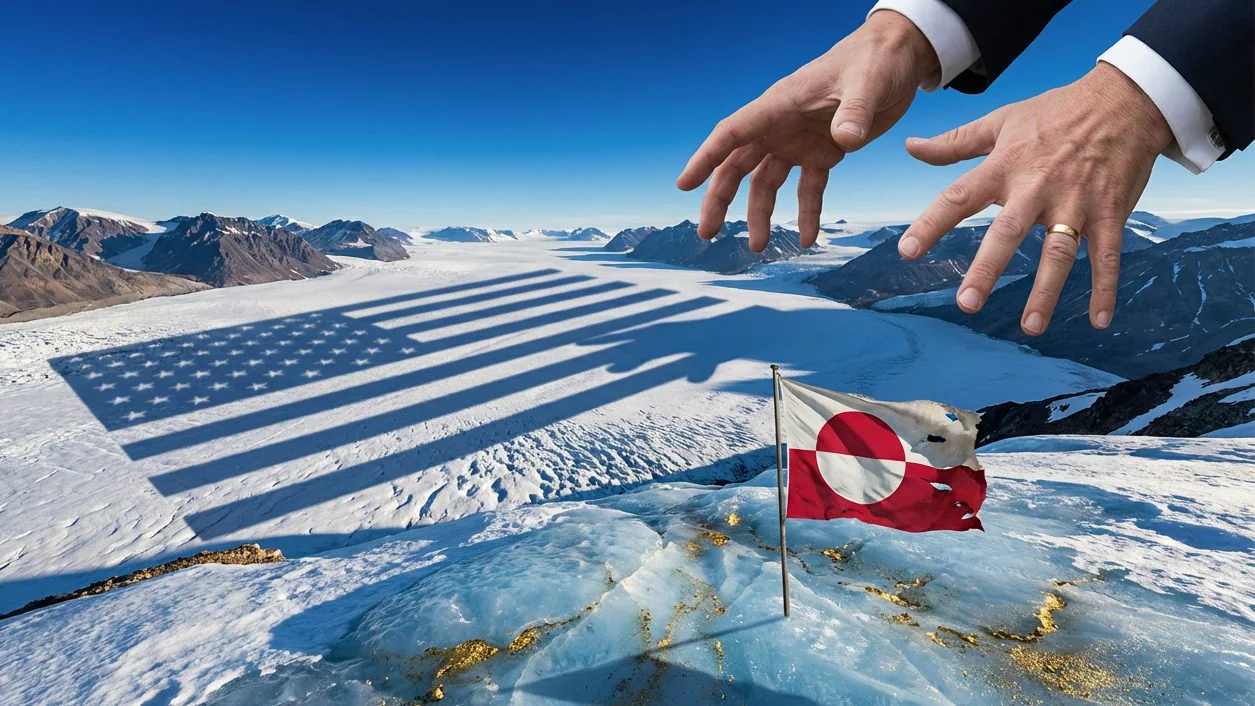
In 2019, Donald Trump’s idea of ”buying Greenland” seemed like a provocation, but the tune has changed at the beginning of 2026.
Following the White House’s statements last Tuesday 6 January which spoke of “militarily occupying the Arctic island” to guarantee their security in the face of growing threats from China and Russia in the Arctic, Denmark and Greenland – clearly alarmed – immediately sought a discussion with US Secretary of State Marco Rubio on the matter. In this regard, in the early hours of Wednesday 7 January Rubio commented that the White House would like to convince Denmark to cede control of Greenland to the United States, rather than annexing it by force.
“Trump wants to buy Greenland, not invade it.” – US Secretary of State Marco Rubio
Donald Trump renewed his calls for the acquisition of Greenland the day after the arrest of Venezuelan President Nicolás Maduro on Saturday 3 January. The American president said he “desperately needed” Greenland, triggering an escalation of tensions between the United States, the semi-autonomous Danish territory and Europe.
The point, however, is that the large Arctic island is not for sale because it is not an alienable asset like private property, but an autonomous territory of the Kingdom of Denmark with its own institutions and a people that international law recognizes as holders of self-determination. Washington’s desire to transform a huge and strategic territory like Greenland into a “new acquisition” is therefore not enough.
The United States cannot buy it also for reasons of political and legal constraints: both Denmark and Greenland should agree to cede the aforementioned territory to the USA, but this is practically impossible, because neither of the two is willing to give in to the expansionist aims of the Trump administration. Denmark itself, in the framework of its 2009 self-government, expressly recognizes that the Greenlandic people have the right to self-determination under international law, and that any change in sovereignty would therefore require the consent of the Greenlanders, not just Copenhagen. Without a bilateral agreement (Denmark and Greenland VS United States) there is no possibility of “purchase”.
The United States can therefore consolidate its military presence and increase its influence by expanding the already present Pituffik base (the US presence in Greenland is based on a 1951 defense agreement between the United States and Denmark, still in force and integrated over time: for new military infrastructures, Washington must negotiate with Copenhagen and coordinate with the local Greenlandic authorities), and increase the number of investments and economic agreements (minerals, infrastructure, Arctic research). The United States, therefore, will in no way be able to “buy” Greenland like you buy any good.